
Qamar Al-Muluk Waziri... The Voice That Crossed the Walls of Prohibition
Some voices do not only sing, but open closed doors, transcend the boundaries set for women, and are immortalized in the memory of history.
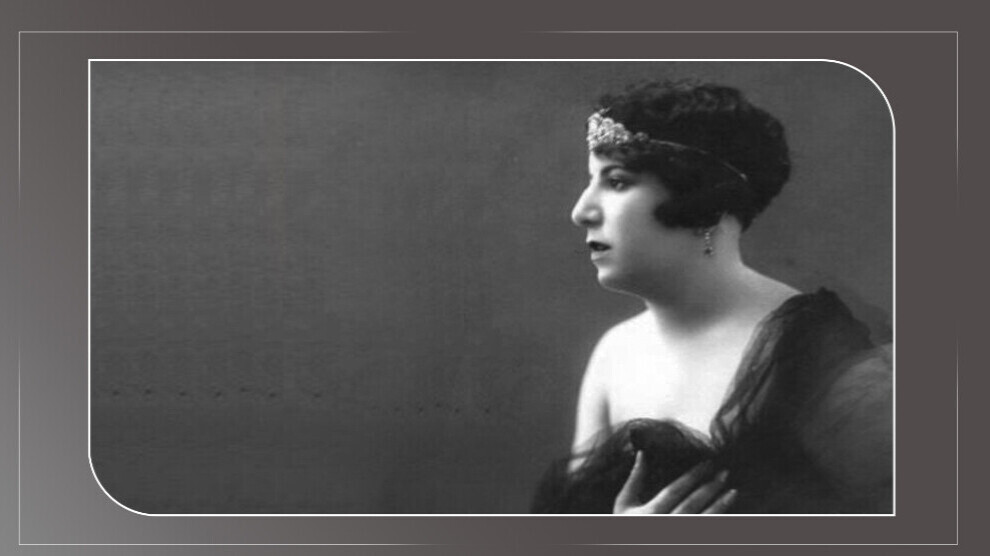
NEWSCENTER– In 1924, the Iranian capital, Tehran, witnessed an exceptional event that changed the features of Persian art, when Qamar Al-Muluk Waziri ascended the stage to create a true revolution. At that time, women's appearance in the public space, especially singing before men, was surrounded by strict restrictions and social prohibitions. But Qamar did not hesitate to deliver her voice to the public, paving the way and inspiring an entire generation of women who aspired to take the stage after her.
Qamar Al-Muluk Waziri was born in Tehran in 1905, and grew up to build for herself a glory as one of the most prominent pillars of Iranian classical music in her era. Her courage was manifested in that celebrated concert in 1924, when she boldly sang before a mixed audience of men and women without covering her face, thus challenging the grave social obstacles that pursued female artists in that era.
Her step stemmed from a deep belief that a woman's voice is not something to be concealed, but is an authentic part of society's culture and identity. Thanks to her powerful vocal timbre, her masterful techniques, and her unique style, her art was no longer merely a tool for entertainment, but turned into a living message affirming that women are capable of choice, creativity, and expressing themselves before public opinion.
Art in the Service of Humanity
Qamar Al-Muluk Waziri's legacy was not confined to the limits of the golden throat, but extended to intertwine with humanitarian work; she was known for her keenness to hold charity concerts and dedicate their proceeds to helping the poor and needy. She believed that music is not just an artistic luxury, but is an extended bridge toward people's hearts, and a means of giving and sharing human concerns.
Qamar passed away from our world in Tehran in 1959, but her echo did not fade; rather, it remained alive in the history of Iranian music as a symbol of the woman who wrested her right to exist within spaces that society tried to narrow for her.
Her biography today leaves us before fundamental and deep questions: Who possesses the authority to determine the voices that deserve to be heard? Why is women's art fought at some historical junctures? And how can music lead social awareness toward change and freedom?