
Five Years of Taliban Rule... Suppression and Restriction of Women's Rights
Five years after Taliban return,restrictions on education and work have altered Afghan women’s lives_dreams unfulfilled,yet they still assert role in Afghanistan’s future.
BAHARAN LAHIB
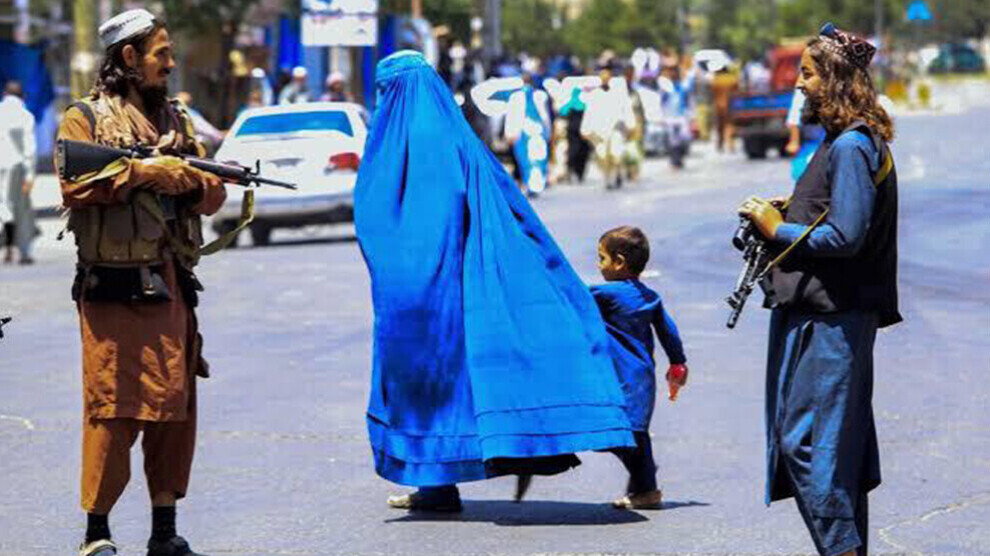
Baghlan — Since the Taliban's return to rule, Afghanistan has witnessed extensive tightening of women's rights, including bans on education and work, and restrictions on community participation. These restrictions have reshaped Afghan women's lives and pushed rights organizations to document violations and demand protection of their fundamental rights.
August 15 marks another somber milestone in Afghanistan's history. On this day five years ago, the Taliban movement returned to power, quickly beginning to dismantle what remained of women's rights. Women were barred from working outside the home, particularly in government institutions, and girls were prohibited from continuing their education beyond the sixth grade.
This was followed by a mass exodus of most civil society activists, intellectuals, and educated individuals, with estimates suggesting more than one million people have left the country, while many continue attempting to flee via dangerous and rugged routes, risking their lives in search of livelihood or a safer environment.
Data from the Afghan Statistics Office issued on behalf of the government in 2020 showed that the number of employees in government institutions reached 414,902, of whom 106,869 were women, reflecting an estimated 5.5% increase in the proportion of female employees compared to the previous year.
Most women working in civilian government departments lost their jobs with the Taliban's return to power, and the deprivation also included women who had been working in military institutions of the former government. Despite the absence of accurate statistics on the current extent of women's participation in the civilian sector, estimates suggest that the number of female employees in various government departments does not exceed fifty across the country.
With this sharp decline in employment and education opportunities, in addition to restrictions on access to recreational places, the number of those suffering from psychological disorders in Afghanistan has also risen, amid a social and economic environment growing harsher day by day.
"August 15 Is Not a Passing Date"
Darya Behar, a young woman from Baghlan Province, explained to our agency the transformations that have swept through her life since the movement's return to power. "I was a teacher five years ago; today I spend my time at home without work. August 15 is not just a passing date—it is a day that covered Afghanistan in smoke, iron, and fire, a day filled with tears everywhere, with the cries of children and women echoing all around. With their arrival, the Taliban stripped girls of their rights and imposed many restrictions on their lives. The movement has caused tremendous chaos in women's lives."
She affirmed: "As Afghan girls, we do not see what happened as collapse or defeat, but as a new page opened in our lives. We are not just daughters or mothers; we are the pillars of society. Without women, no society stands; without our presence, life is incomplete. We are the women and girls who form the complete structure of this society."
She explained that five years ago, she had many dreams—she wanted to become an activist for women's rights within her community and to be a voice for Afghan women and girls. However, today's reality is different; unfortunately, they remain confined to their homes. She noted that she does not see this situation as a personal defeat, but as a new phase in her life's journey. "The past five years have taught me that women have a pivotal role in society, and that I am not a forgotten or marginalized woman. Every woman excluded from society is not just an individual outside the circle of life, but a history being excluded and erased from collective memory."