
Yemeni Women and the Socialist Experiment: Is There Anything Left to Build Upon?
Yemeni women's reality shifts between the South's progressive legacy and post-unification decline, making restoration of gains and enhancing women's public presence urgent for change.
RANIA ABDULLAH
Yemen — The socialist experiment in South Yemen raises a question: Is there anything left of that progressive legacy that can be built upon today? In that era, Yemeni women witnessed an unprecedented presence in the judiciary, politics, the military, and education, before their gains receded due to the transformations that followed unification and the rise of traditional forces. Between the memory of a golden age and a reality burdened by marginalisation, the need seems urgent to reclaim what remains of that legacy and transform it into a foundation for a new feminist renaissance.
In the 1970s and 1980s, Yemeni women in South Yemen were not merely citizens; they were partners in decision-making, political participation, and public life.
In that era, the name of Aida Said shone within the leadership of the Central Committee of the Socialist Party. In the judiciary, Hamida Zakaria was the first female judge in the Arab world. Intisar Hawash was the first female paratrooper in Yemen and the Arabian Peninsula. That period was distinguished by an exceptional presence of women in media and the arts who led the cultural and intellectual scene.
Here the question arises: Why did women's participation decline? Where did this legacy go? And how did their participation transform into a marginalised reality?
Roots of the Struggle
Researchers trace the roots of this feminist renaissance to understand the reasons for its decline after having been present and strong. Researcher Anwar Qasim Al-Khadri explains in his study entitled "The Feminist Movement in Yemen" that the feminist movement in the South began as a current opposing British occupation and an integral part of the national struggle. In his study, he indicates that the Yemeni Socialist Party, after assuming power in the South, adopted a comprehensive vision to change the social and legal status of women, and strongly pushed them towards political participation, education, and even joining the armed forces and security services, creating a societal environment that accepted and supported women's leadership.
A field study entitled "The Role of the Feminist Movement in Promoting Human Rights in Yemen" by researcher Rasha Abdel Kafi affirms that the period of Socialist Party rule represented the "golden age" of women's participation in public life, based on a progressive ideology that established the foundations of equal citizenship since 1969.
Rasha Abdel Kafi drew attention to the Family Law of 1974 in the South, describing it as "the most modern and developed in the entire region," as it succeeded in overcoming traditional obstacles and backward societal structures that constrained women's potentials, providing unprecedented legal protection in the areas of marriage, divorce, inheritance, and work.
The Post-Unification Turning Point
The golden age of Yemeni women and their upward trajectory faced major challenges and significant marginalisation after the achievement of unification between the northern and southern parts of Yemen in 1990. Rasha Abdel Kafi's study argues that rights gains were systematically undermined as a result of "the dominance of an alliance of traditional tribal, religious, and military forces" that rose to the forefront of power after the war and political transformations.
This decline manifested in subsequent constitutional amendments that aimed to cancel the article on "full equality" between the sexes, replacing it with vague texts considering women as "sisters of men," while linking their rights to restrictive legal and religious interpretations, thus demolishing the constitutional guarantee of equality.
Al-Khadri agrees in his study that the feminist movement after unification suffered from fragmentation between narrow partisan frameworks and subordination to political authority, which weakened its influence and its ability to pressure for the attainment of rights or the preservation of previous gains.
Reality and Aspirations
Despite the bleakness of the current scene, many women agree that the legacy of the socialist experiment in the South is not merely nostalgic memories, but a solid foundation that can and must be relied upon today to produce a new feminist renaissance.
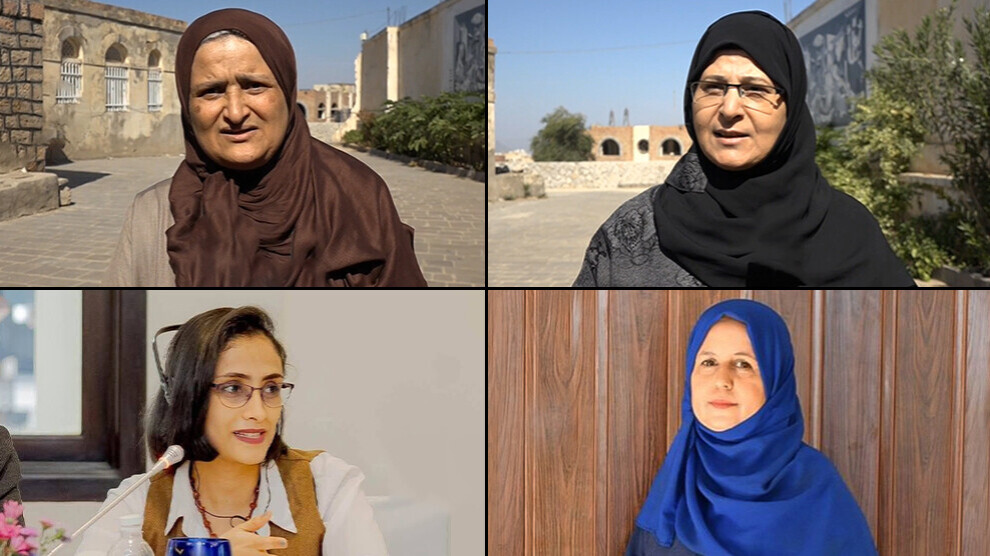
Hana Al-Sharjabi has not forgotten the status of women in South Yemen and the achievements they reached. She says: "We cannot forget the role played by the former Socialist Party in South Yemen in pushing women towards decision-making and comprehensive community participation."
She adds: "It has been observed that the role of women has declined, but this does not lead us to despair; rather, the experience must be renewed. With the presence of leading women who can be relied upon, and with political parties and components pushing women to participate in decision-making and public life, change is possible."
Gains That Can Be Built Upon
Researcher and activist Rasha Abdel Kafi told our agency: "The Socialist Party adopted the cause of women's liberation and made social justice for all part of its project. Its experiment in South Yemen was pioneering and advanced on the level of the Arabian Peninsula. At that time, Yemeni women in South Yemen achieved many gains, most notably the Family Law, which guaranteed them many rights."
She added: "This inspiring experiment contributed to women entering the labour market and assuming leadership positions in the state. However, these gains declined after 1990 and largely disappeared after the 1994 war, following the adoption of a new constitution that did not grant Yemeni women their full rights."
Jamila Marai, a member of the Central Committee of the Yemeni Socialist Party, recalls the educational aspect of that period: "The country possessed an educational system that was the most advanced on the Arabian Peninsula, which uplifted women and gave them great status, enabling them to ascend the judiciary bench and even participate in the national front."
Regarding the decline of women's role in public and political life, she says: "Women suffered a setback and the diminishment of their rights due to political pressures from the authorities, leading to a drop in their participation indicators from the peak to the bottom."
Jamila Marai pins her hopes on a strong feminist movement that is building and laying the foundations for the return of women's glory, saying: "There is no room for despair; there is a solid feminist nucleus today, and extended models that inspire generations. Therefore, I send my message to the Socialist Party and other parties about the necessity of pushing women again into decision-making positions, not just working behind the scenes of political action. Women's role is no less than men's role in building society."
For her part, Shafiqa Ahmed, Secretary of the Organisation of the Yemeni Socialist Party, explains that the experiment of the Yemeni Socialist Party during its rule of the People's Democratic Republic of Yemen was not limited to empowering women but extended to pushing all vulnerable and marginalised groups and bringing them to leadership positions in the party and government.
She adds: "What we witness today of regression and decline in the status of women and societal gains is a natural outcome of the compelling circumstances and wars that Yemen is experiencing."
Shafiqa Ahmed indicates that "hope remains alive; the field within the Socialist Party is still wide open for women to attain leadership positions. Moreover, we observe positive movement in other parties, indicating that women are reaching higher positions in general secretariats and party leaderships."