
Textile Workers: An Economic Force in Algeria
Algerian women are considered a fundamental pillar in the traditional textile sector. Their role is not limited to knitting alone; they are also engaged in weaving carpets and traditional garments.
Rabiaa Kharis
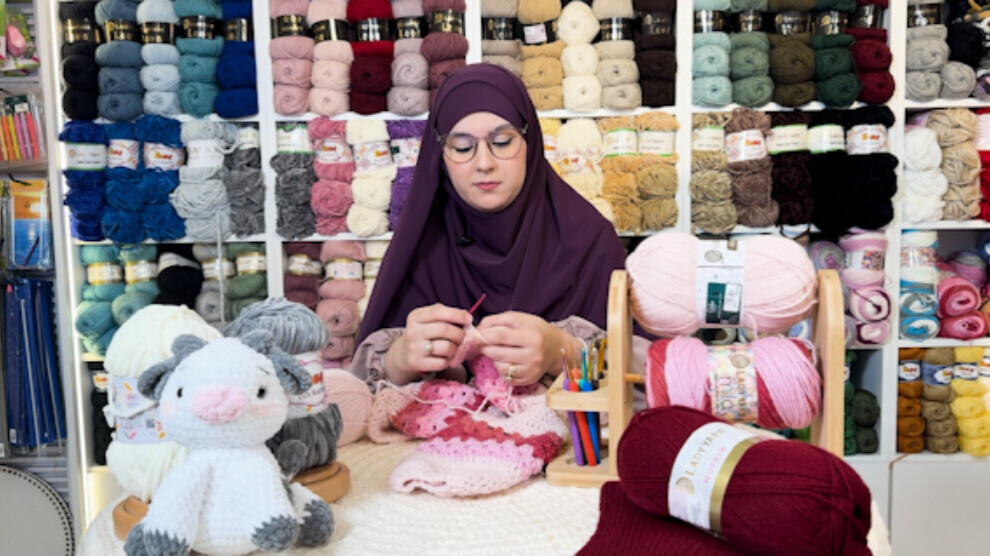
Algeria — As soon as you step into “Sidia Craft” shop in Bab Ezzouar, one of the most prominent hubs in the eastern suburb of the Algerian capital, your attention is immediately drawn to balls of wool in various shapes and colors, with each row almost collapsing under the weight of the yarn.
These wool balls, once the “companions” of grandmothers during the winter season, are today competing with major global brands. Many of the garments on display remain faithful to old designs in terms of knitting techniques and patterns.
Inside this shop, which is considered an ideal destination for handicraft enthusiasts and lovers of unique designs, a young woman carefully runs colorful strands of wool through her fingers, tying them into tight knots and pressing them skillfully so they align neatly beside one another. In the end, she produces elegant woolen outfits, handwoven baskets, and even dolls made of wool.
A Strong Collective Return to Handicrafts
Asmaa Rizkallah, a young Algerian woman in her twenties, says she learned to knit with crochet hooks and needles when she was seven years old. At first, she made decorative crochet pieces used to adorn a bride’s wardrobe shelves. Shortly afterward, she paused her craft due to her academic commitments.
However, as she explains, she eventually returned to her passion. “I came back because wool knitting has gained increasing global interest. It has transformed from a traditional craft, a winter hobby, or a folk heritage into a sustainable fashion trend and a creative source of income.” She notes that she is self-taught, relying on independent learning, perseverance, and practical experience rather than formal educational institutions.
She confirms that “most people prefer to wear handmade wool garments for one main reason: they are made from high-quality, hypoallergenic threads suitable for children and do not cause itching — a condition not always met in ready-made clothing.” The beauty of this craft, she adds, lies in “the artisan’s commitment to uniqueness, individuality, and offering options that respect different sizes and designs — something not available in mass-produced garments.”
According to her, what is particularly striking is “the collective return of women to professions once practiced by their mothers.” Training workshops are offered to enable women to pursue independent professional activities or work within organized groups. Many women work in this field to finance their education, while others are the primary breadwinners for their families.
Women as a Pillar of the Traditional Textile Sector
Thanks to the training courses provided by the shop, Asmaa Rizkallah explains that “many women have successfully launched new projects in the traditional industry sector and have directly contributed to job creation.”
Among the reasons knitting, embroidery, and crochet weaving now compete with imported and ready-made clothing, she points out the rise of social media, which has significantly contributed to product marketing “through publishing engaging content on platforms such as Facebook, Instagram, and Twitter, after sales were once conducted in a traditional manner by customers visiting the shop to inspect products.”
Algerian women are considered a cornerstone of the traditional textile sector. Their role extends beyond knitting to weaving carpets and traditional garments. According to previous figures provided by the Ministry of Tourism and Traditional Industries at the end of 2025, the number of female artisans in Algeria reached approximately 150,000 out of 470,000 registered artisans in the sector.