
Launch of the First Platform to Document and Monitor Femicides in Tunisia
Femicides in Tunisia have escalated alarmingly, prompting civil society to repeatedly sound the alarm to warn of the government's inadequate response to these gender-based crimes, with murder rates having increased nearly sixfold between 2018 and 2025.
ZOHOUR AL-MASHRIQI
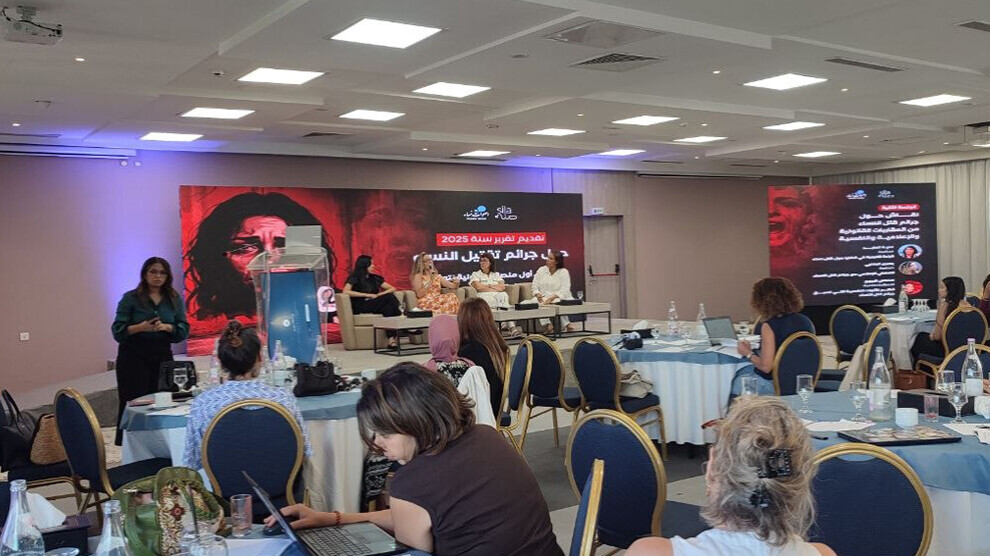
Tunis — Coinciding with the 70th anniversary of the promulgation of the Personal Status Code, the "Aswat Nissa" (Women's Voices) Association has launched the first platform dedicated to documenting femicides, specializing in monitoring and documenting murders of women, and is open to the public in both Arabic and French.
At its press conference, the "Aswat Nissa" Association affirmed that the platform constitutes a space of resistance that will seek to monitor femicides in order to document them, analyze them, and highlight their social and political dimensions, as they are considered a form of gender-based violence.
Mariam Al-Meliki, a public law researcher at the "Aswat Nissa" Association, stated that the platform—which is the first platform for documenting femicides and attempted femicides—has the mission of monitoring crimes in various governorates of Tunisia to break the silence and concealment surrounding these crimes, and to contribute to building a collective feminist memory that preserves women's stories, placing their rights and experiences at the heart of knowledge production and the defense of justice.
She indicated that the goal is also to recognize femicides as specific crimes and to push toward public policies capable of protecting women from all forms of gender-based violence.
She highlighted that the "Aswat Nissa" Association began the process of documenting femicides in 2021, coinciding with the case of Rafqa Al-Sharni, who was killed by her security officer husband using his service weapon. Documentation was carried out through social media, with 35 crimes recorded in 2025 compared to 6 cases in 2018.
Tunisia possesses one of the strongest laws to combat violence against women—not only in its African and regional context but globally—in terms of the legislation's comprehensiveness covering almost all forms of violence, including digital and political violence. Despite this, violence and murder rates have multiplied, which civil society attributes to the absence of protection, weak prosecution of offenders, and societal normalization of the scourge.
For her part, constitutional law professor Mounia Qari spoke to our agency about the continued impunity within a conservative society and a country that has a law but does not apply the policies or mechanisms necessary for its proper implementation. All these political, cultural, and educational factors contribute to the exacerbation and proliferation of this phenomenon in society.
She pointed out that the lack of genuine deterrence or strict penalties means that violators or perpetrators of abuses fear nothing, especially with certain societal traditions that may indirectly contribute to covering up problems or hesitating to confront them courageously.