
Women and Children of Taiz in a Harsh Confrontation with the Siege and Deteriorating Living Conditions
Taiz residents, especially women and children, face harsh siege and attack repercussions, as water and gas become daily suffering, doubling commodity prices and depriving children of natural childhood.
RANIA ABDULLAH
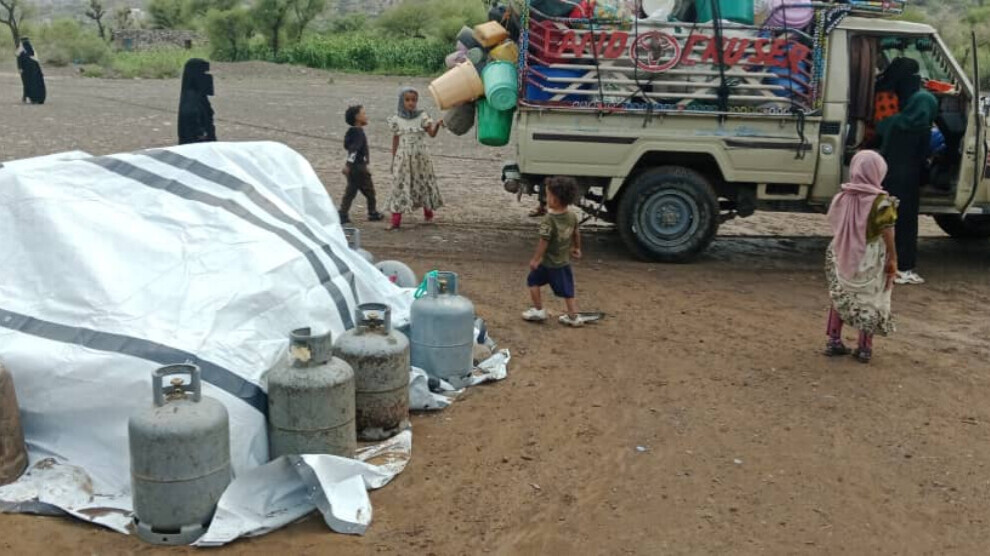
YEMEN – In Taiz city in southwestern Yemen, women and children were not immune to the repercussions of the truce violation, the renewal of attacks, and the tightening of the siege, as they found themselves facing a worsening living reality that differs greatly from what life was like before the conflict. A reality in which obtaining a domestic gas cylinder or securing an amount of water, after hours of waiting in long queues, has become a daily suffering that burdens families, takes away children's time allocated for play, and deprives them of practicing their childhood naturally.
According to the International Organization for Migration, the recent military escalation and the confrontations that followed caused a sharp rise in the prices of basic materials in Taiz, where their cost increased between three and five times, as a result of the cutting of roads leading to the areas surrounding the city, which made securing even essential foodstuffs beyond the capacity of many families.
The siege imposed by the Houthis on Taiz city doubled the suffering of hundreds of thousands of residents, amid the rise in prices of basic goods to five times their usual levels, the continued closure of roads leading to the city, and the stumbling of humanitarian efforts aimed at opening a safe corridor to deliver aid, simultaneously with the widening wave of displacement from combat areas in the west and south of the country.
The Repercussions of the Siege on Daily Life
Reem Al-Athouri, correspondent for the "Taiz Time" website, said that the siege imposed on Taiz city is not limited to closing roads or the shortage of petroleum derivatives, but extends to various details of the daily life of residents, and the increasing difficulties they face in securing their basic needs, to the point that suffering has become part of the daily life of every family.
She added that many families have become unable to secure domestic gas, which pushes them to search for firewood and use alternative means to cook food, in light of the difficulty of obtaining fuel and the high cost of living. She explained that these conditions double the burdens placed on women, who bear the responsibility of managing household affairs and preparing food for family members, despite limited capabilities.
She pointed out that the suffering does not stop at the gas crisis, but extends to the high costs of transportation and the difficulty of accessing hospitals and health facilities, in addition to the hardship that families face in securing water and purchasing their daily needs.
She confirmed that the repercussions of the siege affect various sectors, including water, health, education, and transportation. She explained that the fuel shortage not only affects the movement of citizens, but is also reflected in the basic services on which residents depend in their daily lives.
Reem Al-Athouri called for conveying the suffering of the people of Taiz to the world and shedding light on the difficult humanitarian conditions they live in, stressing the necessity of not dealing with this suffering as a natural reality that residents have become accustomed to.
She added that the siege does not mean merely closing roads, but its impact extends to disrupting daily life and postponing the residents' dreams, in light of burdens borne by families who have no fault in what the situation has come to.
Children Facing the Water Crisis
For her part, citizen Ikhlas Amin spoke about the resilience of the people of Taiz despite the harsh living conditions, noting that the repercussions of the siege affect various age groups, from children to the elderly, who face increasing difficulties in obtaining the simplest requirements of life, foremost among them domestic gas and water.
She addressed the gas crisis, explaining that obtaining it has become extremely difficult compared to what the situation was before the conflict, as citizens are forced to stand for hours in long queues hoping to obtain a cylinder, but they may return to their homes without it due to the lack of sufficient quantities.
She noted that the water crisis has cast its shadows on the lives of children, who now spend long times in waiting queues to obtain it, instead of playing and practicing their daily activities, which deprives them of part of their childhood and places them before responsibilities beyond their ages.
Health Facilities Facing Supply Shortages
Ikhlas Amin said that the repercussions of the siege are not limited to homes and markets, but extend to health facilities, where medical cadres face difficulties in providing oxygen and medical supplies, alongside the shortage of water and medicines, which increases the suffering of patients, especially those who need continuous care and treatment.
She explained that the shortage of these needs places patients and medical cadres before additional challenges, at a time when hospitals need the continued flow of medical supplies and the availability of fuel to ensure the provision of health services.
She added that women bear a large part of the repercussions of the crisis, especially with some of them being forced to use firewood to cook food after the impossibility of obtaining domestic gas, and the accompanying exposure to smoke and the hardship of preparing meals by traditional means, in light of living conditions that are becoming more difficult.
She confirmed that the effects of the siege affect everyone, from women and children to the elderly and the sick, whether inside homes or in hospitals, noting that the continuation of these conditions doubles the daily burdens on families trying to secure their basic needs with limited capabilities.
Ikhlas Amin concluded her interview by demanding the lifting of the siege on Taiz city and putting an end to the suffering of its residents, calling on the concerned authorities and decision-makers to bear their responsibilities toward civilians and take serious steps to end this suffering.