
"Leheng" Video Clip... An Artistic Bridge of Loyalty Immortalizing Women's Sacrifices and Bonds of the Soul
In a humanitarian gesture transcending blood tie, the "Leheng" video clip embodied Ghalia's story, spiritually adopting the absent martyr Kalbahar Botan's legacy, turning art into a bridge linking women's sacrifices with loyalty.
FARIDA RABO
QAMISHLO– The Golden Crescent Movement for Culture and Art, in cooperation with "Mezkin" Studio, produced a video clip titled "Leheng" (meaning The Hero/Heroine) to immortalize the memory of the martyrs of Kurdistan's freedom whose martyrdom was recently announced. It was launched on the anniversary of the martyrdom of "Beritan" (Kulnaz Karatas), who is considered a prominent symbol of the women's revolution and women's resistance.
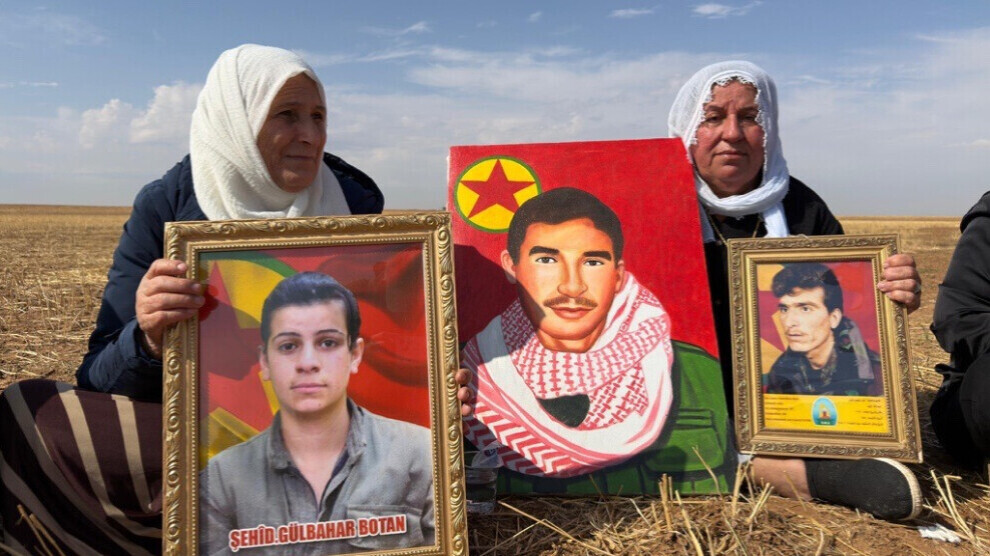
The "Leheng" video clip came as the fruit of a collective effort, not only in its musical quality, but also in the deep spiritual bond that was formed during its filming; a bond that transcends traditional blood ties as it embodies women's struggles and sacrifices. During the filming of the work, while mothers were carrying pictures of their loved ones who ascended as martyrs, the story of a woman named "Ghalia" emerged, who took upon herself to preserve the memory of one of the female martyrs, despite the absence of any biological kinship linking her to her, in a stance that left a deep impact.
Spirituality That Transcends Family Ties
During the production of the work dedicated to the martyrs and women's resistance, it was remarkable to see "Ghalia" among the mothers of the martyrs who attended carrying pictures of their children. In the case of the martyr Kalbahar Botan "Bata Sheikhmous," who was martyred in the "Gari" area in 2009 and whose name was recently included in the official list of martyrs, her family made no effort to search for her records or honor her memory.
The story of the fighter "Kalbahar Botan," who departed without a family to mourn her, left a profound impact on the soul of "Ghalia," a woman who dedicated her life to working within the "Council of Martyrs' Families." With her diligent engagement in the Council's activities, Ghalia developed a close connection to the stories of the martyrs and their families, contributing effectively to preserving their human and struggle legacy.
On the day of filming the "Leheng" video clip, which was produced in honor of the martyrs and women's resistance, the mothers gathered at the site carrying pictures of their loved ones. Ghalia participated in this gathering carrying the picture of "Kalbahar Botan" to represent her absent family, taking upon herself the responsibility of keeping her memory alive, standing alongside the other mothers as her spiritual mother.
This emotional stance brought together the stories of two different lives and united them within a single artistic framework; through this act of remembrance, Kalbahar's story was rewritten to emerge into the light again after years of absence, while Ghalia's life journey acquired a new meaning, drawing strength to move forward, confirming that loyalty to the legacy transcends the boundaries of blood and kinship.
The "Leheng" video clip does not content itself with narrating past heroisms only, but also constitutes a testimony to the deep spiritual bonds that unite women today. Through this song, two different life stories met, to show how merely keeping a picture or evoking a name can breathe new life into a story that was threatened with oblivion.
The "Leheng" video clip, produced by Mezkin Studio, presents this touching humanitarian gesture to the public through cultural platforms and digital media, once again allowing the opportunity to listen to the song that brought together the stories of Ghalia and Kalbahar, and revealed their details.