
Pomegranate Season in Kobani… A Story of Effort and Toil from the Heart of the Land
Behind every ripened pomegranate seed in Kobani’s orchards lies a long struggle of fatigue and deep bond with the land, where women pick the crop, restoring nature’s pulse and life.
BARJIM JOUDI
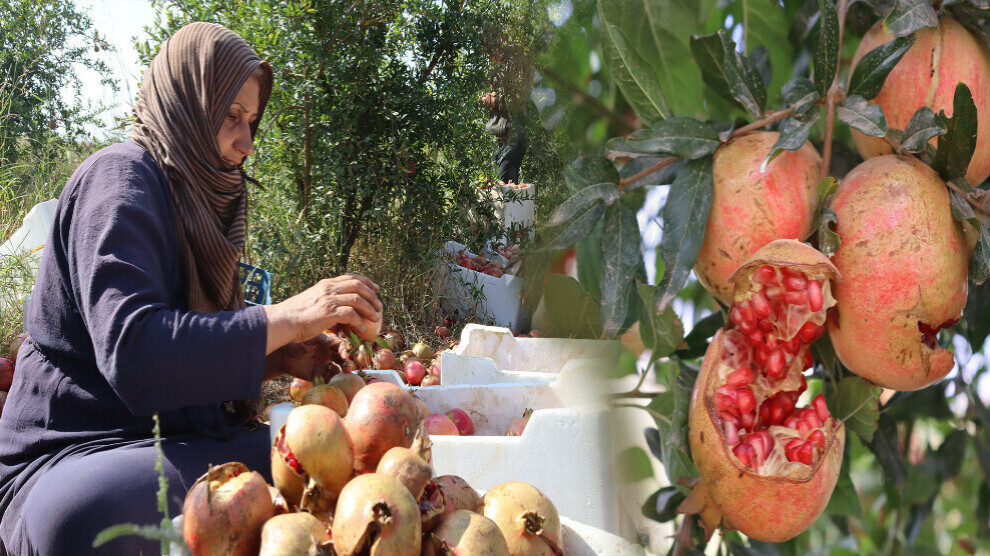
KOBANI_With the arrival of the pomegranate picking season in Kobani, the orchards have turned into beehives buzzing with work, effort, and hope, drawing the details of the daily life of their residents. This season, which extended from last September until the current October, is considered one of the seasons and an opportunity for many families to secure their livelihood.
Harvesting the fruits from the land and nature requires great effort, specifically promegranates, as they need extreme care and long working hours, starting from planting the seedings and maintaining them, reaching the preparation and sorting of the fruits. At the heart of these orchards, the role of women and their arms stands out particularly in picking and sorting pomegranates, reflecing their eternal connection to the land and the values of work. Alongside the gleaming red and yellow colors of the pomegranate fruit, the movement of women adds vitality and beauty that embody the pulse of life in the orchards.
Giving and Production
To document these scenes that delight the eyes and gladden the hearts,our agency headed to the pomegranate orchards in the village of “Boraz,” located on the banks of the Euphrates River, which is distinguished by highly fertile soil suitable for cultivating dozens of types of fruit, making it a strategic center for agriculture and her harvesting in all seasons, to closely follow women’s work.
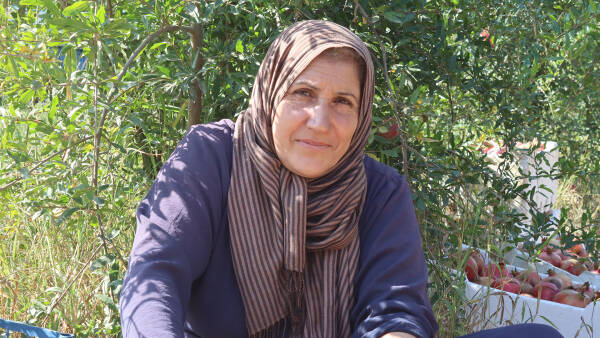
Ghazal Kanjo, 55 years old, owns 800 three-year-old pomegranate trees, and she and her family have been collecting the crop for about a month. Speaking about the reason for her turn toward pomegranate cultivation, she says: “In the past, we used to plant wheat and cotton, but now the majority has turned toward planting fruit trees such as olives and Aleppo pistachios. We, in turn, planted a pomegranate field three years ago and plan in the coming period to plant an orchard of pistachios as well. We rely mainly on a variety of pomegranate known as ‘the French’, whose seeds are distinguished by their deep red color and delicious taste.”
Continuous Care
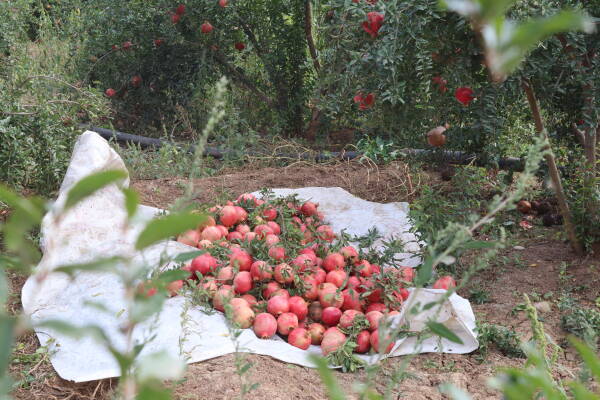
Regarding the difficulties they faced this year, she explained: "Our orchard's production this year was not good. At the beginning, we faced a problem in irrigating the trees as required due to the fuel shortage, and when we were able to secure alternative solutions, it was too late and the trees were affected. As a result, the pomegranate seeds came out small in size and most of them cracked. This is the third time we have collected ripe pomegranates; the first batches were in better condition, but the last picking is in a bad state as you can see."
Ghazal Kanjo concluded her interview by saying: "Pomegranate trees need good service and continuous care from the beginning of their planting, and as much as one takes care of them, they bestow an abundant crop. We store part of this crop for the home, where we make pomegranate molasses from it. Therefore, it is a blessed fruit with high productivity, and its season is considered one of the most important seasons in the region."