
The National Guide to Combating Harassment: A Societal Necessity Amid Exceptional Circumstances
The launch of the National Guide to Combating Harassment and Sexual Exploitation in Syrian civil society organizations represents a step toward a safe and just working environment.
Rochelle Junior
As-Suwayda — In light of weak general protection policies within civil society institutions and entities, and the urgent need for specific policies addressing protection from harassment and violations against civilians, the Equal Citizenship Center in the Syrian city of As-Suwayda, in cooperation with Baytna Organization and a group of civil society organizations across different Syrian regions, worked on issuing a guide to support the development of such policies.
The release of the “National Guide to Combating Harassment, Sexual Exploitation, and Abuse” approximately a month ago within Syrian civil society organizations marks a pivotal milestone in the process of building a work environment based on justice and equality.
This guide is the result of cumulative efforts spanning more than 12 years, offering a practical and flexible framework that helps organizations formulate clear internal policies to protect male and female staff from violations, while ensuring women’s empowerment and effective participation in civil life.
The launch of the guide comes amid a complex political and social context, as civil society organizations face increasing challenges related to licensing, the legal environment, and restrictions on women’s participation. Despite delays imposed by security and political conditions, the guide’s release today reflects determination to move forward in entrenching the values of equal citizenship and building a healthy civil system that starts from within, laying the foundation for a culture of protection and prevention that enhances trust and drives the desired societal change.
Eliminating All Forms of Discrimination Against Women
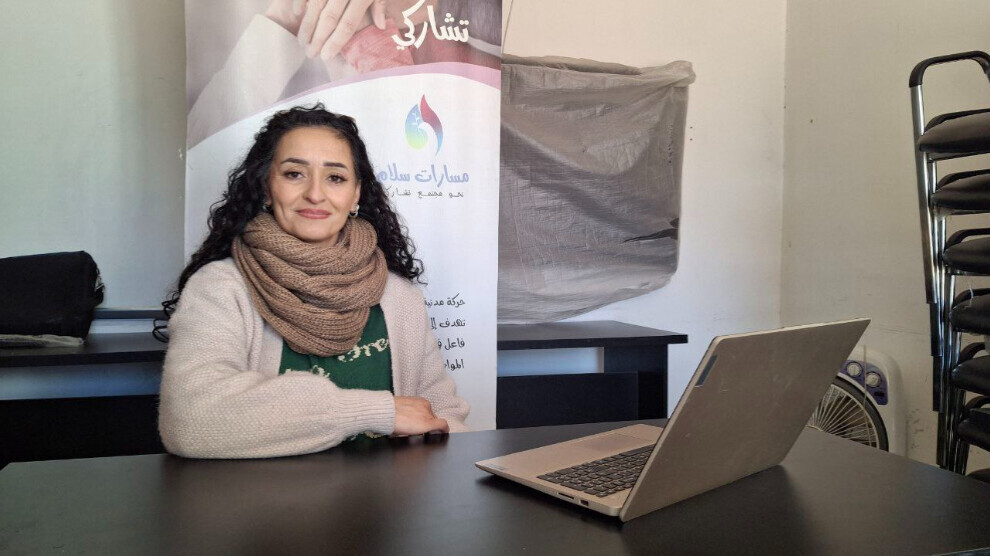
Lawyer, civil activist, and Executive Director of Masarat Salam As-Suwayda Organization, Shorouq Abu Zaidan, stated that the guide was developed as part of a project implemented by the Equal Citizenship Center in cooperation with Baytna Organization, which managed the guide’s preparation. She noted that work on it began in April 2024 and was completed in December of the same year.
The guide was produced at a time when civil society organizations were in dire need of building clear internal policies to protect their staff. “The Equal Citizenship Center has been operating since 2012, based on its belief in the importance of eliminating all forms of discrimination against women and building the concept of equal citizenship between women and men in Syria, with a particular focus on the civil work environment within Syrian geography,” she said.
An Urgent Need and Absent Policies
Abu Zaidan explained that the main reason for preparing the guide was the widespread lack of clear understanding among organizations of the concepts of harassment, sexual exploitation, and abuse, in addition to the difficulty of developing specialized internal policies. This comes at a time when the existence of such policies has become a basic requirement demanded by most donors seeking to cooperate with any organization operating inside Syria.
She noted that the guide was designed as a general and flexible framework that takes into account differences in legal and political contexts and provides practical guidance for building implementable policies in highly complex work environments.
A Participatory Approach Based on Regional Contexts
She clarified that work on the guide took place during a period when Syria was effectively divided into different areas of influence (Northeast, Northwest, interior regions, and the South), each with its own legal systems and operational mechanisms. This required adopting a broad participatory approach with civil society organizations in these regions.
Twenty organizations were selected—five from each region—based on specific criteria related to organizational size, nature of work, existence of internal policies, and licensing status. Local lawyers also participated in intensive regional sessions to provide explanations of the prevailing legal frameworks.
She pointed out that the study revealed significant disparities between regions, particularly regarding licensing, as organizations in the interior regions of Syria often operated without licenses due to restrictions imposed by the former regime.
From Draft to Final Version
After the completion of regional sessions, the first draft of the guide was prepared based on discussion outcomes and desk research. The team then returned to partner organizations to conduct practical trainings on the guide’s content and receive feedback to address gaps. A “Training of Trainers” program was also implemented to ensure organizations’ ability to transfer knowledge and independently adopt policies within their regions. Following the completion of these stages, the final version of the guide was produced.
Delayed Launch and a Changing Context
The guide was originally scheduled for launch in December 2024, but the fall of the former regime and the subsequent rapid political and security changes, along with major violations in several areas, led to a postponement, according to Abu Zaidan.
She also explained that the new context, despite partial changes in licensing procedures, continues to witness restrictions on civil society work and ongoing debate over women’s participation in public life—particularly after their relative exclusion from the political process and decision-making centers—an issue that has also affected women’s reality within civil organizations.
Women’s Empowerment and Creating a Safe Environment
Abu Zaidan emphasized that the primary goal of the guide is to empower women working in civil society organizations, protect them from violations, and create a psychologically and physically safe work environment that enables them to continue, participate effectively, and reach decision-making positions—both within organizations and at the broader societal level—while taking into account the realities of women according to geographic context.
She noted that delays in publishing the guide were also due to targeting of several included regions, most recently the violations and massacres witnessed in the city of As-Suwayda, which prevented the local team from proceeding with the launch as they were occupied with responding to humanitarian and security developments.
A Delayed but Necessary Launch
Despite all challenges, the guide was recently launched following internal consultations within the Equal Citizenship Center, based on a firm belief that civil society organizations must continue their work as a societal voice and a bridge for achieving balance, building policies, and driving change.
In closing, lawyer and civil activist Shorouq Abu Zaidan stressed that building a healthy civil society system starts from within—by adopting clear policies that protect staff, reinforce human rights values, and establish a work environment founded on justice and equality