
What Are the Most Prominent Challenges Facing the Educational System in Egypt?
The school year's start offers students new educational and social experiences but raises questions about the education system's ability to provide an environment achieving learning goals and maintaining students' psychological balance.
ASMAA FATHI
CAIRO– The challenges facing the educational process do not stop at the limits of school curricula or examination methods, but extend to the environment in which the student receives their education, starting from classroom density and the availability of basic tools and equipment, passing through the nature of the relationship between the student, the teacher, and the school administration, reaching the ability of the educational institution to deal with problems that students may face and provide clear paths for obtaining support and assistance.
One cannot talk about the quality of education in isolation from the environment in which the student receives their daily lessons. A crowded classroom, a shortage of some basic tools, or difficulty reaching the administration and teachers when a problem occurs, are all factors that can directly or indirectly affect the student's ability to focus, comprehend, and feel safe within the educational institution.
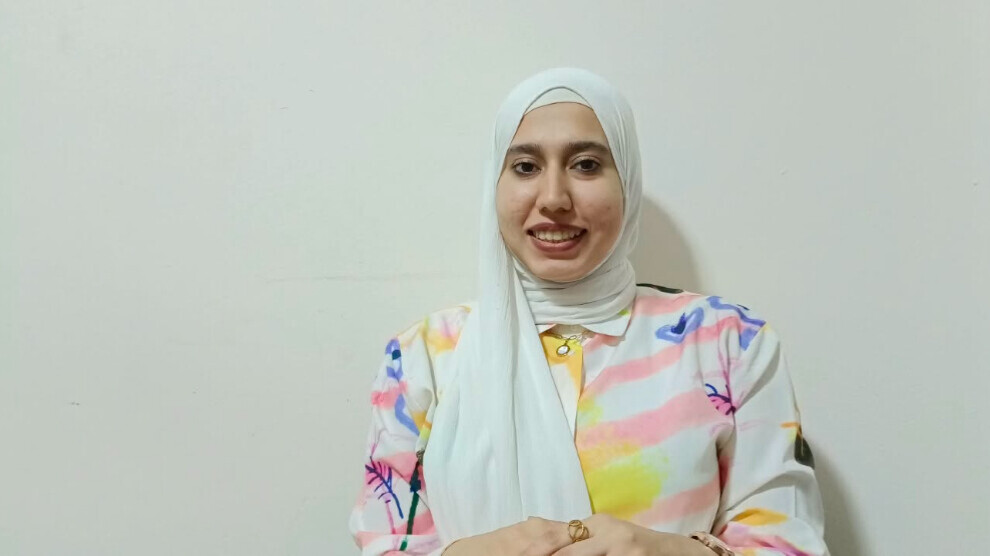
Psychologist Menna Allah Magdy believes that educational institutions primarily seek to meet students' needs, but some details may not receive sufficient attention. She explains that challenges related to infrastructure are not only linked to the building, but include the basic tools that students need, such as seating, chairs, boards, and other equipment.
She adds that among the challenges is also the ease of communication with teachers and school administration when a problem occurs, alongside severe overcrowding inside some institutions. She stresses the importance of providing a safe, spacious, and suitable place for the existing numbers, allowing the best possible level of focus and education. Also, providing the student's needs within the educational institution can help limit their being forced to search for alternatives outside it.
Psychological Pressures Facing the Student
In parallel with material challenges, the student faces pressures that do not necessarily appear in the form of a clear problem inside the classroom, but may gradually accumulate to affect their relationship with learning. Exams, fear of failure, the abundance of homework, and the lack of clarity about what is required, are all factors that may make the student deal with studying as a continuous source of anxiety instead of being a space for learning and acquiring knowledge.
Menna Allah Magdy warns that the apparent calmness of the student or their academic excellence does not necessarily mean that they enjoy a good psychological state. She explains that continuous pressures can over time lead to loss of passion, or to crises and disorders whose effects appear at later stages.
She notes that the student may continue their studies despite losing passion, and may reach a stage where they feel that their effort will not achieve the result they want, especially if they made a great effort and did not obtain the expected total. Therefore, she believes that what is required is achieving a state of moderation; the student is not pressured excessively, nor left without guidance, while also teaching them how to ask for help when facing an educational or psychological problem.
Continuous Assessments
Menna Allah Magdy believes that the idea of assessment in itself is good, because it makes the student attentive to the necessity of studying and preparing. But she believes that exaggerating the repetition of tests may place an additional burden on the student and the family.
She suggests that there should be appropriate time periods between study and assessment, considering that monthly tests can achieve the goal of follow-up without the student turning into a state of permanent preparation for a new exam.
She stresses the necessity of achieving balance, so that assessment is not completely abandoned, and at the same time the educational process does not turn into a continuous series of tests.
A Means of Participation or an Additional Space for Pressure?
With the complexity of the educational process, new spaces have emerged that have become part of family life, foremost among them mothers' groups on social media and messaging applications, which have often turned into a fundamental means of exchanging information related to study, homework, exams, and teachers.
Menna Allah Magdy believes that these groups have positive aspects, as they help mothers follow up on details related to their children, and learn about the nature of the problems facing students. But she notes at the same time that these groups may exceed their educational goal to enter into personal details or turn into a space for disputes and problems.
She warns against reliance on technology turning into complete dependence, confirming that benefiting from digital means has become normal, but technology should not be the only basis for the educational process.
She stressed the importance of combining direct education and electronic education, and not settling for lectures or digital content, alongside encouraging students to use books, libraries, and research in multiple sources, and not accustoming them from a young age to relying on artificial intelligence tools alone to obtain information.
The Teacher, Qualification, and Follow-Up
Menna Allah Magdy explained that qualifying teachers represents a fundamental element, so that the teacher is well-versed in the subject they teach and capable of presenting it appropriately to students. She stressed that their role should not be limited to standing in front of the classroom and providing information, but requires real competence in the educational aspect.
She also suggests providing sessions or training that help students with psychological awareness and building greater psychological resilience, with emphasis on the importance of having time for rest, play, and entertainment alongside study, because building the student is not achieved by study alone.
She stresses the necessity of continuous follow-up of the performance of educational institutions, to ensure that educational plans are implemented well, and to follow up on various levels within the institution in a way that ensures that development does not remain merely written plans but turns into actual practice.
Education reform is a shared responsibility among all elements of the system, as the student, family, teacher, curricula, and technology each influence the other. The priority lies in the school providing most of the student's educational and psychological needs, with clear mechanisms for requesting help when needed.
https://youtu.be/g1cofIUXFg8?si=XicLKYfP3LWab-Ip