
The return of premature babies to Gaza… A story of survival and motherhood torn apart by war
Azhar's story reveals wartime mothers' pain: a child torn from her embrace, returning after months of treatment to face a tent, destruction, and food shortages, while her mother tries to mend what is broken.
Rafif Aslim
Gaza — In mid-November 2023, the Al-Shifa Medical Complex in Gaza was besieged and then stormed by Israeli forces, leading to the suspension of vital services inside. Days later, between 28 and 35 premature babies were evacuated to the southern Gaza Strip. Their condition was critical, with several dying due to power and oxygen cuts. Later, the babies were transferred to Egypt via the Red Crescent, before some families in Gaza received them back, amid emotions mixed with joy and tears.
Baby Azhar left the Gaza Strip on November 22, 2023, along with a group of premature babies, to receive treatment in Egypt. She had been born one month before the war, with an underdeveloped lung, which forced her mother to leave her in neonatal care. When the mother was displaced to the south and tried to take her daughter, the medical staff refused and asked her to leave her to save her life.
She recognized her daughter through her birth bracelet
Heba Saleh, mother of baby Azhar, said that her daughter was transferred from Al-Shifa Hospital to Abu Yusuf Al-Najjar Hospital in Rafah in the southern Strip, where she developed blood poisoning due to oxygen deprivation. She adds that the baby later received treatment in a hospital in the administrative capital of Egypt, noting that she was asked to accompany her daughter, but she apologized due to her responsibility for four other children, contenting herself with signing papers allowing the baby to leave alone.
She explained that when she met her baby for the first time after several months of separation, she only recognized her through the birth bracelet bearing her name. She describes that moment, saying the baby was in a difficult physical and psychological condition, and she never imagined she would run like other children. She considers her return to her a "miracle" that filled her eyes with tears for days.
"Azhar is used to food that is unavailable due to the siege"
Heba Saleh followed her daughter's condition during her time in Gaza City through a friend who visited her constantly, but news later stopped after the hospital siege and the separation of the north from the south. After the baby was transferred south and then to Egypt, and as the war intensified and conditions deteriorated, she lost hope that her daughter would return except after many years, perhaps as a teenager or a young woman.
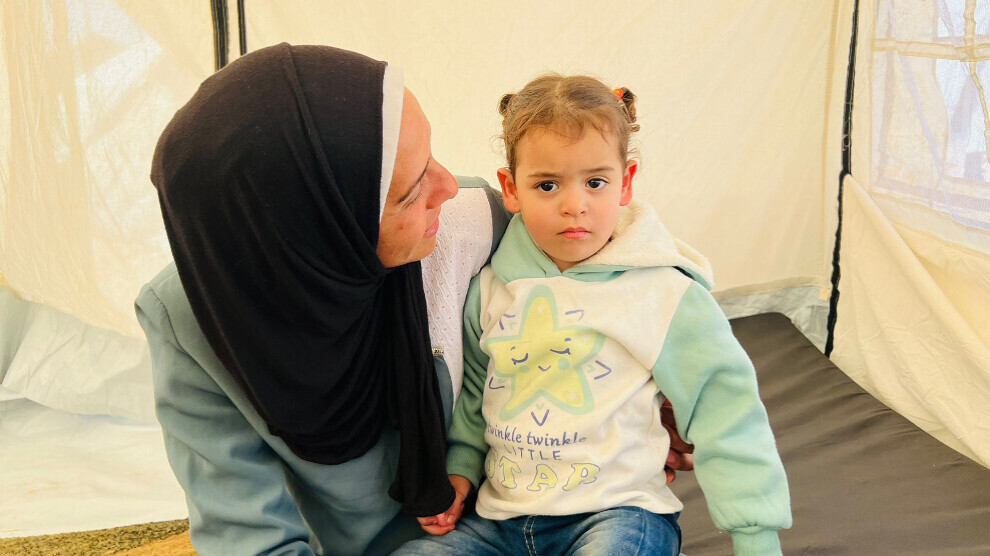
She adds, "The baby did not accept me at first, even though I spoke to her via video and she saw family pictures, but she felt afraid of everything: the destruction, power cuts, and even living in a tent." She notes that even today, she sometimes wakes up to screaming and fear from the tent environment, despite her relationship with her mother improving and her attachment to her siblings.
"Four families disputed over the identity of the children"
Heba Saleh points out that during the reception of some of the returning children, two babies died, while two others left without a guardian and their identification bracelets were lost during transfer from Al-Shifa Hospital. She says that four families disputed over the identity of the children, each presenting evidence and claims that they were their families, and the fate of identifying them remains pending due to the lack of DNA tests in the Gaza Strip so far.
Heba Saleh concludes her speech by saying that Azhar does not always recognize her as her mother, and her youngest daughter, Shams, who is one year younger than her sister, does not know her father, who traveled to stay by his sister's side. She adds that it took many days for the two children to regain a sense of security and gradually reintegrate into the family.