
From Sudan to Gaza…A Diplaced Woman Faces Fear and Hunger Alone with Her Child
Islam Al-Balbisi fled Sudan’s war only to face Gaza’s devastation. She lost her home and family members and now fights to survive alone with her young child.
RAFIF ESLIM
Palestine_ Islam Al-Balbisi fled the conflict in Sudan to Palestine, only to find herself caught in the war that began on October 7, 2023, within just a few weeks. She found herself between the hammer of Sudan and the anvil of Gaza.
Islam Al-Balbisi had traveled about four years ago to settle in Sudan. When the conflict broke out, the Palestinian embassy decided to evacuate her and bring her back to Palestine. However, her husband chose to remain in Egypt and sent her, pregnant in her first months, to spend some time with her family.
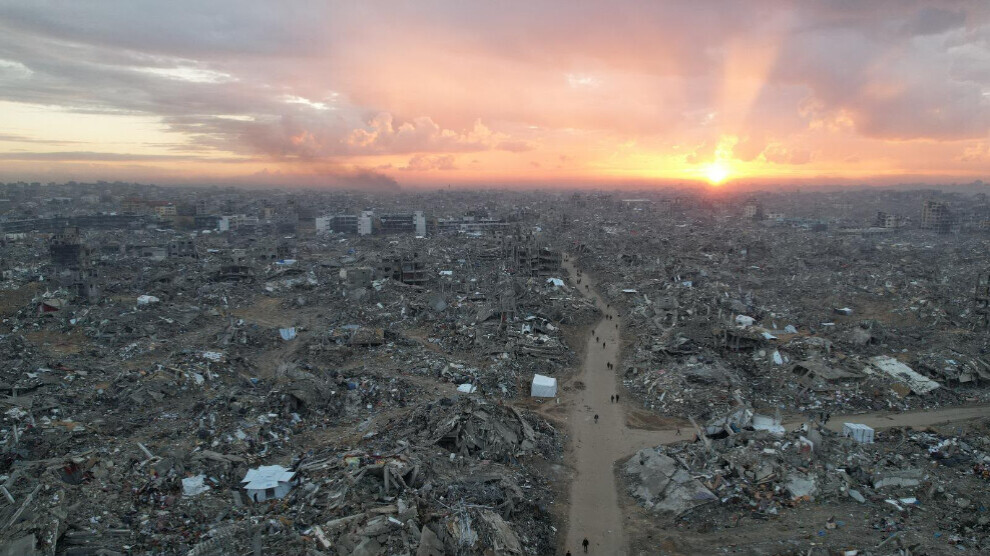
Just weeks later, the war on Gaza erupted, and people began evacuating to Rafah in the southern Gaza Strip—the city that was her mother's home and her family's residence. "Unfortunately, after a few months, I was given a full evacuation order," she says, forcing her to flee alone with her child and face harsh conditions, including the death of her father and brother during the war and a famine that lasted six consecutive months.
Islam Al-Balbisi, a mother who knows no despair, decided to go to aid centers in Rafah, specifically in the Al-Shawka area, to obtain milk and diapers for her child and some food for both of them. She noted that at that place, she saw death with her own eyes, witnessed bodies falling, and even wiped blood off a milk container before leaving with her prize so her child could sleep through the night after hunger had stolen sleep from his eyes.
She believes the war in Gaza is harsher—displacement never stops, neither does the "bloodshed," and the brutal weapons used to kill Palestinians are countless, from bullets and drones to various types of missiles.
An Unknown Fate
Islam Al-Balbisi experienced displacement, fear, hunger, and the dread of an unknown fate during the war in Sudan, but those horrors are incomparable to what she endured in Gaza—entire residential blocks being targeted, collapsing on sleeping civilians. The types of injuries she witnessed in Gaza were unlike anything she saw in Sudan. Yet in both countries, civilians paid the price with death, displacement, and uprooting.
She lost her first home in Rafah in the southern Gaza Strip, and her second in the Sudanese capital, Khartoum. She now lives in a tent made of fabric wrapped around iron poles—if a strong wind blows, it will collapse. She fears the coming winter in such conditions, in a place unfit for living, wishing for an end to this suffering and to leave Gaza.
She graduated from the Faculty of Law in Gaza, but due to the circumstances, she has not been able to find a job or manage her affairs to support herself and her child, especially given the scarcity of humanitarian aid reaching women in Gaza. She noted that due to these ongoing pressures and excessive worry, she has begun to feel countless physical and psychological ailments that may take a long time to recover from.