
Artificial Intelligence... Does It Strengthen Women's Position in the Labor Market or Threaten Their Jobs?
Artificial Intelligence doesn’t appear to be merely a technological revolution reshaping the way we work,produce; it has become a profound transformation imposing troubling questions about the future of jobs,the stability of workers, particularly women.
TAMANI AL-SARWI
Baghdad — While AI technologies open new doors for work and provide women with easier tools to enter the labor market, they simultaneously carry challenges that cannot be ignored—starting from the potential loss of some jobs and ending with the growing need to acquire new digital skills. This transformation raises a fundamental question: Does AI represent a genuine opportunity for women's economic empowerment, or could it become a new factor threatening their professional stability and increasing the vulnerability of certain groups in the labor market?
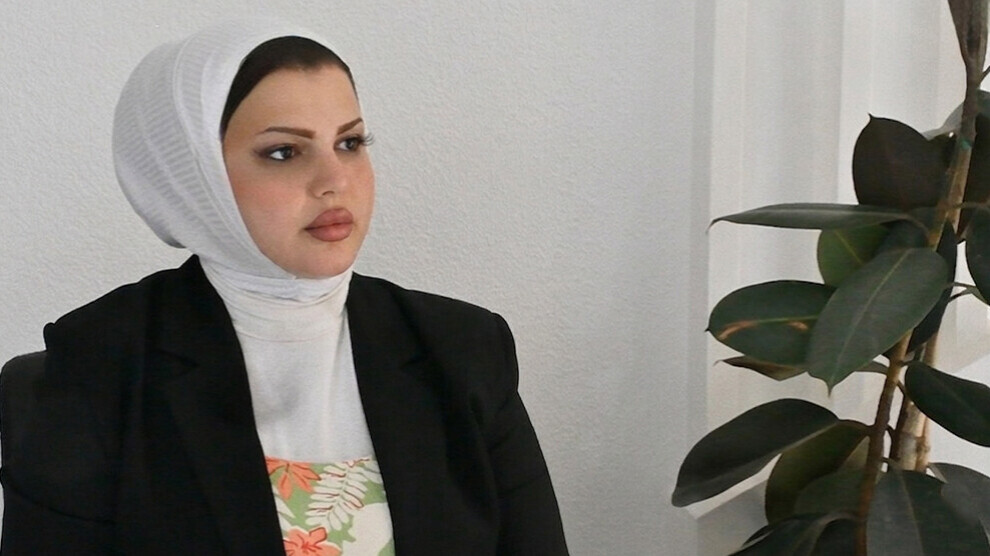
In this context, Dr. Farah Abdel Kafi, a specialist in technology and artificial intelligence, affirmed that the rapid development of AI tools has radically transformed the shape of the labor market and created unprecedented opportunities for women to enter new professional fields without the need for large capital or complex technical expertise. She noted that mastering these tools has today become a genuine competitive advantage for every woman seeking employment or wishing to launch her own project.
New Opportunities with Easier Skills
She explained that many professions previously required years of learning and costly training courses, in addition to working within specialized companies or institutions. However, AI tools have shortened many of these stages, making skill acquisition and production more accessible, thereby opening the door for a wide segment of women to enter the labor market with greater confidence.
She added that work such as advertising and publication design, content production, and photo and video editing are now possible using AI tools that can be learned in a short period, enabling women to accomplish these tasks themselves without high costs or complex technical expertise.
She affirmed that the prevailing belief that AI is reserved for programmers or computer science specialists is no longer accurate, as most current tools are designed to be user-friendly and accessible to everyone, operable via smartphones or computers without the need for programming or coding experience.
She added that these technologies are now present across various sectors—from medicine, engineering, and education, to media, business management, and small home-based projects—offering women wide opportunities to benefit from them according to their specialization or the nature of their work.
Dr. Farah Abdel Kafi explained that AI represents an important opportunity for women's economic empowerment, especially in societies where women face challenges related to mobility or access to workplaces. Women can now manage their projects from home, market their products, prepare advertising campaigns, produce professional content, and communicate with clients using AI tools, without the need for significant expenditure.
Negatives and Challenges That Cannot Be Ignored
Despite the opportunities AI offers, Dr. Farah Abdel Kafi affirms that it conversely imposes increasing challenges on the labor market, particularly for jobs that rely on routine and administrative tasks.
Reports from the International Labour Organization and the International Monetary Fund indicate that women may be more susceptible to the effects of automation due to their higher representation in roles such as data entry, clerical work, customer service, and report preparation—professions where AI technologies can now perform a significant portion of their tasks.
She added that increasing reliance on AI may lead to reduced demand for some traditional jobs, forcing women workers to acquire new digital skills to maintain their positions in the labor market. The widening digital divide is among the most prominent challenges, as women lacking technical knowledge may face greater difficulty competing for future jobs.
She affirmed that between the opportunities AI offers and the challenges it imposes, investment in digital skills and continuous learning remains the decisive factor in ensuring women benefit from the rapid transformations in the labor market, transforming this technology into a tool for economic and professional empowerment rather than a source of concerns related to job loss.
In concluding her remarks, Dr. Farah Abdel Kafi called on women not to fear AI, but to consider it a means of development and economic independence, while emphasizing the necessity of verifying the information it provides—especially in scientific and academic fields—because it remains an assistive tool that can err, and its outputs should not be relied upon without review and verification.