
“Al Shatt” …Hend Al-Khadri Brings Life Back to Gaza’s Shore from the Rubble of War
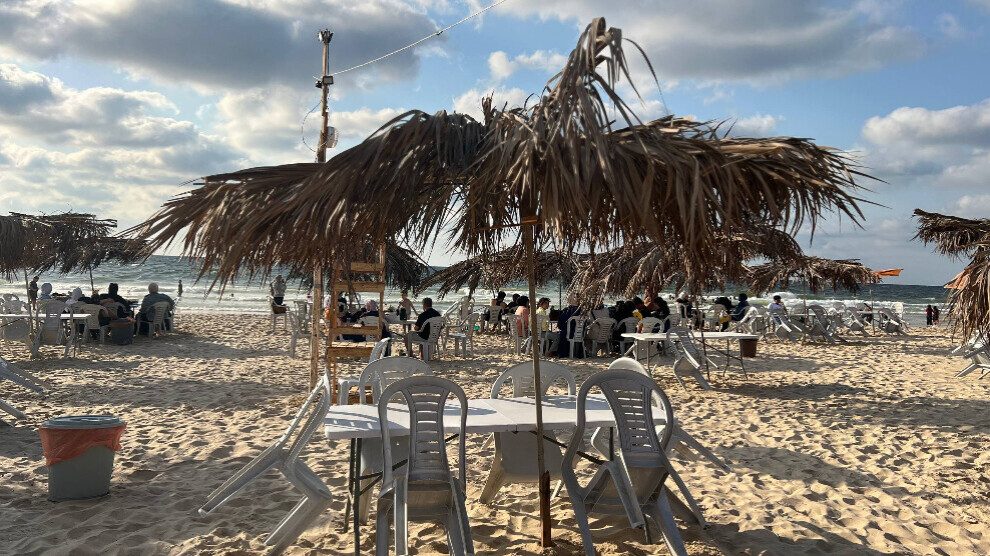
Amid the rubble of war and the tents of displaced people, Hend Al-Khadri is trying to restore some aspects of life on Gaza’s shore through the “Al Shatt” rest area, which she built using recycled materials recovered from the rubble.
RAFIF ESLIM
Palestine_Three years after the war that reshaped the face of the Gaza Strip in Palestine and destroyed large parts of its coastline, life is trying to find small spaces amid the debris. On the seashore, where the tents of displaced people sit alongside traces of destruction, a young Palestinian woman chose to start a project with a different idea.
With simple, environmentally friendly resources, Hend Al-Khadri opened a rest area on the Gaza seashore, using recycled materials or those recovered from the rubble. The project is not only a space to welcome visitors but a small attempt to revive the coastline and create a place where people can gather, even for a few hours, away from the reality of war and its aftermath.
Hend Al-Khadri says that after the three‑year attack and the complete destruction of the coastline along Al‑Rashid Street, including restaurants and rest areas, she and many women found no place to go during summer to relax and decompress by the sea. This motivated her to create the rest area, naming it after the nature of the place itself: "Al Shatt" (On the Shore).
Hend Al‑Khadri did not hesitate to start anew, believing that living in a devastated city still under bombardment is itself a risk, and that investing part of her money in a project that benefits people is worth the attempt.
She believes that "Al Shatt" represents for her a special form of reconstruction, different from the usual. Even the choice of the location, known as the Nabulsi Roundabout, was deliberate; it was previously home to Israeli military vehicles and witnessed several massacres during the war, before turning today into a space pulsing with life and joy.
She noted that her project takes environmental aspects into account, using recycled wood from humanitarian aid boxes and bringing palm trunks from Deir al‑Balah and Khan Younis to build shades. The iron was recovered from the rubble of bombed homes, confirming that most of the place's components were sourced from available materials within the Strip, except for plastic tables and chairs, which Israeli authorities recently allowed entry.
She explained that setting up the project was costly, but there were no other options to start, given the difficult conditions in the Gaza Strip.
A Project That Gives Women a Chance to Escape Harsh Reality
She added that the coastline is now crowded with displaced people's tents: "We cannot escape the reality of losing three years of our lives." This is how the idea for the "Al Shatt" rest area came about—to provide a space that gives residents a chance, even temporarily, to escape the harsh reality they have lived through and offer them moments of calm and detachment from the effects of war.
Despite the tents of displaced people surrounding the place and trying to assert their presence in the scene, the rest area has become a beloved space for visitors and a destination for families and friends. People also come to visit the sea for the first time since the war began, in an attempt to regain something of the normal life they have been deprived of.
"Al Shatt" rest area welcomes anyone wishing to work by the sea, affirming that the place is open to everyone and delights in these visits. Hend Al‑Khadri says that what gives her the most happiness is seeing children playing and laughing with paper plates.
Obstacles and Difficulties
Regarding the difficulties she faced, she says that every detail of the project was an obstacle, from transportation and providing the electricity needed to make wooden chairs, to bringing fresh water to the location, in addition to the crazy rise in prices of raw materials, soft drinks, and snacks.
She recounts that one of the lifeguards working on the beach told her: "When we first saw you, we didn't expect you to continue your project because of all these difficulties. But when you persisted, you not only succeeded but brought life to the place."
Today, Hend Al‑Khadri needs to develop her project, especially with the growing demand from visitors and vacationers, while her financial capacity stopped at the opening stage. She is currently seeking to gradually expand the project by reinvesting its profits, asking why the entry of shades is prohibited: "What prevents shades from entering? Why do Israeli forces ban them?"
She notes that the project now employs ten workers, meaning she has become responsible for providing livelihoods for ten families, and she hopes this number will rise in the coming period, to continue giving hope to people, just as Gaza always gives her hope. She affirms that it is a city "that deserves our time and effort."