
Afghanistan…A Stolen Childhood on the Roadside Pavements
In the streets of Afghanistan,children work to provide bread for their families_from shoeshining and street vending collecting waste.Children whose childhood has been tied to street labor by poverty, insecurity,and the absence of employment opportunities.
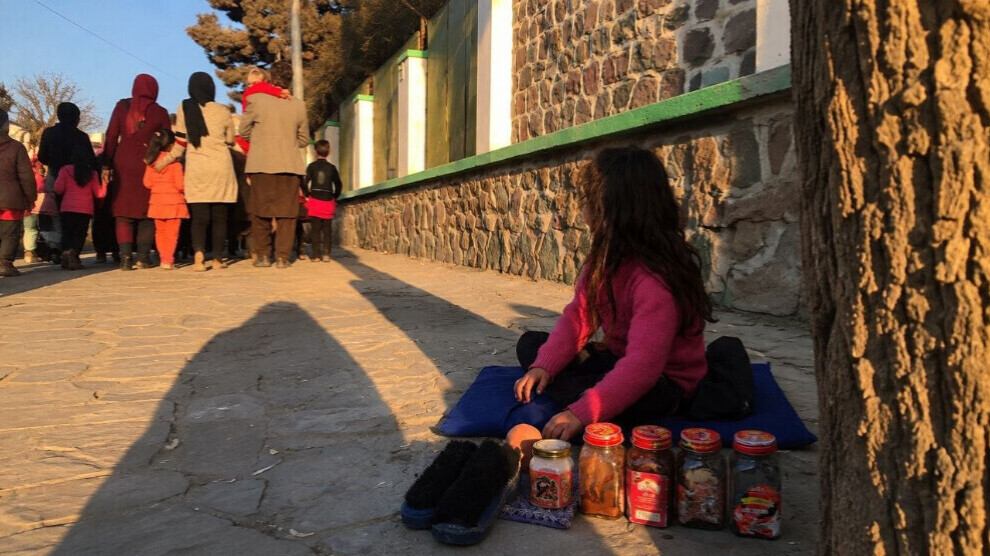
Kabul_Child labor is one of the serious problems in Afghanistan,with children working in various provinces selling plastic bags,shining shoes,repairing cars and bicycles,as well as begging,working in mines,selling water,and street vending to cover their families’living costs.Many are even the role breswinners for their families.
Child labor in Afghanistan has a long history, but after the Taliban's return to power and the decline in employment opportunities, the proportion of children in the labor market and on the roadside pavements has increased. Due to their young age, these children typically receive meager wages and are subjected to humiliation, contempt, and violence from employers and others. Reports have also emerged of working street children being arrested and treated violently.
According to a 2023 United Nations statistic, despite the absence of precise figures, the number of working street children in Afghanistan was estimated at over one million. In contrast, the Taliban rejected this statistic and claimed that the number of working children is only between three and four thousand.
UN reports have also warned of the risk of child exploitation, including sexual exploitation, amid the dire conditions Afghanistan is experiencing.
Among these children is Noriah Azimi, 10 years old, who works shining shoes on a street in Kabul. She said: "I leave home every morning at six. I walk for hours to reach this place, then I shine people's shoes—those who come to go to their jobs. Most of them give me some financial help on top of the work payment."
When asked if she had ever been arrested by the Taliban, she said, after arranging her hair with a childish smile and thin hands: "No, because my brother sells water a few steps away from me and protects me. He's the best brother in the world. He has saved me from the hands of the Taliban several times, and we escaped together."
During the conversation, the girl would occasionally look at her brother, ready to leave the place immediately if she saw any sign of danger. Her brother was also a child, about 12 or 13 years old.
Regarding the reasons that pushed her to work, she said: "We are six people in the family. My father suffers from kidney disease and cannot work, and my grandmother is also sick and lives with us. I and my two older brothers provide our daily sustenance of dry bread by selling water, plastic bags, and shining shoes."
Noriah Azimi's greatest wish was to one day have enough money to take her family to one of Kabul's restaurants and eat whatever they wanted, to feel full at least once.
A short distance away stood Bahar.N, 8 years old, who was selling pens on the roadside while simultaneously collecting empty water and soda bottles. At this early age, she carries the heavy burden of life on her shoulders.
She says: "Sometimes I fall asleep on the roadside. Some people passing by take a pen from me and give me more money than its price, but other times, someone kicks me with their foot to wake me from my place and tells me this is not a place to sleep."
During the conversation with the girl, fear, joy, and fatigue could be seen alternately in her childish eyes. When she spotted a group of Taliban elements at a distance, she quickly left the spot without continuing the conversation and disappeared into the nearby alleys.
The life story of Bahar and Noriah is not merely the story of two girls; it is a narrative of millions of children who face immense difficulties every day. Children who traverse Afghanistan's streets in search of a livelihood, to secure a few pieces of dry bread to survive tomorrow.