
Afghan Hairstylists Defy Taliban Restrictions with Secret Work
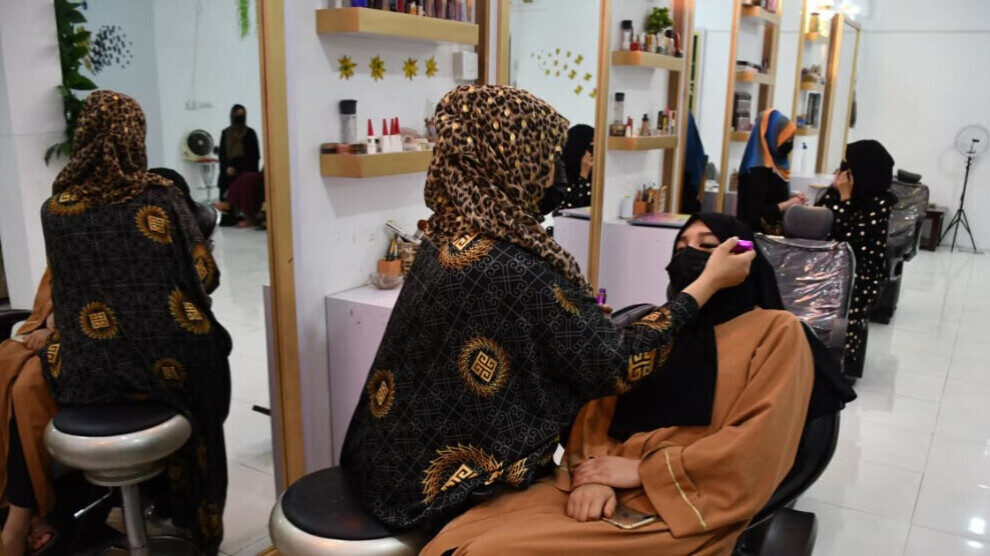
The ban on women's beauty salons in Afghanistan has pushed hairdressers and beauticians to work in secret; yet some continue to resist the restrictions imposed by the Taliban.
BAHARAN LAHIB
Bamiyan — Women in Afghanistan turned to various professions to secure their livelihoods and continue their lives, but with the Taliban's return to power, they faced different problems and challenges.
Afghan women say sarcastically: "The Taliban only want us to beg—to stand on street corners with our young children and get money. If they wish, they arrest us and keep us for hours and days in their prisons. This is the only humiliation they allow us."
Among the professions that flourished in Afghanistan over the past twenty years is hairdressing and beauty work—a profession that does not require higher education and is usually learned by women from one another. Before the Taliban's return to power, hairdressers earned better income because women were their main customers. But with many women losing their jobs, the boom in hairdressing work also declined.
Initially, when the Taliban took power, they began step by step to restrict women's activities. After a few months, orders were issued to all women's beauty salons to remove photos displayed inside and outside their shops. In salons that did not comply, Taliban members covered the images with white paint themselves.
Later, the Taliban announced that women's beauty salons were no longer permitted to continue their activities. Women were forced to move their tools to their homes, but they were not safe even there. Brides and hairdressers were pursued, and in some cases they faced imprisonment.
To find home‑based beauty salons, women were also sent from street to street to check whether a beauty salon was operating inside a home. If information confirmed such salons existed, measures were taken to arrest the workers.
Jamila Kazemi from Bamiyan spoke about her work and experience: "I have had a beauty salon for nine years. I loved this work; it was a very good project. I worked for several years, and after the Islamic Emirate came, they closed the salon. They did not allow us to work."
She added: "During this time, I trained a number of young women in Bamiyan, and before that many trainees graduated under me in Herat. Many trainees came to me and received training, but they are not working. Some resisted by reopening their shops and continuing their activity."
Jamila Kazemi says she does not have a license to work: "Since the salon was closed, we started working illegally. I also work in tailoring."
Regarding the Taliban's treatment of her, especially the religious police (commanding right and forbidding wrong), she said: "They came several times and were very angry. They arrested me twice and said we must not continue this work. But we did not listen to them and continue our work."
She added: "They say this work is illegitimate, illegal, and un‑Islamic. Do not do this work, especially in markets; go to women's homes and do their makeup there. When a woman beautifies another woman, everyone looks at her, and you also share in the sin. Sometimes they also claim you harm people's economy. They say you do makeup and take a lot of money, costs rise, and this must end. This work should not exist in an Islamic society."
She noted that the working conditions for other hairdressers, especially her trainees, are difficult: "Before Taliban rule, three of my trainees had their own shops and worked there. They were active and satisfied with their work. Now, when they work, they follow the same method I do. They also work in tailoring, and alongside it, they continue in hairdressing and beauty."
In conclusion, Jamila Kazemi addressed a message to women, saying: "Women must continue their work, and in the end we will see what happens."