
A Sudanese Woman Breaks the Silence of Violence to Write Her Freedom
In Sudan, many women face various forms of domestic violence, often forced into silence under the weight of traditions and laws. Their stories stand as witnesses to prolonged suffering and a continuous struggle for freedom and dignity.
Mervat Abdel Qader
Sudan — Violence against women in Sudan remains one of the most pressing challenges faced by women’s rights organizations striving to combat it. The country is governed by customs, traditions, and social norms that at times override both religion and law.
Many women in certain Sudanese communities suffer from domestic violence at the hands of husbands or brothers, with some customs and legal frameworks viewing such violence as a man’s right within the household. This leads to the woman’s suffering being ignored by both family and society.
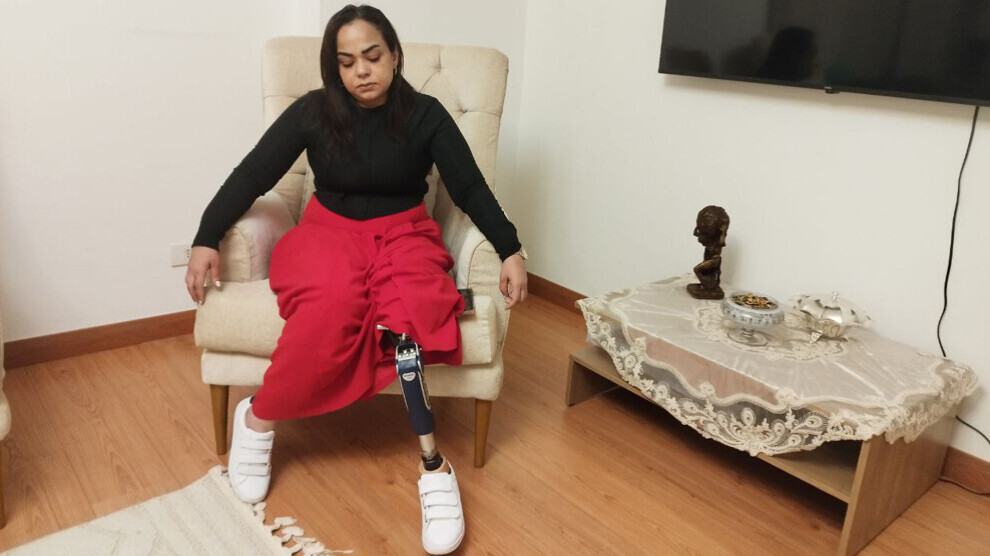
Dina Amir, now forty years old, never imagined that her marriage would end with her losing her leg. After a decade of enduring every form of violence inflicted by her husband, she finally gathered the strength to seek a divorce. Breaking her long silence, she chose our platform to share her experience and bring her story to the world.
Dina explains that she married ten years ago and now lives in a Gulf country, but life did not unfold as she had hoped.
“I found myself with a narcissistic man who cared only for himself — emotionally cold. I endured him for the sake of my children. He subjected me to every form of invisible abuse: abandonment, emotional neglect, denying my needs, and preventing me from visiting family and friends.”
Economic and Psychological Violence
Dina states that her husband was unemployed, yet forced her to financially support him and meet his needs. When she resisted his exploitation, he seized her money and property. Matters escalated to the point where he deprived her of seeing her own children.
This difficult situation severely affected her health. She suffered dangerous physical and psychological conditions, including repeated blood clots that ultimately required the amputation of her leg, among other complications. Despite her suffering, her family only supported her after her health and financial situation completely deteriorated. Only then did her mother and sisters stand by her and encourage her to seek a divorce. After numerous court sessions, she finally obtained it—but walked away having lost everything.
She recounts enduring severe verbal abuse and insults. When she requested a divorce to end the violence, her husband publicly slandered her, her family, and her reputation, which worsened her psychological and physical condition.
A Law That Fails Women
Personal status laws often view women as the weaker parent, supposedly incapable of raising children. This results in many courts granting custody to fathers. Dina explains that her husband exploited her disability after the amputation, filing a lawsuit claiming she was unfit to care for the children. The court ruled in his favor, and she lost custody.
In the past, violence against women in Sudan was even more widespread. Disregarding women’s rights, undermining their autonomy, and normalizing abuse were deeply rooted in cultural traditions. Some men even prided themselves on subduing their wives and enforcing obedience, even through physical violence.
Dina recalls how her father used to beat her mother in front of her and her siblings — leaving her with a deep fear of marriage. When she eventually married, she found herself repeating the same cycle of violence with a husband who mirrored the behavior she witnessed growing up. Yet her mother continued advising her to “be patient” and preserve her home and children, believing that psychological abuse was normal in marriage as long as it did not escalate to physical violence.
A Message of Resistance
In a message to women in Sudan and across the Arab world, Dina emphasized the importance of refusing silence in the face of violence, stressing that freedom is more valuable than anything else.
Dina Amir represents thousands of Sudanese women who face multiple forms of violence yet find themselves forced into silence, unable to speak about the abuse they endure