
Moroccan researcher calls for consuming seaweed to enhance public health
Research highlights the importance of incorporating seaweed as dietary supplements rich in minerals and vitamins, especially for women suffering from iodine and iron deficiency, making it a pillar for improving nutrition and preventing certain diseases.
Rajaa Khairat
Morocco — Moroccan researcher Wafaa Charifi, at the Aquatic Biotechnology Laboratory of Cadi Ayyad University in Marrakesh, is leading a scientific project advocating the consumption of dietary supplements based on marine or freshwater algae to enhance public health.
Moroccan researcher Wafaa Charifi explained that women are more concerned than others with consuming these supplements, as they record the highest rate of anemia and many symptoms caused by acute deficiency in certain minerals essential for public health.
About this project, she says: "As researchers at the Aquatic Biotechnology Laboratory at Cadi Ayyad University, we work on developing several research axes related to algae, especially in the field of nutrition. Algae can be considered sea vegetables because they are rich in essential and beneficial substances for public health, such as minerals, vitamins, high-quality proteins, and sugars whose concentration varies depending on the type of algae."
She added that these algae cannot replace land-grown vegetables and fruits, but they remain dietary supplements that should be incorporated into nutrition and daily meals, especially marine algae rich in iodine, which is not found in vegetables and fruits. In Morocco, many people suffer from acute deficiency of this vital substance, especially women who suffer from thyroid problems.
She called for consuming these dietary supplements, especially since Morocco overlooks the Mediterranean Sea and the Atlantic Ocean, which gives it great richness, with more than six hundred species of marine algae that can be exploited in the field of nutrition, as well as in other fields such as cosmetics, similar to what Asians do, to improve nutritional quality and reduce certain diseases associated with mineral deficiencies (anemia).
Regarding whether there are health complications for consumers of these algae, she explained that some types are not suitable for consumption, and there are designated areas for the growth of edible algae that should be adopted for harvesting. These are determined according to precise scientific criteria, including knowing the source of these algae, their growth methods, and whether they pose a risk to human health, among other factors. It also requires conducting precise research in specialized laboratories to determine whether these algae are toxic before directing them to markets. As for the quantity to be consumed, specialists in diet and nutrition should be consulted to determine the deficiency. It is recommended to consume green algae for iron and magnesium deficiency, while brown algae are recommended for those suffering from iodine deficiency and thyroid problems.
Women are primarily concerned with consuming these supplements
Regarding who are more concerned with consuming algae than others, Wafaa Charifi explained that all people need to consume these supplements, especially children who often suffer from iron deficiency. They should be encouraged from an early age to incorporate these dietary supplements into their meals because they are rich in minerals and vitamins, especially green algae.
Regarding iodine deficiency, she mentioned that women are more concerned than others with consuming brown algae, as many women suffer from thyroid problems resulting from iodine deficiency, noting that women are primarily concerned with consuming these supplements and encouraging their children to consume them as well.
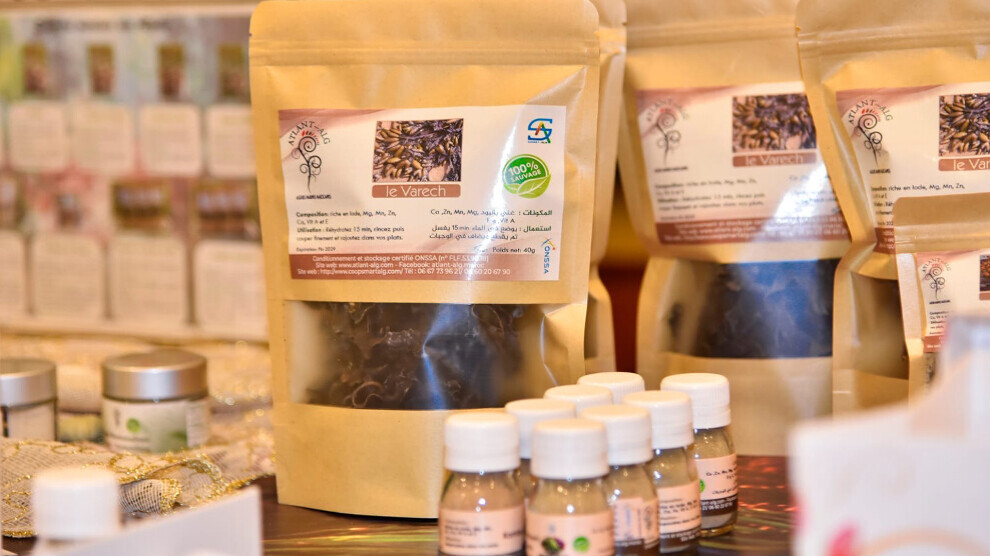
Regarding consumption methods, she explained that algae come in the form of leaves, like black algae, which are soaked in water before consumption and can be added to many dishes such as rice and soup. They can also be used in powder form or other forms.
Regarding methods of raising awareness about the importance of consuming dietary supplements derived from algae, she noted that Moroccans are far from this food culture compared to Asians who rely heavily on them in their dishes. "Our role as researchers in this field is to raise awareness of the importance of these dietary supplements by organizing scientific seminars and conferences highlighting the latest developments in scientific research in this field. We also organize field meetings hosting student researchers and young people to learn about the types of algae and their role in nutrition."
She pointed out that all this remains insufficient to establish a food culture based on algae consumption. Therefore, researchers should be encouraged to develop projects and bring their research out of university shelves and storage, and disseminate information in this framework so that the benefit is widespread and algae consumption becomes a prevailing culture among all citizens.
At the conclusion of her speech, Wafaa Charifi called on families to "invest in digital platforms and websites to learn about the benefits of algae and their importance in improving nutritional quality, by incorporating them into Moroccan dishes."