
Tunisian artist paints on water and turns colors into stories
Tunisian artist Zahra Zarrouk discovered Ebru art by chance, finding in it her refuge from breaking, her life's message, and a shelter for women to express their pains.
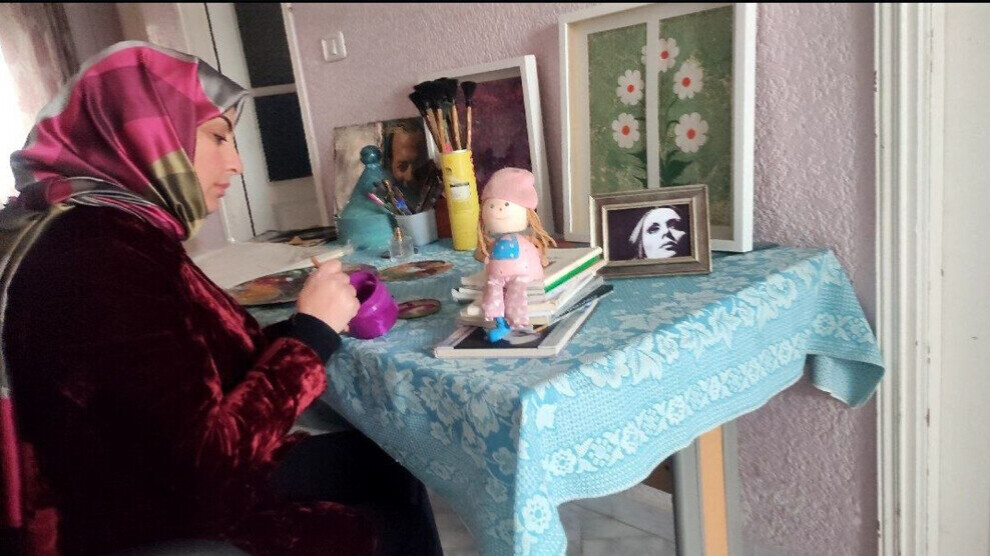
Zahour Al‑Machreki
Tunis – In the experience of Tunisian artist Zahra Zarrouk, a tale of passion is revealed that transcends the boundaries of creativity to become a quest for beauty, memory, and humanity. Through the art of Ebru, which makes water a mirror for colors and the soul, the artist unveils a world where craftsmanship intertwines with history, skill with identity, reviving a visual heritage that for centuries has been part of the memory of books and arts in Tunisia.
In a conversation overflowing with passion, Tunisian artist Zahra Zarrouk revealed her extraordinary journey with the art of "Ebru," also known as "painting on water," noting that books in that period were distinguished by exceptional quality and craftsmanship (Le Reliure). The durable animal leather on the outside blended with the marbled, colorful Ebru paper on the inside. This blend was not aimed only at beauty but reflected a development in preservation and bookbinding techniques that allowed books over 200 years old to retain their luster to this day.
This art is evidence of the cultural openness that Tunisia experienced and its keenness to acquire the finest handicraft arts in the world to protect its intellectual heritage.
Art is the refuge
Artist Zahra Zarrouk affirmed the pivotal role that art plays in restoring community bonds and refining the human soul, pointing out that the Ebru art workshops she supervises are not limited to being a space for technical education; they are a meeting place for diverse human stories.
She explained that trainees come from varied backgrounds and ages, ranging from their twenties to their eighties, to find in art a psychological treatment and a space to express their own stories, all of which melt together into a single painting.
She stressed that art is the most powerful tool to confront phenomena and tensions in societies, describing it as the "savior" that refines morals and gives the individual a spiritual energy that distinguishes them even in their appearance and daily behavior.
In a message addressed to families, she called for the necessity of directing children toward manual and aesthetic creativity such as music, theater, and drawing, instead of drowning in technology. "Give your children a paintbrush instead of a phone. Let them release their energy in 'scribbling' on paper and walls; it is better than distorting society's reality with deviant behaviors. Art alone is capable of building a sound and balanced society."
She reviewed her research career, which culminated in the publication of her book "A Tour in the Sanctuary of Water." This is the first book of its kind in Arabic that documents the history, techniques, and spiritual aspects of this art, especially in the Tunisian context since the Husseinite era. She also spoke about her international achievement of winning the bronze medal in the International Creativity Competition in Australia, based on a scientific paper that researched the energy of water and colors, affirming her role in reviving this artistic heritage and presenting it as an academic and creative reference in the Arab region and Africa.
Ebru as a human experience
She explained that the relationship of an artist mother with her children goes beyond the boundaries of traditional care to become a deeper and richer human experience. Motherhood, between the artist's brush and the reality of life, gains different visual and psychological dimensions, giving the child a unique opportunity to grow in an environment stimulating creativity and awareness. She affirmed that "artistic motherhood" creates a different vision of things. "Although the role of motherhood is instinctive and deep in all women, the artist mother possesses a special viewing angle that reflects positively on the child's psychological balance, compared to growing up in the care of a mother who practices other traditional professions or specializations."
From playing with a brush to social awareness
She said that a child who grows up in their mother's studio (workshop) begins to explore the world through colors and brushes from their early years. This early interaction is not mere entertainment; it is a tool for building a distinct and different personality in society, possessing a high level of awareness and ability for self‑expression. It is not necessary for the child to confine their future to plastic arts; rather, this aesthetic foundation opens horizons for them to excel in other fields, whether literary, scientific, or athletic.
From the youngest female writer to a sports champion
The artist cites her personal experience in raising her daughter, who began her creative journey at the age of six. At that time, she won the award for "the youngest female writer in Tunisia" during her participation in an artistic and literary festival, distinguishing herself in poetry writing and active participation in literary festivals and children's exhibitions.
Today, her daughter is eighteen years old and preparing to take her baccalaureate exams, relying on a background of academic and athletic excellence. Her initial passion for art and beauty led her to transition toward the "world of seas" and water sports, achieving championships and medals.
Artist Zahra Zarrouk concluded by saying: "The highest thing that art can offer to motherhood is the ability to raise a successful, sound human being, capable of benefiting their community and country."