
Madya Qandil:We Aspire to a Cinema That Reflects Society’s Issues and Documents Women’s History
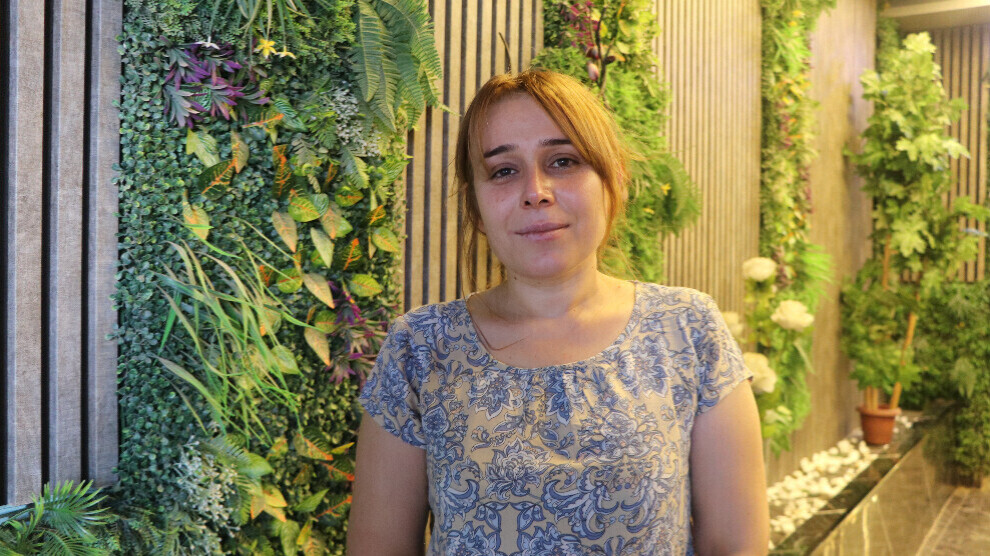
Medya Qandil, a preparatory committee member for the Rojava Cinema Conference, affirmed the need for a filmmakers' union, noting cinema's role in documenting society's history and women's struggles while building cultural awareness.
NAGHAM JAJAN
Qamishlo-Cinema is among the most prominent and influential forms of artistic expression in shaping collective consciousness and forming the cultural memory of societies, It is not merely a means of entertainment, but a space that reflects the reality of peoples, raises human and social issues, and opens the door to the exchange of ideas and experiences across different cultures.
Cinema gives women a space to express their stories, experiences, and the challenges they face, while also allowing them to highlight their achievements and diverse roles within society. Through participationin various aspects of filmmaking_whether acting, directing, writing, or production_women are able to move beyond restrictiona and strengthen their presence in the cultural and creative scene. From this standpoint, cinema stands as an influential tool for raising women’s issues, supporting their empowerment, and reinforcing values of equality.
In this context, the Rojava Cinema Conference was held in the city of Qamishlo, Rojava, from July 24 to 26, with the participation of filmmakers and those interested in cultural affairs. The conference discussed the current state of cinema, the challenges it faces, and ways to develop it in the future, alongside examining women's role and contribution to filmmaking.
Speaking to our agency, Medya Qandil, a member of the conference's preparatory committee, affirmed that there was a strong need to hold a conference bringing filmmakers together to discuss the state of the field, explaining: "Some time ago, all the filmmakers in Rojava met to discuss the state of cinema, and from there the need arose to organize a conference of this kind. The goal was to open the way for new steps in the artistic field, particularly cinema, alongside exploring ways to raise awareness about cinema, define its role, and discuss the obstacles standing in the way of its development."
Focus on Women's Role in Cinema
Regarding the main themes addressed by the conference, Medya Qandil explained that discussions focused on several issues, including the state of cinema and women's role within it, as well as its relationship to society and the Kurdish cause.
She added: "During the conference, we discussed many important issues, including how cinema can be a voice that expresses society, and how filmmakers should reflect social, historical, and sociological dimensions in their work. We also gave special attention to the importance of women's participation in filmmaking, film management, and various fields of cinema."
She explained that cinema inherently carries a social message, affirming that every film has content and a message capable of influencing society: "The conference saw wide participation from women, which reflects the growing importance of their presence in the cinematic scene," adding, "We aspire for cinema to become an effective means of documenting society and preserving the history of women and their struggles. Given the harsh conditions, challenges, and ongoing attacks the region continues to face, we discussed the role cinema can play in expressing people's issues and presenting perspectives capable of touching their reality. Every cinematic work carries a message for society, and through these messages, cinema can contribute to building awareness and strengthening collective memory. We aspire to continue this work and take new, important steps toward securing a more advanced future for cinema."
Half of the Participants Were Women
Medya Qandil noted that the majority of participants came from Rojava, explaining that the conference was attended by 100 delegates, including directors, writers, and cinematographers, with women making up 50 percent of participants: "Most of the participants were from Rojava, alongside the participation of a number of figures from across Syria."
Regarding the conference's outcomes, she affirmed that the three-day discussions produced important decisions: "The conference achieved its goals after a series of discussions, and among its most notable outcomes was the establishment of the Rojava Filmmakers' Union and the election of a committee to oversee and organize cinematic work. Filmmakers also affirmed their readiness to put all their capabilities in service of the community."
She stressed that education and training form the essential foundation for advancing and developing the cinema movement, affirming that the conference gave special attention to this aspect: "Among the most notable decisions to come out of the conference was giving priority to education and training as the basis for expanding the cinema movement and strengthening its development. A dedicated track was also allocated to supporting women's work in cinema and enhancing their participation."
Medya Qandil, member of the conference's preparatory committee, concluded by saying: "Since we are part of Syria, it is essential to expand our relationships and exchange expertise with actors within and outside Syria. At the same time, we believe the coming phase requires joint cooperation among filmmakers across the four parts of Kurdistan, in a way that contributes to developing cinematic work and strengthening its presence."