
Solidarity Campaigns for Independent Cultural Spaces in Tunisia
Tunisian cultural spaces face pressure as advocates launches solidarity campaigns against restrictions on public and intellectual freedoms.
NAZIHA BOUSSAIDI
Tunis — Tunisian men and women advocates of freedom of thought and expression have launched a broad solidarity campaign in support of cultural spaces that have recently faced pressures and harassment, foremost among them the "El Rio" cultural space in the capital, which is preparing to celebrate its centenary next year, in addition to the "Bizerte" Cinema Association, which has likewise been subjected to attempts at restriction.
Opponents of these measures consider that the matter is not about cultural institutions per se, but about the vital societal role these spaces fulfill. Independent cultural spaces are no longer merely exhibition halls or cinema festivals; they have become platforms for public debate, the exchange of ideas, hosting civic initiatives, organizing intellectual seminars, rights-based activities, and political meetings, thereby providing space for voices that often struggle to find alternative platforms.
They believe that restrictions on these spaces do not only affect cultural life, but extend to the entire public sphere, limiting spaces for dialogue, undermining pluralism, and weakening society's capacity to produce free and responsible debate.
They also consider this form of restriction more dangerous than outright prohibition, as it produces self-censorship. When cultural space operators see what happens to others, they begin to delete sensitive seminars, avoid certain partners, distance themselves from rights-based files, and limit themselves to "safe" activities that do not attract attention. Thus, the political objective is achieved without issuing a single prohibition order. Fear becomes the censor, and silence becomes an undeclared public policy.
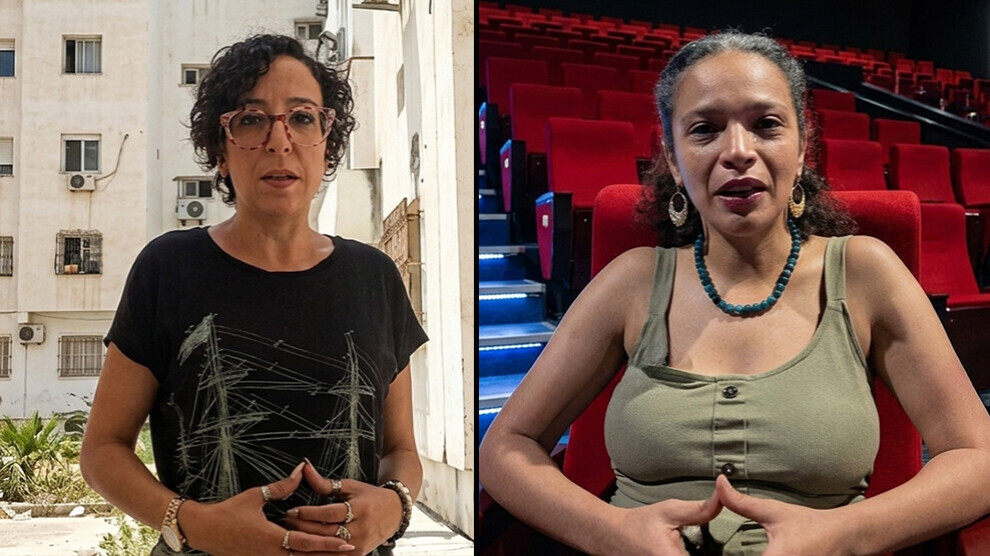
Doha Gallali, an activist with the "Musawat" (Equality) organization, believes that what is happening does not target El Rio space per se, but falls within a broader policy of restriction: "El Rio is a respectable cultural space currently subjected to harassment. I extend a message of support to it and to all independent cultural spaces facing the same pressures within the framework of a general policy of suffocating people and country."
She condemns the deprivation of public funding, the closure of its affiliated café, its exclusion from hosting major festivals and events, in addition to inspection visits targeting its relationship with civil society. She considers these practices "extremely dangerous" because the space, as she says, "has always been open to everyone, hosting respectable and committed cultural and artistic activities, and receiving civil society events, including those of a political nature—perhaps that is why it is being punished today."
She affirmed that any pressure on El Rio or any restriction targeting the venue remains rejected and condemned, emphasizing the rejection of all forms of repression imposed on public and intellectual freedoms. She added that the cultural scene in Tunisia cannot flourish or develop unless the hand of pressure and repression affecting everyone is removed, considering the protection of independent cultural spaces a fundamental condition for preserving pluralism and ensuring the continuity of cultural life.
Doha Gallali stated that she knows this situation will not last, just as pressures previously imposed on other cultural spaces and generations of intellectuals and activists in the cultural trajectory did not last. She affirmed that what is happening today will one day come to an end, and that this certainty is what drives them to continue resisting and defending freedom in all its forms, and to condemn all repressive practices and attempts at harassment that some believe may intimidate or frighten people, but which in reality, she says, only strengthen their determination to continue their path.
Media professional Rabab Al-Sarairi stated that El Rio space has been, over decades, a meeting point for artists and intellectuals, young and old, and has always been like a "grand house" welcoming everyone regardless of their cultural, intellectual, political, or ideological affiliations. She noted that this space has played a pivotal role in consolidating the spirit of pluralism and opening the field for free creativity.
She added: "It is truly unfortunate that a venerable space with a long history becomes threatened in the context of restrictions on private cultural spaces—those that have been and remain a fundamental support for freedom of thought and creativity in Tunisia." She believes that attacking these spaces directly affects society's capacity to produce free and diverse culture, and weakens one of the most important pillars of independent cultural life.
Support and Solidarity
The restrictions on cultural spaces have met with widespread disapproval from civil society and some cultural structures, which expressed absolute support through the issuance of statements. Among these structures is Dar Kharef Publishing House, which expressed in its statement its full solidarity and support for the El Rio cultural space, which today faces difficulties threatening the continuity of its activity and cultural role.
It called for supporting and protecting independent cultural spaces in Tunisia as a collective asset, a historical document, and a fundamental pillar of cultural life.
The Tunisian cultural association "Actif" expressed in a statement its full solidarity with the "Bizerte" Cinema Association, adding that the Bizerte Cinema Festival represents an important cultural and artistic event that has, throughout its editions, contributed to enriching the national cinematic scene, opening the field for creators and young people to present their work and exchange experiences, and has also formed a space for the public to meet cinema in its most splendid manifestations. The effort and diligent work exerted by the Bizerte Cinema Association to ensure the success of this event deserves all appreciation and praise.
It stated: "We are fully aware of the scale of the challenges facing cultural associations in their daily work to maintain the continuity of such events, and we express our full solidarity with the association's team in these circumstances, with our great appreciation for their patience and determination to continue the mission despite difficulties."
In general, independent cultural spaces are outlets for free expression, and restricting or closing them constitutes a restriction on every free word and every free breath, and a normalization with the politics of fait accompli.