
Yalda” Celebrations in Eastern Kurdistan Reflect Deep History and Kurdish Tradition
Yalda Night is considered one of the oldest rituals in Eastern Kurdistan, symbolizing the triumph of light over darkness. Although it faded after the arrival of Islam in the region, it was later revived and remains part of Kurdish cultural identity
Vina Sabhri
Mahabad_Yalda Night is the longest night of the year, known as the winter solstice, and symbolizes the beginning of winter. It is celebrated in Iran every year on December 21–22. Its roots date back to Zoroastrian and pre-Islamic civilizations and it is also known as “Yalda Night.”
Throughout history, many ancient rituals in Eastern Kurdistan have undergone change due to foreign invasions; some were looted, while others disappeared entirely. Nevertheless, several traditions have endured to this day, preserved and celebrated thanks to their sacred roots and prominent cultural significance. Among the most notable of these is Yalda Night, which symbolizes the triumph of light over darkness.
Historical sources indicate that following the arrival of Islam in Iran and Eastern Kurdistan, many rituals gradually faded, including Yalda Night among the Kurds. In some families, it disappeared entirely. However, over time, this ancient ritual was revived and reintroduced into cultural life.
Yalda Night is one of the celebrations held on the first night of winter—the longest night of the year—and its history stretches back thousands of years. In ancient times, this night was considered a decisive turning point in the cycle of nature.
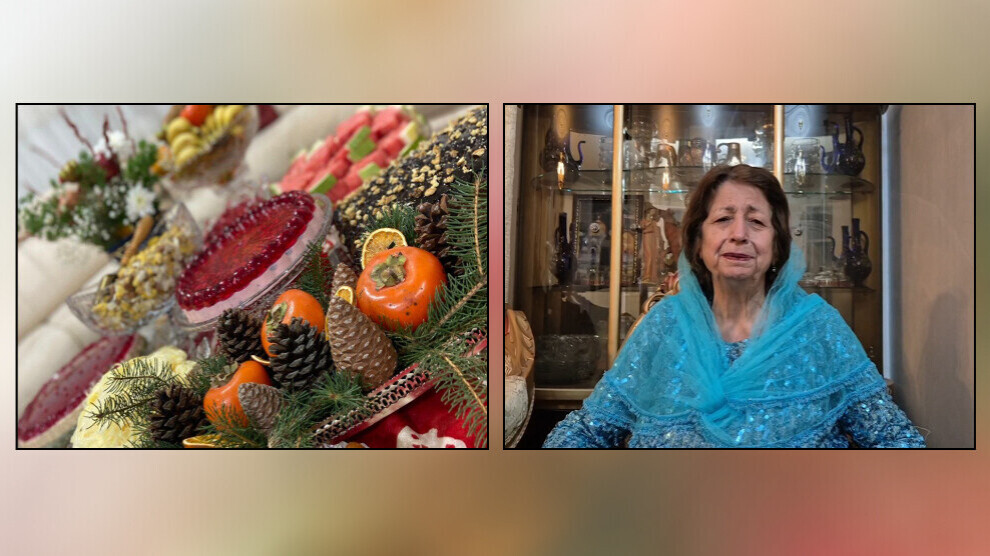
Many believe that Yalda marks the birth of Mithra, the deity of light, on the night when darkness reaches its peak before being defeated, allowing light to be reborn. Traditional Yalda tables featured foods such as pomegranates and red watermelon, symbolizing life and fertility. These symbols were not only associated with the sun and light but were also regarded as representations of feminine power and the continuity of life.
Archaeological researcher Laleh Ahmadi explains that Kurdish culture celebrates Yalda through two forms of ritual, expressing humanity’s renewed connection with nature and belief in the victory of light over darkness. Yalda Night is considered the beginning of the “Forty Days Festival,” marking the first forty days of winter. Ancestors regarded it as the last of the long nights of the year and gathered to celebrate it as a symbol of the end of darkness and the arrival of brighter days.
In the recent past, the Forty Days Night was celebrated differently than it is today. Zara Mansouri, 70, recalls her childhood memories of Yalda:
“There were no celebrations like today. Friends and family would gather in the evening, usually preparing dolma or meatballs for dinner. They served black mulberries, walnuts, raisins, and almonds, along with fruit sweets. Watermelon was not added to the Yalda table until later. We would gather, exchange stories and old tales, play musical instruments such as reeds, drums, and daf, sing together, and truly enjoy our time.”
Despite these changes, parts of the Yalda table in Eastern Kurdistan remain adorned with sweets, almonds, walnuts, and fruits such as pomegranates and watermelon, alongside traditional dishes like dolma and meat kofta.
In some areas of Eastern Kurdistan, such as Sanandaj (Sine) and Kermanshah (Kermashan), celebrations known as “Khwanja Borun” are held. These are traditional customs associated with marriage and engagement in Iran. During this occasion, families prepare a “khwanja,” which includes Yalda dishes, appetizers, fruits, sweets, and special gifts. These trays are typically presented to newly married women or to engaged girls who are still living in their parental homes.
Although inflation and rising prices in Iran in recent years have deeply affected tourism, nightlife, and even traditional weekend rituals, an increasing number of families now celebrate Yalda Night privately and under severe financial pressure. As a result, occasions meant to strengthen solidarity and social belonging have become a mirror that each year reflects the growing economic darkness overshadowing daily life.