
Tunisian Migrant Women Writers Confront the Violence of Erasure
Tunisian migrant women writers face the “violence of erasure,” suffering marginalization and exclusion from media and cultural forums, including women’s spaces, while demanding recognition, visibility, and acknowledgment of their voices and experiences
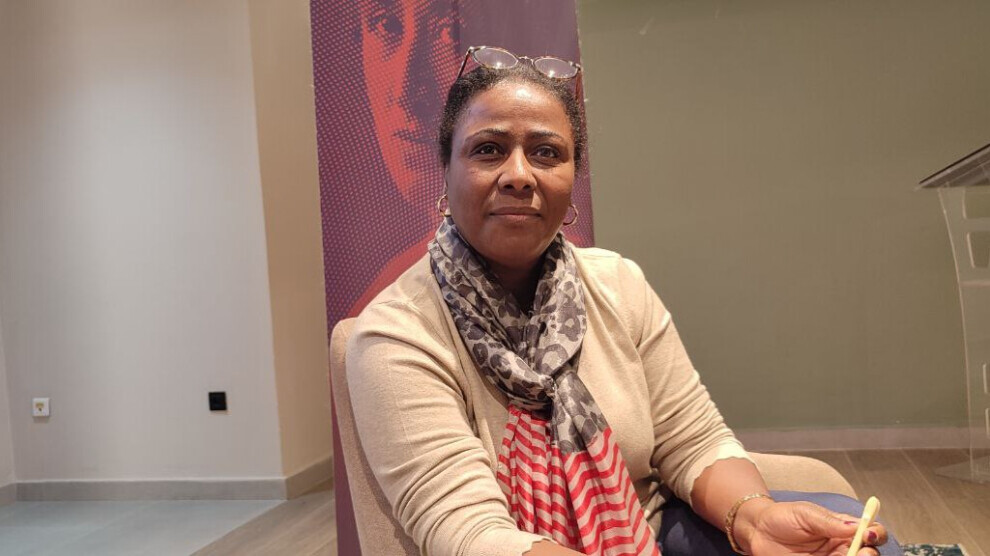
Zohour Al-Mashriqi
Tunis — Migrant women writers from North Africa and the Middle East suffer from numerous obstacles that hinder their presence in the cultural and media arenas. Their marginalization and exclusion from events and forums weaken their opportunities to convey their ideas and express their visions.
This highlights the necessity of supporting and amplifying these female voices in a way that enriches cultural and social dialogue and enhances diversity within the creative landscape—an issue emphasized by Tunisian writer and literary figure Fathia Dbeish, who stressed the importance of women’s presence in cultural forums.
Regarding the challenges faced by women writers in exile, she explained that they confront the “violence of erasure” and complain of continued exclusion from media outlets, literary and cultural gatherings, and even feminist spaces, calling for recognition of their work and identities.
Fathia Dbeish stressed that women’s presence and inclusion in cultural forums is a fundamental necessity, especially for migrant women writers who need such spaces to introduce themselves and infuse them with a feminine dimension. She noted that these forums represent vital spaces for women writers living outside their homelands, as they grant recognition of their status as authors. Media interviews, she added, also contribute to restoring fairness by highlighting their work both inside and outside their countries, strengthening their visibility and breaking the cycle of persistent marginalization.
Duality
She explained that the difficulties faced by Tunisian migrant women writers are marked by a duality between the homeland and the country of residence. As a writer who chose to write and publish in Arabic, she moves between Tunisia and France, while her literary production reaches the Middle East more than elsewhere, driven by her desire to address readers in their mother tongue.
She views her choice of Arabic as an act of protest against fragmented identities between “here” and “there,” even though her daily life is conducted in French due to her work with foreigners and in fields that impose the use of that language. Dbeish finds in returning to Arabic through writing a form of balance between the two languages. However, her Arabic texts struggle to reach Arab readers because of the slow movement of books in the region, the scarcity of book fairs and cultural spaces, the limited participation of migrant women writers in forums, and the lack of efforts to invite them from their countries of residence.
She considers this obstacle not only material, but also cultural, becoming more evident with the absence of sufficient support to invite and highlight them as writers. She pointed out that women writers often carefully determine where to publish their work, explaining that her primary audience is in the Arab Mashreq, where she publishes in Iraq, Jordan, and Egypt—meaning that about 80% of her readers are outside her home country, Tunisia.
She also noted that women writers face an additional challenge in readers’ curiosity about their personal lives, as their texts are often read as windows into their lives as women rather than as literary works in their own right. She initially viewed this as a form of unfairness, before later realizing that such interest could serve as one of the channels to reach readers. She emphasized that limited circulation hinders recognition of women writers and weakens their presence, necessitating greater efforts by women intellectuals to amplify their voices and secure recognition of their literary standing.
Injustice and Neglect
She explained that she did not initially view the absence of migrant women writers from national and regional media as a form of injustice or discrimination, but rather as a result of difficulties in communication between them and media institutions and organizations, along with the dominance of certain voices over the cultural scene. However, she has come to see this situation as abnormal, involving injustice and disregard for women writers’ experiences.
Although she considers herself fortunate to have an audience in Tunisia through cultural radio, she does not receive attention from other media outlets nor invitations to participate. She affirmed the right of women writers in exile to be included in these spaces, and that their works deserve visibility and attention to their experiences.
She pointed out that women’s writing continues to suffer marginalization due to male-centered dominance that views writing as a male domain, causing women’s steps in this field to be met with indifference and insufficient attention.
Women as an Integral Part of the Creative Act
Regarding addressing women’s issues in her work, she explained that she is consistently classified as a feminist writer, asserting that writing about women is not a superficial or decorative choice, but an integral part of her creative act. She noted that most of the characters in her novels are women—a conscious choice aimed at granting them roles and lives that were previously denied to them in earlier texts, where their presence was often secondary to a male protagonist.
She cited her novel Melanin, which brought her fame and was classified by the Sociological Research Center at the University of Tours as the first intersectional feminist novel—a designation that pleased her, as it reflects her deep belief in this approach.
As for the current situation of women in Tunisia, she stated that violence against women is a global phenomenon affecting women across societies. She added that women writers in France, despite it being known as a “country of freedoms,” suffer from exclusion and discrimination as migrants from the Global South, where silence and invisibility are imposed on them.
Tunisian writer and literary figure Fathia Dbeish concluded by affirming that they are currently working on a project to highlight their presence and confront this violence. She referred again to the “violence of erasure,” whereby the voices of migrant women writers remain absent and unheard, amid a state of indifference and, at times, systematic non-recognition.