
Stories of Women Who Forged Their Independence and Defied Tunisian Social Stigma
Many divorced women embark on arduous journeys beyond overcoming domestic violence, confronting societal prejudice while turning to economic independence as their ultimate path to reclaim self-confidence.
IKHLASS HAMROUNI
Tunisia-In the rural areas of Sidi Bouzid Governorate, the suffering of certain women does not end the moment they escape the cycle of domestic violence. Instead, they find themselves facing a new challenge: confronting a social stigma that continues to view divorce as a permanent mark of shame rather than the beginning of a fresh path.
Despite heavy social and economic pressures, some divorcees have chosen to transform their painful experiences into a springboard. Through small businesses and individual initiatives, they have achieved financial and personal independence, proving that divorce is not the end of the road, but rather a new chapter in restoring dignity and shaping a different future.
A Small Business That Opens the Door to Hope
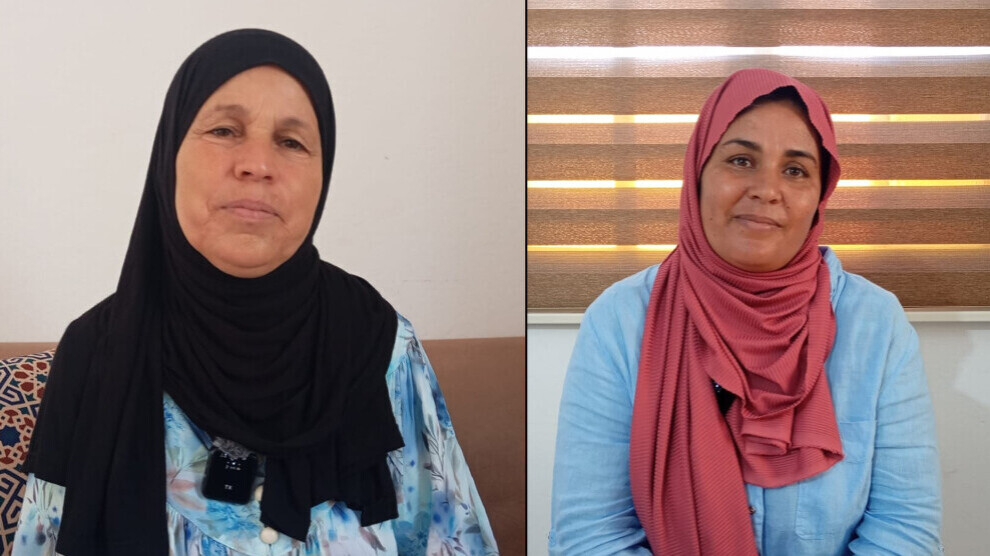
In a village within the Regueb delegation of Sidi Bouzid Governorate, divorce was not the conclusion of a painful story for Marwa Jaballi, but rather the start of a long journey to reclaim her life and build a stable future for herself and her three children after years of abuse and social pressure.
Jaballi, who separated from her husband more than five years ago, shares that societal judgment and preconceptions relentlessly pursued her as a divorced woman. "Everyone monitored my behavior and movements," she recalls. "I would hear comments every time I went out to run errands for my children or look for work, until I felt like the word 'divorcee' preceded my name wherever I went."
She explains that this social stigma initially drove her to isolation and a fear of facing others. Over time, however, she realized that surrender would not change her reality and that she had to carve out her own path. Consequently, she chose to venture into traditional crafts and homemade pastries, despite limited resources and initial obstacles.
"I started by producing small quantities from home, then joined training courses that helped me sharpen my skills and improve the quality of my products," she says. "As time passed, my client base expanded, and I began seizing every opportunity to showcase my work."
Jaballi emphasizes that her business served as a turning point in her life, restoring her self-confidence and granting her a sense of capability and independence. Once afraid of the judgment and remarks of others, she became intensely focused on growing her enterprise, transforming initial criticism into expressions of appreciation and praise once she proved her success.
This transition from a vulnerable divorcee constrained by social boundaries to an independent, self-reliant woman also profoundly impacted her children. "My situation didn't change alone; my children changed too," she notes. "They became more open-ended and enthusiastic about life, encouraging me to keep going and feeling proud of what I've achieved." She adds that her bond with them grew closer and warmer once she shed the psychological pressures that once hindered her from expressing her affection.
Jaballi believes that economic independence was the decisive factor in altering the course of her life, granting her the freedom to make choices and restoring her dignity and confidence. She affirms that women are fully capable of overcoming hardship once they possess the willpower and refuse to let societal judgments dictate their future.
Summarizing her journey, Jaballi says: "Divorce wasn't the end of my life; it was the beginning of a safer, more dignified chapter for me and my children, after breaking the cycle of violence and turning pain into a project and a fresh chance at life."
The beginning of a new phase
Similarly, Fatima Abdelli underwent a parallel journey, confronting society's harsh lens toward divorced women before discovering in her own business a means to reclaim her life, build independence, and boost her self-assurance.
Fatima Abdelli recounts that her marriage was a brutal ordeal marked by physical and psychological abuse. "My husband constantly assaulted me, to the point where he once struck me in the head with a glass bottle—an injury whose lingering effects I still suffer from today."
She stresses that the decision to divorce, though immensely difficult, marked the beginning of a new path—albeit one fraught with hardship. She found herself navigating severe living conditions alongside the societal stigma targeting divorced women. Facing this phase entirely on her own without family support, her primary pillars were self-reliance and an unwavering belief in her ability to endure.
"I decided to turn my suffering into a driving force, starting with financial independence," she explains. "I launched a small bread-selling business, later expanded my activity to open a retail shop, and eventually transitioned into trading plastic goods."
Fatima Abdelli views work as a genuine turning point that granted her independence and self-reliance, empowering her to manage her affairs without depending on others. For this reason, she urges women to build their own independence and never tether their futures to the presence of another person.
"Before my divorce, my personality was weak, and I endured insults and violence without the capacity to defend myself," she shares. "This experience changed me radically. I grew stronger and more confident, and I no longer pay attention to what people say, because I believe in my abilities and my right to live with dignity."
In a message addressed to all women, she encourages them to turn social pressures into a catalyst for success, refusing to let preconceived notions or public judgment dictate their life paths. True female strength, she asserts, begins with self-belief and autonomy.
Fatima Abdelli concludes by emphasizing that divorce was not the termination of her life story, but rather a launchpad toward a renewed identity. Where she once struggled to defend herself, she now stands ready to confront injustice, demand her rights, and safeguard her dignity with unwavering confidence and without fear.