
From the 74th Genocide to the Quest for Identity and Justice (1)
On August 3, 2014, Mother Sari's family fell victim to ISIS. Eleven relatives were killed and nearly twenty remain missing, leaving her awaiting their remains.
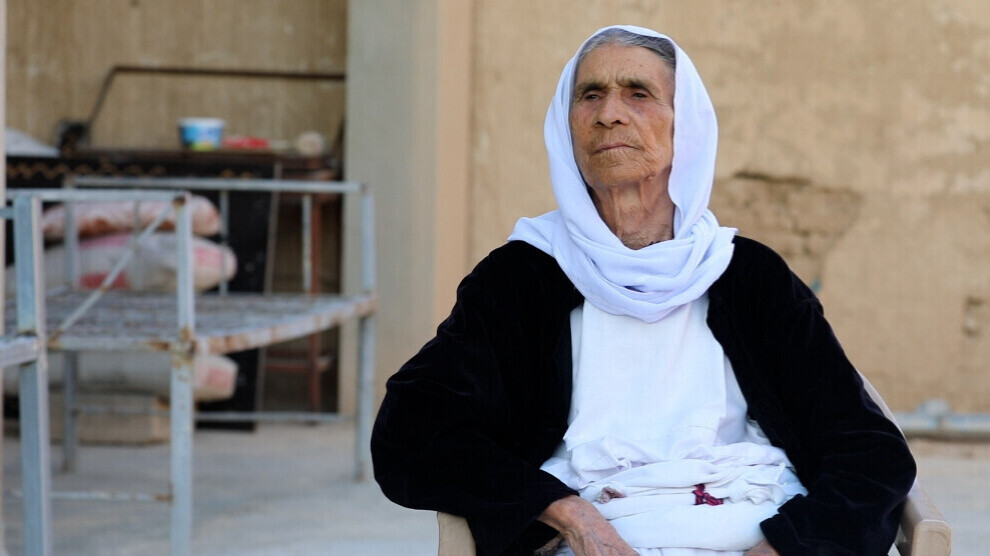
Ten Years Since the Genocide: Mother Sari Still Awaits the Remains of Her Loved Ones
JIHAN ZIMO AND GULISTAN AZIZ
Sinjar-On August 3, 2014, what happened to the Yazidis was not merely a fleeting attack, but a full-scale genocide. Thousands of men, women, and children were killed in cold blood, and many were buried in mass graves, most of which remain sealed to this day. More than 400,000 Yazidis were forced to abandon their homes and holy land, carrying with them an endless fear as they headed toward an unknown fate.
ISIS did not stop at killing; it abducted thousands of Yazidi women and girls, abused them, sold them in slave markets, and turned Sinjar into a ruined city, leaving virtually stone upon stone.
It was an act of genocide in every sense of the word—an organized and deliberate attempt to erase an ancient religious community and uproot the Yazidi faith from its foundations.
"They Separated Eleven Members of My Family to Kill Them"
The summer heat in Sinjar is unbearable, as if the sun chose this spot to be closest to it. Amidst this heat, our agency’s correspondents began their journey to chronicle the stories of survivors—of mothers, fathers, and children whose souls remain suspended between memory and loss.
Finding these stories was no easy task. Their owners live among the people, yet hide within their silence. Some refuse to speak for fear of reopening old wounds, while others believe that silence paves the shortest path toward repeating the tragedy. Thus, they choose to speak, even if it hurts.
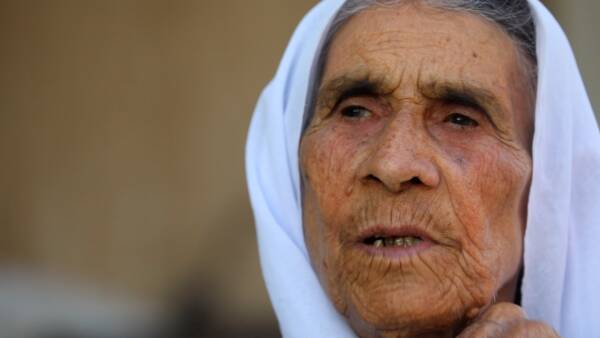
Among them is Mother Sari, a woman who does not know her exact age, but knows the number of those she has lost. "Perhaps I am over seventy, or perhaps I have completed eighty," she says.
On August 3rd, she and all members of her family—totaling 74 individuals, including children, grandchildren, siblings, and relatives—fell into the grip of ISIS. Today, only her elderly husband and a young grandson remain with her in the village of Tel Uzair, while her once-vibrant home has fallen silent, filled only with memories.
On the morning of that day, life seemed ordinary in Tel Uzair before the news spread rapidly: "ISIS has arrived." At 8:00 AM, the family fled toward Kora Awfido, believing it would be a safe haven, but it turned into the beginning of a nightmare.
Mother Sari recounts, "After they captured us, they took us to Seeba, then to the city of Sinjar. There, they separated eleven members of my family from us to kill them, keeping only the children with us. Afterward, they took us to Tal Afar, and then to Badush Prison."
Waiting for Remains
Mother Sari tells her story in a calm voice that conceals an ocean of pain: "They killed my son Khalaf, and they killed my oldest grandson. From our family, eleven people were killed—my brothers, my nephews, and all my sons." She pauses briefly before adding, "When they detained us in Kora Awfido, they took them to Sinjar and killed them there. The bones of three of them were found and transferred to Baghdad, but for six years they have not been handed over to us. We are still waiting for the bones of our loved ones."
That was not all. Holding back her tears, she says, "They seized our home and property, killed three of my grandchildren as well, and then threw their bodies into a well in the village of Entar, south of Tal Afar."
A Full Year of Captivity Under ISIS
At Badush Prison, about a thousand women and children were detained. As airstrikes continued, ISIS mercenaries constantly shuttled prisoners from one place to another. Mother Sari remained a captive for a full year, while her grandson Khairi was held for five years.
She says, "During that year, we moved between Tal Afar, Badush, an Arab village named Kasr Mehreb, and many other villages until we ended up in a Shia village whose inhabitants had fled and left everything behind. We lived in their homes. We did not dare to flee, because anyone who tried was killed and their body thrown into the wells."
The summer was harsh, and water was nearly nonexistent. Mother Sari describes those days with a phrase that encapsulates everything: "Our hair became like stone from intense dryness, and water could no longer pass through it—even though Yazidi women's hair used to be a symbol of dignity."
Mother Sari witnessed with her own eyes how ISIS mercenaries selected women and girls: "They took young women, and even young mothers carrying their babies, picking them out just as spoils of war are chosen."
After a year, ISIS released the elderly and people with special needs, and Mother Sari was among them. She left Tal Afar, heading first to the Lalish Temple, and spent a year in a displacement camp before finally returning to her village of Tel Uzair in Sinjar.
Mother Sari’s story raises the question: what keeps her resilient after all of this, and how can a single heart bear so much loss?
Her Final Dream
Mother Sari does not ask for much. All she wishes for is to know the fate of the missing—for them to return if they are alive, or even as bones if they have passed away. Knowing the truth, to her, is the beginning of justice.
She believes that the responsibility of the Iraqi government is not limited to recognizing the genocide inflicted upon the Yazidis, but also includes uncovering the fate of the victims, returning their remains to their families, and bringing closure to families that have been waiting for more than ten years for the chapter of loss to finally close.