
Women’s Participation in Politics Is a Necessity to Break Male Dominance
The political and social reality in the Kurdistan Region does not provide sufficient support for women’s movements and activities aimed at empowering women and advancing their role—particularly in the political sphere.
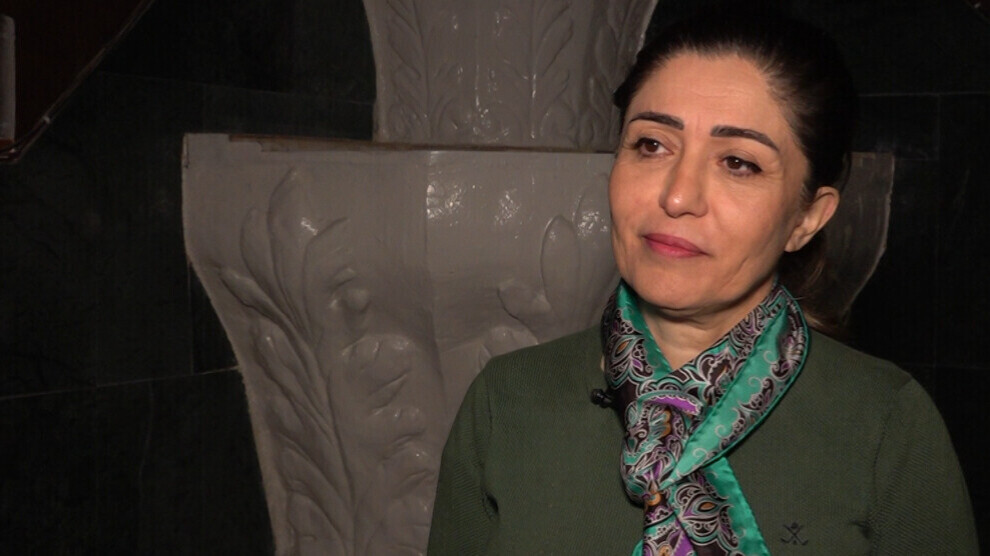
Hevi Salah
Sulaymaniyah — In a society constrained by structural inequality and shaped by policies rooted in gender discrimination, women’s social roles shift from spaces of recognition and participation into arenas of restriction and exclusion. Their absence from political life is not merely a lack of representation, but a direct reflection of a patriarchal culture that entrenches regression and weakens society’s overall potential.
Women’s participation in political affairs and the utilization of their intellectual and practical capacities represent a fundamental step toward overcoming mindsets that view women as second-class citizens. Active female political participation not only achieves gender justice, but also contributes to development, reinforces equality, and breaks the monopoly of power held by men.
“Women’s Political Participation Between Experience and Challenge”
Kasha Dara, Director of the “Azadbun” Organization, believes that women in the Kurdistan Region possess important experience in political participation. “After the 1991 uprising, the Kurdish people established their own government and elected their parliament, marking a historic moment that confirmed women’s participation in politics—albeit often individually rather than collectively,” she said, noting that despite its limitations, this participation paved the way for women to continue their journey toward freedom and progress.
She emphasized that since the 1930s, women have played roles in various organizations, citing Habsa Khani Naqib, who founded a women-led organization. “All these experiences reflect women’s awareness within Kurdish society and their understanding of the importance of political participation. Women’s political presence is not merely about representation—it is an active contribution to social change, achieving equality, improving services, and reaching a level where all human beings are treated equally.”
Dara pointed out that although women have been included to some extent in government and parliament, there are observations and criticisms regarding the depth and impact of this participation. “Personally, when I reached a central decision-making position and served as a member of the Kurdistan Parliament, I may not have been at the desired level, but I worked hard, made efforts, and took positive steps forward.”
Challenges Facing Women’s Political Participation
Kasha Dara criticized the political and social reality in the Kurdistan Region, stating that it has failed to provide adequate support for women’s movements and activities aimed at strengthening women’s roles and empowering them to advance. “During our time in parliament, the will of female parliamentarians was clear. We sought to introduce fundamental changes to laws and government institutions and to make women’s participation in politics more effective and visible. This direction received a degree of support from the authorities at the time, who viewed the issue as important and necessary.”
She noted that the role of political and diplomatic centers in the Middle East and Kurdistan—both internationally and regionally—was different in the past compared to today. “The prevailing discourse once focused on democracy, human rights, and civil governance, which made authorities more open to supporting decisions that benefited women. Today, this discourse has declined, and this has been reflected in the reduced attention given to women’s issues.”
She explained that women’s political participation in Kurdistan has always been linked to the level of political and social support, both domestically and internationally, and that any decline in this support is directly reflected in women’s presence in public life.
Women’s Self-Awareness as a Gateway to Equality
Dara called on women to ground their activism first and foremost in their humanity, and to view themselves as complete human beings. “When a woman perceives herself in this way, she stands on equal footing with men. It becomes essential for women to feel their existence as human beings and to claim their rights—not only for their individual benefit, but for the well-being of society as a whole. This awareness is a fundamental foundation in the journey toward equality.”
She referred to the long history of relations between women and men, stressing that at its core, this is a social issue aimed at serving society. “As a woman, I do not seek to seize what is now called ‘male authority,’ but rather to achieve equality in rights and opportunities across all fields, including participation in power and politics.”
She emphasized that this does not mean women want to enter into a struggle to take power away from men, who are an essential part of society. “What is required is for men and society alike to understand that our goal is to build a better life—and this cannot be achieved without women’s active participation in all fields.”
Dara also believes that the quota system remains necessary and has not yet fulfilled its purpose. “Kurdish society has not yet reached a level where it fully recognizes the importance of women’s participation in political life. Therefore, continuing to work with this system remains an urgent necessity to improve women’s conditions and strengthen their effective presence in politics.”
She stressed that women in decision-making positions must possess experience and expertise in political, social, and economic fields so that they can demonstrate their capabilities and become positive role models within society. “If a woman’s competence is not equal to or greater than that of a man, this constitutes a shortcoming. Therefore, women’s experience in decision-making positions is of utmost importance. In addition, women must build trust within society and convince people of the importance of their political participation—because it is not merely an individual issue, but a fundamental pillar of societal progress and prosperity.”