
Women of Qandil: The Martyr Beritan Is a Symbol of Resistance and Refusal to Surrender
On Beritan's 34th martyrdom anniversary, Qandil women recall her as a symbol of courage, resistance, and refusal to surrender, with activists saying she embodies struggle and women's leadership.
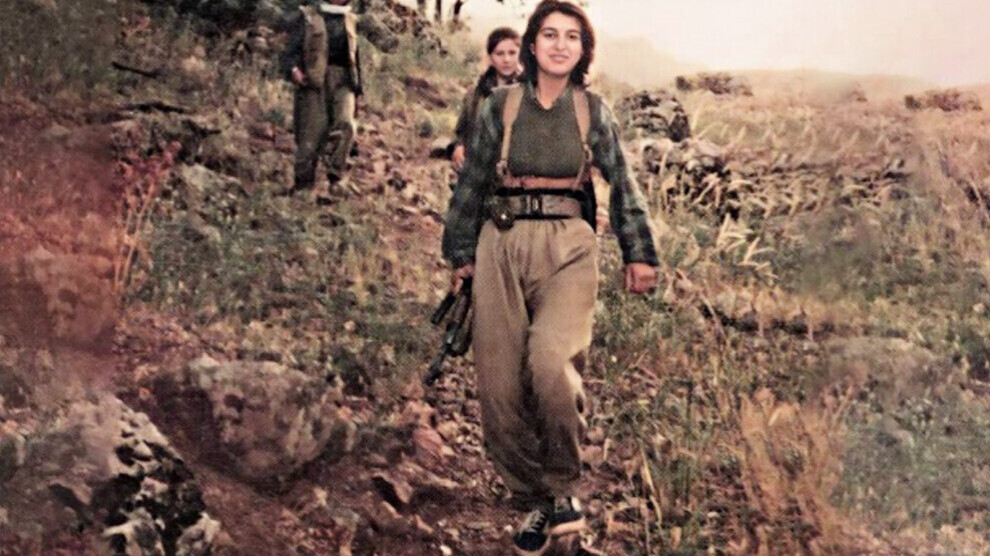
QANDIL – Kulnaz Karatas, known as Beritan, is from the Dersim region in northern Kurdistan. She grew up in an environment where political issues, security pressures, and nationalist feelings left a deep impact on her life and surroundings.
In 1989, Kulnaz was accepted into the Department of Economic Sciences at Istanbul University of Economics. There, she engaged with patriotic students in anti-regime activities and protest behaviors, and was detained for a period in "Bayrampaşa" Prison. After her release on 9 May 1992, she decided to join the ranks of the liberation movement. At that stage, she chose for herself the name "Beritan," a name that later occupied a special place in the history of Kurdish resistance.
On 25 October 1992, during the battles of the "Khwakurk" area, the fighter Beritan fell into a tight siege during which she faced extremely difficult conditions. She resisted until the last moments of her life, and instead of surrendering, she smashed her weapon and threw herself from the mountain peak.
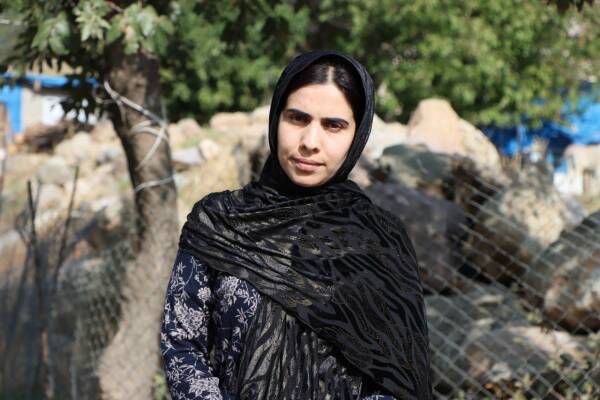
"The Martyr Beritan Still Influences All Women of Kurdistan"
Activist on the slopes of Qandil, Srwin Jalal, told our agency: "The martyr Beritan is not just a name in the history of Kurdish resistance, but a symbol of courage, leadership, and refusal to surrender. She was a courageous woman who stood in 1992 in the face of the line of betrayal and occupation during the attacks launched by the Turkish state and its allies against freedom fighters in Khwakurk. She resisted until the last bullet and refused to let her weapon fall into the hands of the enemy, and instead of surrendering she smashed her weapon and threw herself from the mountain peak, in a step that turned into a historical symbol in the journey of Kurdish women's resistance."
She added: "The martyr Beritan represents for us a symbol of resistance. She proved that leadership is not monopolized by men, and that women are capable of leading the vanguard as well." She noted that the impact of Beritan's resistance and leadership was a motive for immortalizing her memory through the establishment of military forces specialized for women, a step she sees as an important confrontation against patriarchal psychology and the restriction of women's roles.
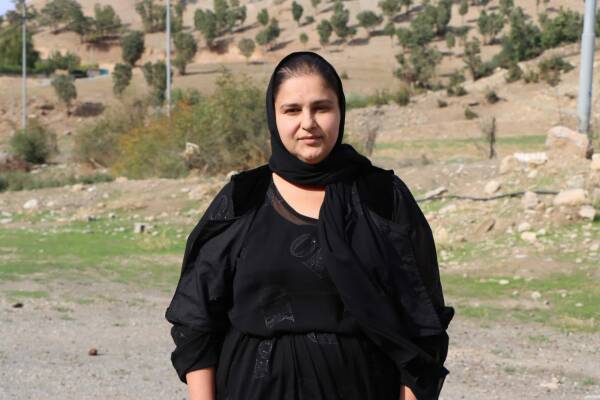
Transmitting the History of Kurdish Women to New Generations
As for activist Dilovan Sabah, she described the fighter Beritan during her talk about her memory and role as a courageous woman who devoted her life and capabilities in the arenas of resistance in defense of her beliefs and goals. She said: "When I hear the name of the martyr Beritan, I think of those women who gave themselves and their lives to their people on the high mountains, amid cold and heat, and in the midst of hardships and difficulties."
She pointed to the harshness of life in the mountains of Kurdistan. "The women of Qandil know well how difficult life is under those conditions; therefore, recalling women like Beritan increases feelings of respect and love toward those who continued walking on the path of their principles and goals. Transmitting the history of Kurdish women to new generations acquires great importance, and I see that we are obligated to preserve the memory and names of these women, so that the new generation realizes the nature of the role that Kurdish women played in the history of their people."
Dilovan concluded her interview by saying that "the goal of the women of Qandil is for their children to grow up in an environment dominated by tranquility and dignity, and to learn love of the homeland and the protection of the soil and nature of Kurdistan. And I hope that the day will come when all women live in security and freedom."