
Women in North and East Syria: Decision-Making Partners Driving Transformation
Women in the Autonomous Administration of North and East Syria are undergoing an unprecedented transformation, becoming influential actors in political, social, and economic life after decades of marginalization
Asmaa Mohammad
Qamishlo — For more than a decade, North and East Syria has witnessed profound transformations in the status of women, marked by a gradual shift from marginalization and exclusion to genuine partnership across political, social, and economic spheres. This transformation did not occur suddenly; rather, it is the result of a long journey of struggle and organized work led by women, contributing to tangible changes in legislation, societal attitudes, and mechanisms of participation within the Autonomous Administration’s institutions.
Amid these changes, the role of women leaders and institutions concerned with women’s affairs has become prominent in advancing women’s rights and strengthening their presence in decision-making positions, despite ongoing social and cultural challenges that continue to hinder comprehensive and radical change in some areas.
A Real Social Revolution
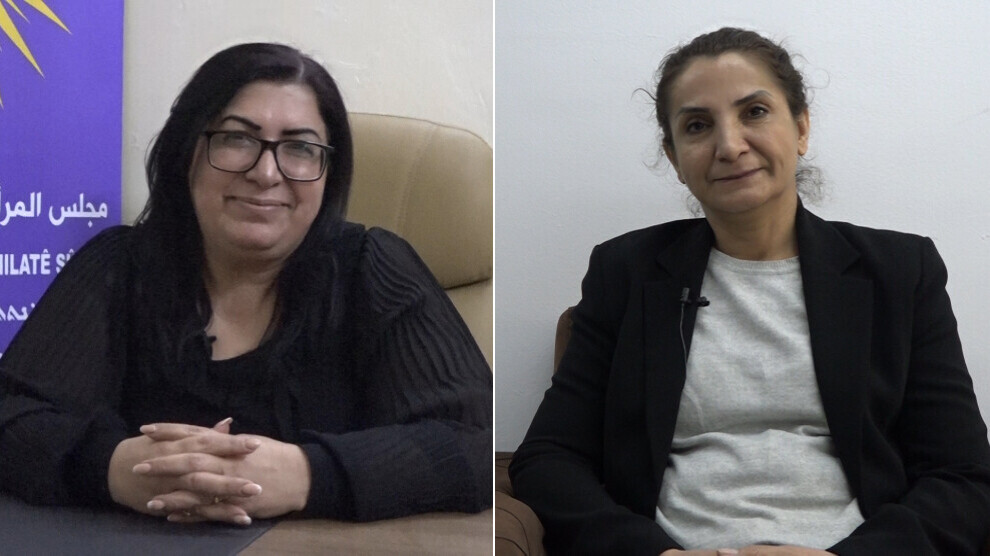
Abir Hassaf, a member of the Coordination Committee of the Women’s Council in North and East Syria, affirmed that “women in the region are living through a historic phase and an unprecedented qualitative shift. Its impact has not been limited to participation in administration or political work, but has extended to all aspects of social, cultural, and economic life.”
She explained that these achievements were neither coincidental nor the result of temporary circumstances, but rather the outcome of a long path of continuous struggle and systematic work that began in 2012 with the establishment of the Women’s Protection Units (YPJ). This path gradually evolved to include strengthening women’s academic and legal roles, ensuring their effective participation in drafting the Social Contract, and ultimately consolidating their presence as essential partners in decision-making positions within the Autonomous Administration.
Hassaf noted that society in North and East Syria has begun to witness clear shifts in social attitudes toward women, with many constraints and barriers that once limited their participation in public work and daily life being broken—both socially and professionally. However, she emphasized that these achievements are still in their early stages, as women’s laws, particularly in some rural areas, continue to face challenges related to social acceptance. This, she said, requires more time and effort to bring about deep, radical, and sustainable change in societal and cultural structures.
Regarding the role of the Women’s Council, Hassaf explained that it serves as an umbrella organization bringing together more than fifty women’s organizations, parties, institutions, and coordination bodies. The Council plays a central and pivotal role in raising societal awareness, addressing social issues, and defending women’s rights.
She added that this work is not limited to theoretical activities, but is practically embodied through dozens—if not hundreds—of dialogue sessions, training workshops, conferences, and forums organized across several regions such as Raqqa, Deir ez-Zor, and Tabqa. These efforts aim to create a socially receptive environment for family laws, which in themselves represent a genuine social revolution in the region.
A Unified Vision and a Single Goal
Hassaf stressed that all institutions and organizations operating under the umbrella of the Women’s Council work toward a unified vision and a single goal: achieving real change in society’s perception of women, reducing domestic violence, and empowering women to become primary actors in building society. She highlighted that the Women’s Council’s representation within the People’s Council of the Autonomous Administration enables it to closely follow laws, legislation, and decisions, and to convey women’s voices, visions, and needs directly and effectively to decision-making centers.
In concluding her remarks, Hassaf addressed women active in various fields, emphasizing that responsibility lies with every woman to extend her hand and support as many other women as possible, as true strength lies in unity and solidarity. “Each of us may be an individual, but when we unite, we become a force capable of creating real democratic change. Women have been and will remain the primary bearers of change and the guardians of cultural and historical leadership for all components of North and East Syria.”
From Symbolic Participation to a Leading Role
For her part, Sabah Shabo, the representative of Syriac women in the Women’s Council of North and East Syria and a member of the Syriac Women’s Union, pointed to the pioneering role of women in the political sphere. She stated that “women’s presence in politics in the past was extremely limited and often absent, due to the dictatorial system that prohibited political parties outside the Baath Party, confining women’s roles to symbolic participation without granting them any real opportunity to reach decision-making positions or influence public policies.”
She explained that the absence of political pluralism contributed to women’s political marginalization and deprived them of opportunities to engage in free political activity. Additionally, traditions and customs restricted women’s roles to social and family spheres, distancing them from public affairs and deepening the gap between women and political participation for many years.
Shabo noted that the political landscape began to witness clear changes after 2011, particularly in the regions of North and East Syria, with the emergence of new political parties and the development of democratic self-administration structures. She pointed out that the establishment of the Syriac Union and its active participation in the Democratic Autonomous Administration created significant opportunities for women’s political engagement, along with the establishment of a women’s office managed by women themselves. This office has contributed to empowering women, developing their capacities, and strengthening their roles in decision-making positions.
She explained that women today play an essential role across various sectors of the administration, constituting approximately 50% of legislative bodies and actively participating in executive councils responsible for decision-making and implementation. This reflects a qualitative development in women’s political status and role, making the experience of North and East Syria a model often referred to as the “Women’s Revolution,” due to the pioneering role women have played in leading political and social movements and bringing about tangible change on the ground.
Women Demand the Rights of the Entire People
Sabah Shabo emphasized that women no longer demand only their own rights and freedoms, but rather advocate for the rights of the entire people. Women are an integral part of society, representing the collective voice and acting based on societal concerns and issues, not as a separate group seeking special privileges.
She pointed out that challenges still persist, stating: “Women continue to face entrenched patriarchal mindsets and rigid religious discourse that restrict their participation in political and social life. The Syriac component also faces additional challenges due to a reductionist perspective that confines its identity to a purely religious component, leading to its treatment as a religious group rather than a people with a language, culture, history, and civilization. This, in turn, marginalizes its political demands.”
In concluding her remarks, Shabo stated that the Syriac component “has obtained its rights under the Autonomous Administration, but seeks to constitutionally entrench these rights across all of Syria within a democratic, pluralistic system. Women have proven their political, economic, and military presence despite initial marginalization and continue to confront traditional mindsets. Today, they have become a cornerstone of societal renaissance and a key partner in building Syria’s new future.”