
Tishrin Dam resistance proved people will surpasses threats and occupation
The first anniversary of the Tishrin Dam Resistance marks a pivotal moment, reflecting not just a battle but a powerful test of collective will against Turkish occupation attacks
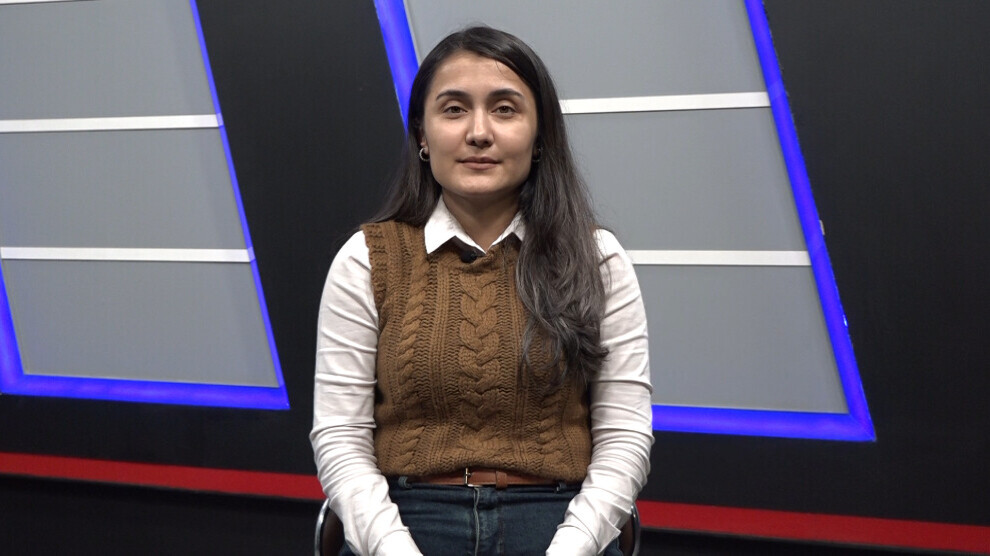
Asmaa Mohammed
Qamishlo — The Resistance of the Tishrin Dam was a widespread popular movement in North and East Syria that began on December 9, 2024, and continued for several months in response to attacks by the Turkish occupation and its mercenaries. Thousands of civilians held continuous sit-ins at the dam to protect it, turning it into a symbol of resistance.
Those days witnessed unprecedented unity among all components of society. Women, media workers, and local communities contributed to creating an extraordinary scene of resilience that remains engraved in the memory of the region. Many civilians, journalists, and female journalists were martyred as a result of Turkish shelling.
The resistance marked a strategic turning point in the history of North and East Syria. The battle for the dam began at a time when the Turkish occupation sought to gain control of strategic points in the region, using a complex form of special warfare aimed at dismantling the social fabric and spreading fear among civilians.
But the people who joined the resistance refused to be an easy target. They stood united—men, women, elders, and children—forming a true human shield in the face of continuous attacks. Heroism was not limited to the civilians; female journalists were at the heart of the events, carrying their cameras as a fighter carries their weapon, facing the same dangers to document violations and expose the disinformation campaigns aimed at distorting the truth.
“One of the Most Fateful Moments”
Rojava TV correspondent Jwana Jumaa, who covered the events at the dam day by day, described the Resistance of the Tishrin Dam as “one of the greatest decisive moments experienced in the regions of North and East Syria.”
“It was not just a military confrontation,” she said, “but a real test of the will of a people who chose to stand against the storm no matter how great the danger. During those days, workers, farmers, women, children, and elders stood together to declare that freedom is not a slogan, but a daily act that pulses through the land, memory, and dignity.”
She added, “On the first anniversary of the Resistance of the Tishrin Dam, we stand before one of the most pivotal stations in the history of our region. A moment when the people, with all their components, proved that free will is stronger than weapons, and that collective awareness is stronger than all forms of special warfare the Turkish occupation attempted to impose—politically, ideologically, and through the media. The Tishrin Dam was not merely a geographic location, but a strategic center through which the occupation attempted to besiege the popular will, destabilize the region, and target the very core of the Autonomous Administration’s project.”
Jwana Jumaa emphasized that she was one of the witnesses to this epic:
“I saw faces advancing despite the attacks, defending despite the cold, exhaustion, and danger—voices declaring that the land is not merely a place, but dignity, history, memory, and identity.”
She recalled that after the fall of the Syrian regime in certain areas, Manbij and Tel Rifaat were attacked:
“The people faced mass forced displacement towards Autonomous Administration areas in a clear attempt to break the social fabric and spread fear. But the people refused to be an easy target, standing firm to affirm that any aggression against their region would be met with strong popular resistance.”
She explained that the Turkish occupation relied on a complex type of special warfare aimed at disrupting awareness, tearing apart social unity, spreading rumors, and launching massive disinformation campaigns to promote fabricated narratives about the fall of areas and supposed control of the dam.
“But these campaigns collided with the media front of North and East Syria, which formed the first line of defense against every attempt to obscure the truth. Words became shields, images became documents, and coverage became a tool to confront one of the largest disinformation campaigns targeting a pioneering democratic project in the region.”
A Central Role for Women in Protecting the Dam
Women played a central and essential role—indeed, they were the core of the resistance, Jwana Jumaa says. Whether on the military frontlines or in the heart of the media field, “female journalists carried their cameras as a fighter carries her rifle. They faced danger, advanced toward the frontlines, documented violations, and exposed the scale of the attacks on the dam and surrounding villages. Women became creators of awareness, holders of the narrative, and symbols of steadfastness that neither aircraft nor missiles could break.”
She added, “I witnessed scenes that will remain etched in memory: men, women, and elders walking on foot under rain and cold after the occupation cut off roads, heading toward the dam to form a human shield against attempts to advance. They repeated with unbreakable determination: ‘We are greater than death, and our will is stronger than any aggression.’ Despite the continuous shelling, the revolutionary spirit surpassed every obstacle. The resistance became a humanitarian and political epic uniting the entire people that no external force could break.”
Attacks on Medical Teams and Journalists
The Turkish occupation, Jumaa reported, targeted ambulances and medical teams in blatant violation of international law.
“Doctors were targeted while on their way to save the wounded; many were injured and others martyred. Convoys were attacked in an attempt to create a humanitarian catastrophe. But the people chose resistance until the last moment, placing the defense of the dam and region above all dangers.”
She emphasized that “the martyrs wrote the greatest chapters of struggle and resistance—chief among them Jîhan Belkîn, Nazim Deshtan, and Akid Roj—who gave their lives for truth and freedom. They became eternal symbols, their blood a sincere message challenging all forms of occupation and oppression. And we, as journalists—despite receiving direct threats of death—did not retreat, because our duty is greater than fear, and our faith in our mission is stronger than any threat.”
Not a Passing Event
As the first anniversary of this great epic approaches, Jwana Jumaa affirms that the Resistance of the Tishrin Dam is far from being a passing event; it is a strategic turning point that reshaped political and social awareness in North and East Syria.
“It is a revolution of will, a revolution of the people, and a revolution of women—who proved that their voices can shake the pillars of oppression, and that their presence at the heart of events is not decorative but the essence of resistance. The people chose to write their history with their own hands, confronting one of the region’s strongest armies with united, fearless, unwavering spirit.”
She stressed that women formed a true pillar in the resistance:
“They ignited the squares of support, raised their voices, stood on the frontlines of media and defense, and embodied the truth that a society’s strength lies in its solidarity and unity. Women’s participation was not mere support—it was the backbone of every successful resistance movement.”
She concluded, “As we recall those glorious days, we renew our pledge to the martyrs that the path they walked will not end. We remain the voice of the people, the mothers, the resistance, and the Tishrin Dam—now a symbol of steadfastness and dignity. We will stand against every threat and continue defending the truth and this democratic project that the occupation seeks to destroy—without success.”
Jwana Jumaa ended her statement saying:
“This land was built from unbreakable will, from a people who do not surrender, from women who ignited the struggle and gave new meaning to strength and resilience. I send my salute to all the people who participated in the resistance, the fighters who protected this land with their blood, all journalists who carried the torch of truth despite the dangers, and to all women of the region. This epic is not just a memory—it is a living lesson for every generation of freedom: that truth always prevails when the people stand united, and free will is stronger than any occupying power or persistent oppression.”