
The Struggle of Kurdish Women in 2025: Resistance Beyond Borders
Despite intensified attacks on women’s rights in 2025, Kurdish women in Kurdistan led resistance, confronting violence and war, reaffirming freedom and democracy, entering 2026 determination expand struggle beyond borders globally.
Argîn Dîlik
Amed — Throughout 2025, women across the world waged daily struggles against war, poverty, and violence. Through their voices and actions, they became symbols of resistance, proving that courage is not measured by circumstances, but by persistence in defending life and freedom despite all constraints.
In the four parts of Kurdistan, women continued their struggle, inspiring their counterparts worldwide. As in previous years, they came together in 2025 around major issues and intensive agendas. Their voices and actions formed a continuous path of resistance, sending a clear message that women’s presence in the struggle is not temporary, but an essential part of the movement for freedom.
Women at the Heart of the Call for “Peace and a Democratic Society”
On October 1, 2024, Nationalist Movement Party (MHP) leader Devlet Bahçeli shook hands with MPs of the Peoples’ Equality and Democracy Party (DEM) during the opening of parliament—a scene that raised questions about the possibility of a new phase. However, the continuation of security operations and the appointment of trustees to municipalities deepened public concern and uncertainty.
Yet, following the call made by Abdullah Öcalan on February 27, 2025, and the developments that followed, it appeared as though a small window toward peace had opened, offering hope for overcoming years of conflict and restrictions.
Within the framework of the “Peace and Democratic Society” call aimed at resolving the Kurdish issue, women emerged as the most visible and active actors. Since the 1990s, they have stood firmly on an honorable front opposing war, turning their voices into symbols of the demand for peace. After a workshop held in Istanbul titled “Women Speak About Peace,” they established the initiative “I Need Peace,” creating a platform that unified their struggle and transformed their demands into a collective force striving to entrench justice and freedom.
To amplify the call for peace, confront the impacts of war, and make peace a societal cause led by women, the initiative organized marches and events. It raised fundamental demands such as resolving the Kurdish issue, ending the policy of appointing trustees, and removing political activity from the sphere of criminalization.
On July 8, women stood before parliament and issued a statement emphasizing the need to remove obstacles blocking the path to peace, directly calling on parliament to assume its responsibility and play its role in achieving it.
Due to criticism and objections arising from the slow progress of the “Peace and Democratic Society” call and the Turkish government’s failure to take expected steps, the Free Women’s Movement (TJA) announced on August 24, 2025, the establishment of the “Women and Constitution Committee.” This initiative aimed to open the door for women’s participation in discussions on drafting a new constitution based on gender equality as a foundation for building a just and democratic society..
An Unresolved Case Becomes a Symbol of the Demand for Truth
Despite a year having passed since the death of university student Rojin Kabayiş from Van Yüzüncü Yıl University under mysterious circumstances, the truth behind her case remains undisclosed. While the crime resonated widely across Turkish cities, women in Northern Kurdistan drew attention to special war policies that have led to the killing or enforced disappearance of many women and girls.
Throughout the year, the question “What happened to Rojin Kabayiş?” remained present, turning her case into a symbol of women’s demand to uncover the fate of all missing and murdered women. At the same time, women focused attention on drug and prostitution networks spreading across several regions—most notably in Amed, Şırnak, Hakkari, and Dersim—considering them part of systematic policies targeting society.
Kurdish women maintained their commitment to national unity throughout the year in the face of war. In this context, the Kurdish Women’s Unity Platform organized a conference in Amed on June 21–22 under the slogan “With Kurdish Women’s Unity, Toward National Unity,” emphasizing women’s role in consolidating this path. Meanwhile, the Free Women’s Movement (TJA) held the first conference of Kurdish women parliamentarians in Amed on May 28–29, expanding women’s participation in political life.
Additionally, a large workshop was held in Sulaymaniyah on July 9, with the participation of 80 delegates from the four parts of Kurdistan and Europe, embodying cross-border feminist solidarity.
On October 1, the Free Women’s Movement (TJA) launched a seven-day march from Amed to Ankara under the slogan “We Walk Toward Freedom with Hope.” During the march, women raised key demands, including guaranteeing Abdullah Öcalan’s physical freedom, enshrining Kurdish linguistic and cultural rights in the constitution, ending the trustee system, and officially recognizing the co-chair system.
Throughout the year, political parties in Northern Kurdistan organized workshops promoting gender equality, democratic society, and opposition to violence. In May 2025, the Women’s Council of the Democratic Regions Party (DBP) launched a series of ideological workshops for women’s liberation under the slogan “Toward a Democratic Society with Free Women.” The initiative included 130 workshops across 25 cities in Northern Kurdistan and Turkey.
Feminist Opposition to Policies of Dependency and Violence
President Recep Tayyip Erdoğan’s declaration of 2025 as the “Year of the Family” sparked widespread opposition among women. According to women’s organizations and media reports, 260 women were murdered within 11 months, while 267 died under suspicious circumstances.
In response to attempts to confine women within the traditional family framework, the Free Women’s Movement (TJA) led awareness campaigns against violence and promoted the model of the “democratic family,” based on equality and freedom, as an alternative to policies reinforcing dependency and discrimination.
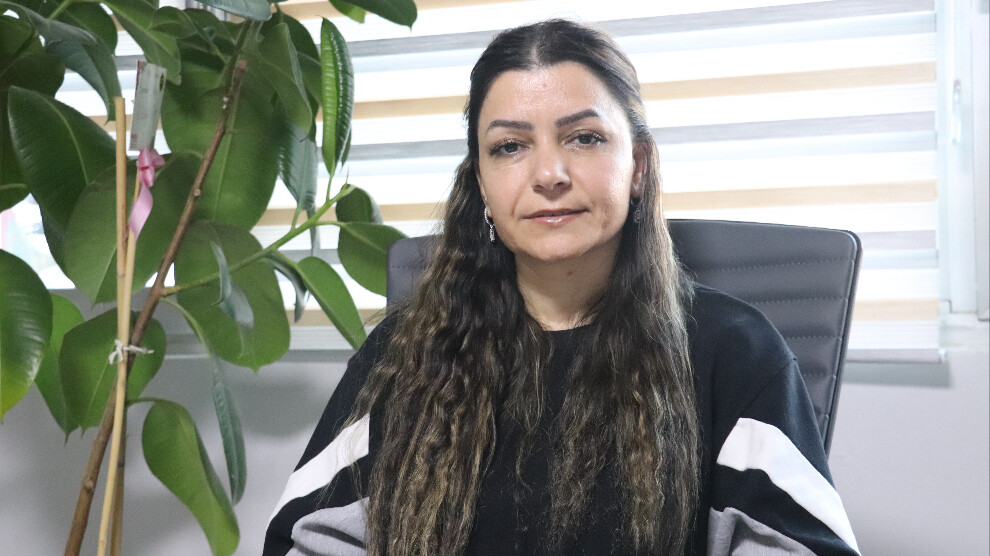
Evaluating women’s activities in 2025, TJA activist Bahar Beker emphasized that the year marked a significant turning point, with women’s resistance becoming more visible and pronounced against attacks. She stated that the central agenda was the “democratic society process” led by women, reflecting their pioneering role in shaping a democratic future.
Regarding TJA’s activities, Beker noted that the year saw extensive awareness initiatives against special war policies and a strong focus on workshops addressing patriarchal mentality, given the rise in violence and femicides in Northern Kurdistan. She stressed that transforming this mindset is essential and that such efforts will continue.
She added that women actively carried the spirit of peace during March 8 celebrations and Newroz, declaring their goal of establishing lasting peace. Events were also organized on April 4, emphasizing the importance of Abdullah Öcalan’s physical freedom on his birthday.
Referring to the October 1–7 march to Ankara, she said women reminded parliament of its responsibility and demanded recognition of the “right to hope” and guarantees for Öcalan’s physical freedom.
Entering 2026 by Expanding Women’s Resistance
Beker linked the rise in violence against women in 2025 to its designation as the “Year of the Family,” noting that most femicides were committed by close relatives such as husbands, fathers, or brothers.
She highlighted the unresolved cases of Gülistan Doku in Dersim and Rojin Kabayiş, alongside the murder of Narin Koran, stating that these cases reveal deep societal decay. Declaring 2025 the “Year of the Family,” she said, failed to protect women and children and instead paved the way for new massacres. The solution, she stressed, lies in adopting the democratic family model.
On the repeal of the Istanbul Convention and impunity policies, Beker said they fueled violence against women, emphasizing that laws alone are insufficient without building an ethical and political society through communes and councils, especially involving young women.
She also criticized the absence of budget allocations for women, despite deep poverty and exploitation in both domestic and labor spheres, and pointed out the lack of free childcare as a major barrier to women’s participation in working life.
Beker emphasized that women played a leading role in the call for peace and democratic society, noting that war inevitably leads to increased violence against women. She referenced conflicts worldwide—Palestine–Israel, India–Pakistan, Sudan, Ukraine–Russia—as examples of the dangers women face during wars.
She concluded by highlighting the upcoming demonstration on January 4 in Amed’s Station Square under the slogan “Hope and Freedom,” stressing its importance in the peace process.
Welcoming 2026 with intensified resistance, Beker stated that the main agenda is establishing women-specific communes and councils as a path toward a democratic life and self-administration. “We are not only Kurdish women,” she said, “but also feminists and internationalists. We will continue collective struggle against war and violence to build democracy and a socialist life..