
How Do Women in Gaza View the Second Phase of the Ceasefire?
Women in the Gaza Strip live in hope that the ceasefire agreement will hold, allowing them to return to their lives as they were before October 7, 2023.
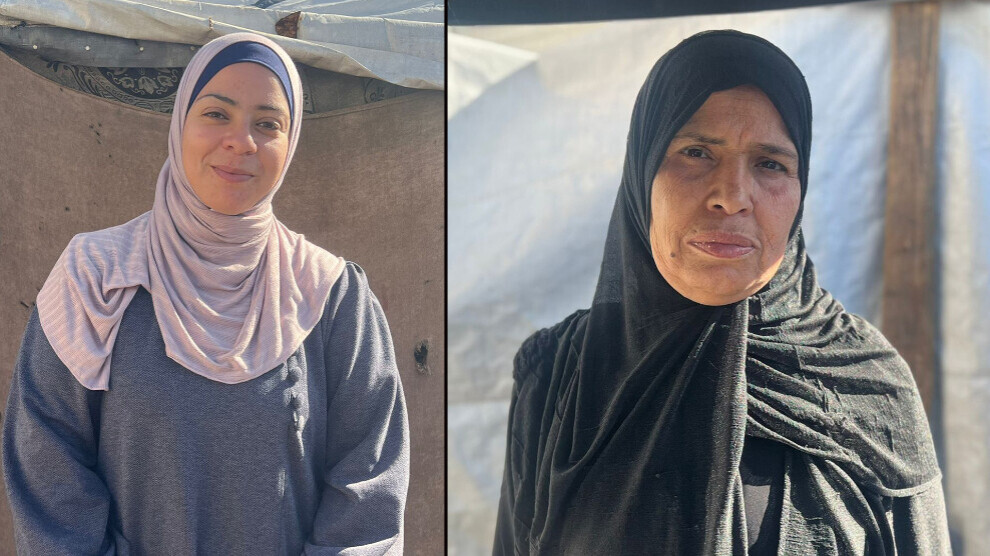
RAFEEF ASLEEM
Gaza — The coming phase in Gaza is witnessing significant developments related to completing the implementation of the ceasefire, particularly the application of the second phase and the handover of Hamas’ weapons. This raises questions about the reactions of women in the besieged city to what is unfolding around them, especially amid ongoing Israeli violations and the rising number of deaths every day. How do they view what lies ahead?
Nihal Al-Jarjawi says that women in the Gaza Strip have grown weary of the attacks and the constant sense of loss. In every Palestinian family, there is someone who has been lost because of the fighting. She asks why the fighting is not stopped immediately and urgently so that life can return to what it once was, stressing that material losses can be compensated — houses can be rebuilt — but how can human lives be replaced? “How can a mother be compensated for her son, or a sister for her brother? The examples are countless.”
Women need a ceasefire so the suffering of women — whom no one looks at, nor at their children — can end, especially young women barely over the age of 23 who are left alone with two children and no provider. “There is a lot of news, but nothing is implemented on the ground, especially regarding the opening of the Rafah land crossing, facilitating the passage of those stranded in neighboring Arab countries, and allowing patients whose lives are at risk to leave.”
This woman in her fifties does not know how to react to the circulating news — whether she feels happy, sad, or indifferent. She truly does not know. She clings to hope but needs to see steps implemented on the ground, such as allowing cement to enter for reconstruction, bringing in cash in all its paper and coin forms, and relieving women in the city from the daily hardships they face in cash transactions, rather than settling for promises and talk that remains ink on paper.
She explained that she does not follow the news through electronic websites or news pages on social media. Instead, she listens to conversations among passersby and to what women share with one another about the truce and the mechanisms for completing its implementation, hoping that the women of the besieged city can enjoy a calm life — even if only that. “These daily violations carried out by Israeli forces shatter hope that the agreement will be fully implemented as outlined in the plan of U.S. President Donald Trump.”
“A Warrior’s Respite”
Meanwhile, Tahani Al-Amarin explains that the term “ceasefire” represents an improvement in her psychological well-being, as she sees it as a warrior’s respite. Who said that women in Gaza did not fight throughout the nearly two years of attacks? She adds that displacement, loss, and malnutrition were all battles fought by women and girls in the Gaza Strip, in addition to inadequate shelter and other hardships — it was not airstrikes alone that disrupted their lives.
She noted that she closely follows news about the crossing, as her husband left for medical treatment at the beginning of the assault and has not returned to this day. She is raising her children alone; she cannot leave to join him, and he cannot enter the Gaza Strip due to the Israeli-imposed restrictions. She hopes the crossing will be opened in both directions in a tangible way, and that construction materials such as cement and stones will be allowed in, so she can believe that this is a real agreement and that all its provisions will be implemented.
She also hopes that the mediating countries will compel Israel to adhere to the ceasefire and refrain from violations in the form of air and artillery attacks that claim the lives of dozens of civilians every day — as if they are “challenging the people of Gaza and sending them a message that their lives cannot return to what they were before October 7, and that death will continue to pursue children, women, and the elderly everywhere, even though they bear no guilt for what is happening.”
Tahani Al-Amarin does not limit herself to reading news from Palestinian newspapers and their websites; she also follows local radio stations and political analyses, searching for a glimmer of hope and confirmation of what can actually be implemented from the provisions included in U.S. President Donald Trump’s plan — such as the return of displaced people to their homes in the “yellow line” areas, reconstruction, the opening of the Rafah crossing in both directions, and the actual commencement of the work of the Peace Committee, to lift the burdens that have weighed so heavily on women