
Somalia witnesses its first direct local elections in six decaded.
The somali capital, Mogadishu,has entered a New phase of democratic experience with the launch of its first direct local elections in nearly six decades.
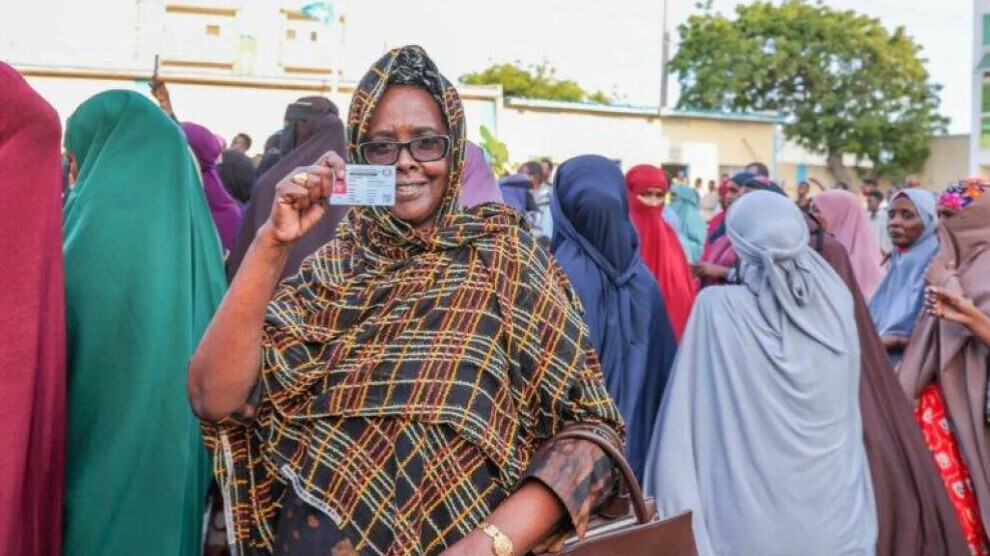
News Center —Somalia is witnessing its first direct electoral process in 57 years, marking a fundamental shift from the clan-based power-sharing system to the principle of “one person, one vote,” amid hopes that it will open the door to a broader political phase.
The Somali capital, Mogadishu, is holding direct local elections today, Thursday, December 25, for the first time in nearly six decades, in a step described as pivotal on the path toward democratic transformation in the country.
These elections are viewed as an early test of Somalia’s ability to overcome the legacy of civil war and clan divisions and move toward a modern political system based on direct suffrage.
More than 503,000 voters are heading to 523 polling stations across 16 of the 18 districts in the Banadir region, where 1,604 candidates representing around 20 political parties and organizations are competing for 390 municipal council seats.
The National Independent Electoral Commission announced that it distributed ballot cards to 918,000 voters after organizing the first voter registration process in decades last April.
These elections come after years of reliance on the clan-based power-sharing system known as the “4.5 formula,” established in 2000 following the collapse of the central state in 1991, which allocated fixed shares to major clans while marginalizing minorities and women.
Today, the slogan “one person, one vote” reflects a radical shift from the old system that depended on clan elders to select representatives.
Although more than 90% of the candidates are young people—indicating demographic and political shifts within society—women’s participation remains limited, failing to reach the mandated 30% quota. Women’s presence in these elections is seen as a symbol of a long struggle for recognition and empowerment, as they continue to face numerous obstacles to accessing decision-making positions.
Analysts believe these elections represent a preparatory step toward the presidential elections scheduled for 2026, amid ongoing disputes between the federal government and the opposition over the provisional constitution and the model of direct voting.
Observers consider that the success of this experience could pave the way for a broader political transformation, while the outcome of the anticipated dialogue between the parties remains the decisive factor in determining the future of the democratic process in the country.
While Somali women have played pivotal roles in social and economic struggle, their political participation has long been constrained by a clan system that recognizes them as representatives only through men. Nevertheless, recent years have seen the emergence of women activists and feminist civil alliances demanding genuine empowerment for women in decision-making positions, stressing that no political transformation can be complete without the effective inclusion of women—not only as voters, but as decision-makers.
Thus, Mogadishu enters a new phase of democratic experimentation, amid hopes that these elections will pave the way for a broader political transition and contribute to building a modern democratic state that overcomes the legacy of war and division.