
Seveda Özbelgül: Peace Is Not Built Parliament Alone, but by Society’s Participation
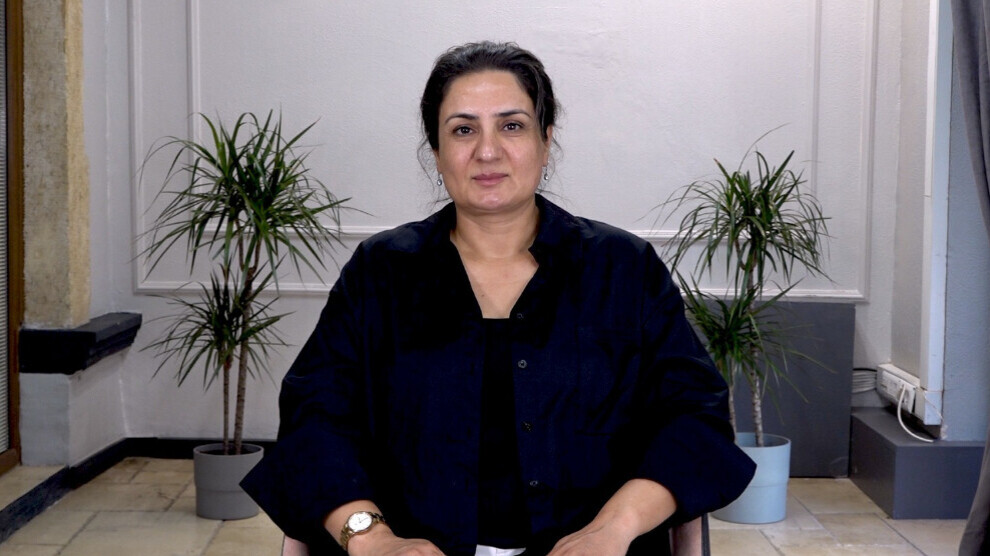
Seveda Çelik Özbelgül, co-president of the Law and Human Rights Committee of the Peoples’ Equality and Democracy Party, confirmed that the next phase of the peace process requires moving to legal and institutional measures.
ELİF AKGÜL
Istanbul – As the peace process in Turkey enters a new phase, attention is turning to what comes after the first steps related to the destruction of weapons and the formation of the parliamentary committee, toward building a legal and institutional framework that ensures the continuity of the process and its transformation into a more comprehensive political and societal path.
In this context, the issues of detainees and convicts stand out, along with the return of fighters who have destroyed their weapons to political and social life, addressing grievances and legal restrictions, alongside the search for a broader formula for a social contract based on equality and democratic participation.
"The Threshold of Verification and Confirmation Must Be Exceeded"
Sevda Çelik Özbelgül, co-president of the Law and Human Rights Committee of the Peoples' Equality and Democracy Party, described the developments witnessed by the peace and democratic society process over the past two years as rapid progress, considering that the decision to destroy weapons, the formation of the parliamentary committee, and then the approval of the framework law represent important legislative steps, despite their need to be completed with additional legal arrangements.
She said that the next phase requires the creation of bodies and committees capable of managing the process, alongside establishing monitoring mechanisms and ensuring the participation of various societal components. She noted that implementing the law on the ground requires exceeding the stage of "verification and confirmation," which she considered a fundamental threshold that should not take a long time.
She believes that the process is not limited to the destruction of weapons, but includes a wide range of legal and social files, from the conditions of detainees and convicts and persons residing abroad, to the return of PKK fighters to political and social life, and addressing the grievances suffered by persons due to charges related to the organization.
She also stressed the necessity that the process address the conditions of prisons, including the extension of the periods of executing sentences, problems related to the application of laws on the execution of penalties, and the conditions of sick prisoners.
The Need for a Social Contract and Societal Participation
Sevda Çelik Özbelgül confirmed that the broader goal should be building a social contract based on equal citizenship and democratic organization, contributing to repairing feelings of hostility that have accumulated over a century, and preparing a foundation for a peaceful future.
She said that the parliamentary committee's report addressed democratic transformation more broadly than just the issue of destroying weapons, noting the necessity of participation in political and social life, the release of about 4,000 detainees and convicts, and addressing the conditions of thousands of persons in exile, prisons, or threatened with judicial prosecution, as well as the reintegration of fighters who will lay down their weapons.
She also pointed to a wide segment excluded from economic and social life by decrees with the force of law (KHK), considering that restoring some rights and addressing these grievances is part of a process affecting hundreds of thousands of people.
She stressed that the parliamentary committee's mission should not be limited to monitoring developments, but should work on identifying problems and proposing the necessary legislation for the next phase, emphasizing the importance of the participation of all political parties, ensuring women's representation, forming subcommittees as needed, alongside involving civil society organizations, human rights advocates, and academics.
She added that peace is not only a parliamentary path, but "a societal field and a title for societal struggle," calling on various segments of society to participate in it.
Addressing Legal Deficiencies
She believes that the committee is also required to address existing legal deficiencies, even without always needing new legislation, calling for proposals related to the implementation of European Court of Human Rights rulings, and grievances related to practices targeting the elected will, foremost among them the appointment of trustees over elected administrations.
She confirmed that the current phase represents the beginning of the process, and that what is required is to continue working without prolonging the time, with the aim of building peace based on societal will, not only in Turkey, but also in the region and the Middle East.
"Öcalan Is the Direct Manager of the Process and One of Its Most Important Architects"
Regarding the role of leader Abdullah Öcalan, Sevda Çelik Özbelgül said that he is "the direct manager of this process and its most important architect," considering that defining his legal and political position clearly represents a fundamental element in managing the next phase.
She explained that leader Öcalan possesses a position capable of giving the process momentum in its coming stages, and therefore his mission and status should be clearly defined, and the next phase should be managed with his participation and direct coordination. She stressed the necessity of applying the law in a non-discriminatory manner, and giving the "peace law" a real effect by defining the legal status of leader Öcalan in a manner commensurate with the requirements of the process.
Sevda Çelik Özbelgül concluded her interview by emphasizing that the next step should be to establish a legal and political framework that allows leader Abdullah Öcalan "to live and work freely," helping the process reach its end.