
Patriarchal and capitalist mindsets reproduce new forms of violations.
Violence against women is rising in the Kurdistan Region due to patriarchal and capitalist policies, with 42 women killed between 2024 and 2025. Activists call for greater social awareness and official transparency.
Helen Ahmad
Sulaymaniyah — Violence against women continues to escalate across the world, and the Kurdistan Region is no exception to this phenomenon. In the cities of the region, news of women being killed is recorded daily, reflecting the growing violence directed at them as a result of the policies imposed by occupying states in cooperation with local patriarchal forces.
The reality of violence and conspiracy in the Kurdistan Region exposes women to repeated waves of abuse. Even when slogans such as “working for women” are raised by parties and political forces, the outcome is often the reproduction of new forms of violations against them. Moreover, the entrenchment of the capitalist system and the spread of patriarchal culture in cities increase the fragility of women’s lives and double the risks of killing and abuse.
Despite the absence of accurate official statistics over the past four years, data collected by our agency reveals the magnitude of the tragedy. From the beginning of November 2024 until mid-November 2025, 42 women were killed, 19 women lost their lives under mysterious circumstances, five women survived attempted murders, and one woman was forced into suicide. These figures reflect a continuous cycle of violence, in which women’s lives become direct victims of official policies and the existing social reality.
Despite Their Continuous Struggle, They Still Face Violence
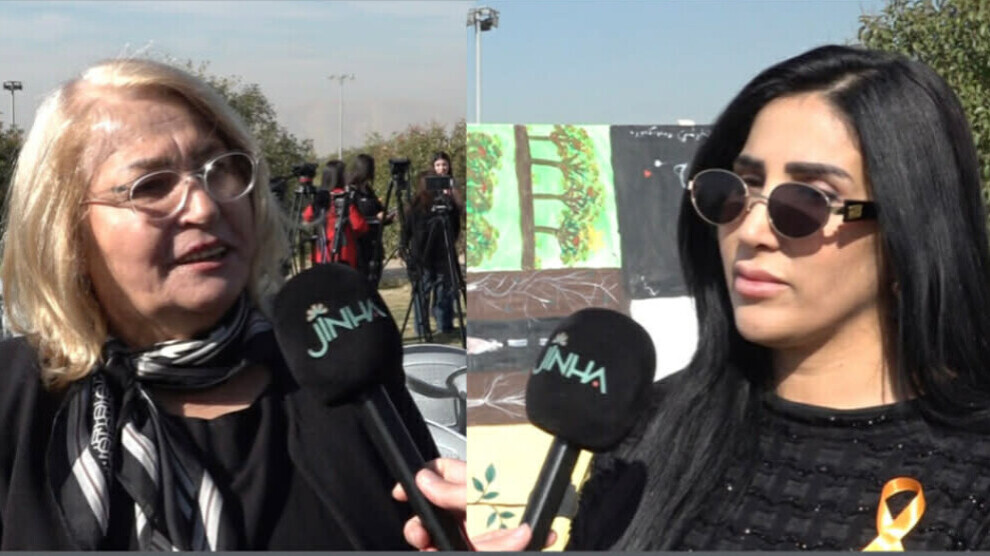
Feminist activist Shina Karim explained that:
“Throughout history, women have faced various forms of violence—criminal, social, political, and religious—and these violations continue to this day. Although some institutions have removed obstacles that once limited women’s participation, they still face major challenges, especially since 2013, when ISIS committed terrorist crimes in the Kurdistan Region that targeted Kurds, particularly women. Nevertheless, women today have a stronger presence within institutions and are waging a more powerful struggle for their rights and achievements.”
She added:
“Women’s entry into public spaces, their participation in the workforce, and their relative economic independence have not yet ended the dominance of the patriarchal mindset that still restricts their lives. However, their engagement in society and institutions has helped them become aware of some of their rights. Yet increasing women’s awareness of their rights requires greater efforts and more effective steps.”
She confirmed that domestic violence against women has not stopped and that women are still subjected to violations by authorities and politicians, where another form of violence is practiced against them under different labels. These ongoing violations affect all aspects of women’s lives, as the media continues to report daily cases of women being killed, while statistics remain on a steady rise.
She pointed out that March 8 is celebrated as International Women’s Day, yet paradoxically, every year witnesses the killing of women by men as a result of the prevailing patriarchal mentality. This reveals that such a mindset and the crimes associated with it pose a permanent danger to women. Therefore, she emphasized the necessity of raising awareness within families so that every woman can defend her rights and make her own decisions.
Women’s organizations and activists play a central role in raising awareness and encouraging women to join these institutions away from the dominant patriarchal mindset, in order to address their problems, protect families, and find solutions that enhance family stability, she explained.
Women Between Capitalist Pressure, Political Violence, and the Lack of Transparency
For her part, journalist Bariz Saber pointed out that the capitalist system places harsh pressure on society, especially on women, leaving clear negative impacts on their lives. Women’s participation in the political process—whether in election campaigns or voting—is often recognized only symbolically, while women rarely reach governmental institutions, parliament, or political leadership positions. Although they possess the ability to achieve effective political presence and struggle, particularly on women’s issues, authorities and parties frequently place obstacles in their way that prevent genuine participation.
She added that alongside political violence, women continue to face violations within society and institutions. Every year, on November 25, activities are organized to combat violence against women for 16 consecutive days, serving as an opportunity to raise awareness about the rights of women and youth.
She confirmed that activities and conferences can contribute to raising awareness among women, youth, and families, because violence does not affect women alone—it impacts the entire family. Therefore, educating families is considered a fundamental step toward addressing problems and protecting society from cycles of violence.
Bariz Saber also explained that statistics related to violence against women in the Kurdistan Region are not published accurately. Many family-related issues and violations are concealed and do not reach society or the media. She added that civil society organizations make efforts to reduce violence and crimes, but these data are not adopted by official authorities, creating a clear gap between reality and what is publicly announced.
She concluded by stating that this discrepancy makes it difficult for women and journalists to rely on credible figures in their work, reflecting the urgent need for greater transparency in dealing with these i