
“New Woman” Foundation Concludes Project to Empower Egyptian Women
The New Woman Foundation highlighted challenges women face in Egypt’s labor market, including workplace violence, transportation risks, and barriers in both formal and informal sectors.
Asma Fathy
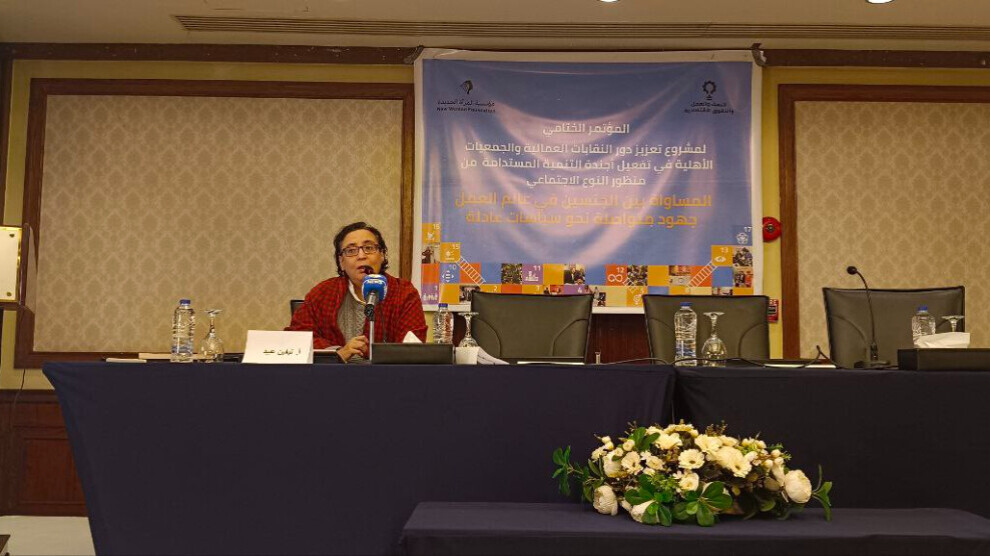
Cairo — Participants at the closing conference of the “New Woman” project highlighted that the initiative represented a comprehensive journey to promote justice and create a safe working environment for Egyptian women, emphasizing the importance of institutional networking to ensure sustainability and align initiatives with the 2030 Sustainable Development Goals.
Over nearly three years, the New Woman Foundation implemented a project aimed at strengthening the role of labor unions and civil society organizations in the sustainable development agenda from a gender perspective across Cairo, Alexandria, and Qena. The project focused on highlighting the real challenges women face in the labor market.
The initiative provided specialized training programs to build capacities and developed knowledge and documentation platforms enabling researchers and unionists to access accurate data, enhancing institutional ability to monitor women’s economic and social rights.
Fieldwork was also a key component, particularly in the agricultural sector, where participants faced transportation risks and verbal and physical abuse, demonstrating the project’s approach of combining knowledge empowerment with practical interventions in sectors where women are most vulnerable.
The closing conference, held on Thursday, December 25, 2025, titled “Enhancing the Role of Labor Unions and Civil Society Organizations in Advancing the 2030 Sustainable Development Agenda from a Gender Perspective,” emphasized the real challenges women face in both formal and informal labor sectors. The event served as a platform to evaluate results, exchange experiences, and plan for sustainable initiatives, reflecting the foundation’s commitment to linking women’s work with public policy and real-life needs.
Executive Director Nevine Obeid presented a critical overview of women’s situation in the Egyptian labor market, highlighting policy gaps versus living realities, particularly in informal work, including daily labor, freelancing, and small-scale producers outside official protection.
The project underscored the pivotal role of civil society organizations not only in service provision but also in proposing alternative policies to ensure women’s rights. Special emphasis was placed on empowering women in agriculture to ensure food security and economic equality, stressing that combating discrimination and promoting equal opportunities is a long-term, sustainable process requiring collective effort.
Program Director Mai Saleh noted that the project was the result of long-term preparation and focused on three main areas: capacity building, knowledge production, and legislative development. These pillars enhanced the skills of women workers, unionists, and community personnel by providing scientific tools to monitor labor realities and challenges in formal and informal sectors.
The “Work and Equality” platform, designed as a comprehensive reference for researchers, unionists, and activists, includes field monitoring reports, documentary videos, and articles authored by unionists themselves, offering an interactive tool to track challenges and opportunities continuously.
The initiative also emphasized the ILO Convention 190-inspired Observatory 190, which published three specialized reports on formal and informal labor sectors, including “Lives on the Margin” highlighting road hazards for women in agriculture, offering concrete recommendations for improving work environments.
The project’s practical impact was evident, including at Nile Linen Group, which implemented protection policies and established an on-site nursery for employees. The “Work and Equality” platform continues to serve as a key reference for gender-related labor issues, with diverse content including advocacy campaigns, field reports, and academic studies.
Project outcomes also promoted activating the “Corporate Social Responsibility Map” to monitor company compliance with social and rights standards, ensuring transparency and civil society oversight in supporting women in the private sector.
Legislative and policy development was another focus, including discussions on the unified labor law and ILO Convention 190 related to preventing workplace violence and harassment.
Mai Saleh emphasized that the project represents a holistic journey to promote justice and a safe working environment, highlighting the importance of networking between women’s organizations and civil society to ensure sustainability and link rights-based work to practical application, aligned with the 2030 Sustainable Development Goals.
Finally, she stressed that addressing women’s challenges in the workplace requires collective and institutional efforts, noting that true empowerment begins with capacity building, knowledge utilization, continuous policy development, and partnerships among all stakeholders. Sustainable achievements depend on ongoing monitoring and commitment to providing safe and equitable work environments across sectors, promoting equality and supporting long-term sustainable development.