
Morocco's Legislative Elections Begin, with Anticipation for Women's and Youth Participation Rates
Polling centers are scheduled to open at eight in the morning GMT and close at seven in the evening, and preliminary results are usually announced the day after the Moroccan parliamentary elections.
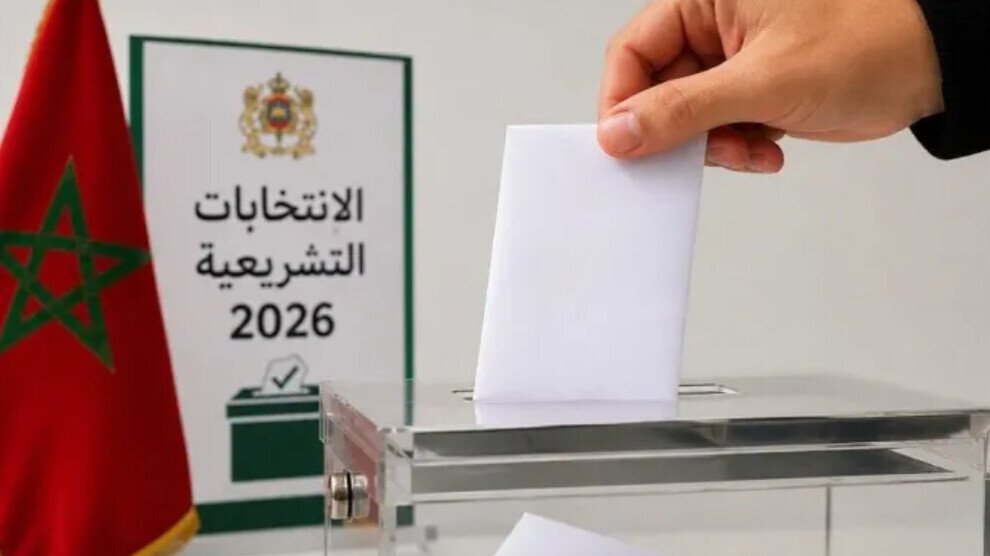
News Center – Voters in Morocco vote today, Wednesday, 23 September, in elections that will determine the shape of the next government, which will face several challenges, most notably youth protests and the migration crisis that has become complicated during the past period.
The next House of Representatives will be tasked with implementing initiatives increasingly focused on addressing youth discontent, which was manifested in an attempt at a mass border crossing toward the Spanish enclave of Ceuta, and in protests led by Generation Z that resulted in casualties last year.
The participation rate, especially among young voters, will be subject to close monitoring because it will be considered an indicator of the extent of citizens' interaction and trust in elected institutions. The number of Moroccans of voting age is about 27 million, but those registered on the electoral lists do not exceed 15.8 million, a decrease of nearly 12 percent compared to the 2021 elections.
Women constitute 46 percent of the 15.8 million registered voters, versus 54 percent for men, according to official figures published by the Maghreb Arab Press Agency.
395 representatives will be chosen in the House of Representatives through 92 local districts and 12 regional ones, amid the ambition of 57% of the current 227 members to preserve their seats, and the participation of 28 parties with 1,850 lists comprising 7,288 candidates distributed across 41,000 polling stations, in order to redraft the legislative and executive scene with extreme precision under the dome of Parliament.
The number of female candidates for the current elections reached 2,658 women, or 36.47 percent of the total candidacies. 1,783 women are competing in the regional districts, whose ninety seats are allocated exclusively to women, while 875 women ran in the local districts competing for 305 seats.
However, only 121 local lists are led by women, out of 1,615 lists, according to Ministry of Interior data. The experience of the 2021 elections shows the difference between guaranteed representation through regional lists and direct competition locally: 96 women entered the House of Representatives, or 24.3 percent of its members, but only six women won through local districts, while 90 female representatives came from the regional districts.