
In Less Than a Year... War Remnants Kill and Injure 265 Women and Children
The Syrian Observatory for Human Rights revealed rising victims of war remnants in Syria, including many women and children, reflecting escalating daily danger threatening vulnerable groups despite declining military operations.
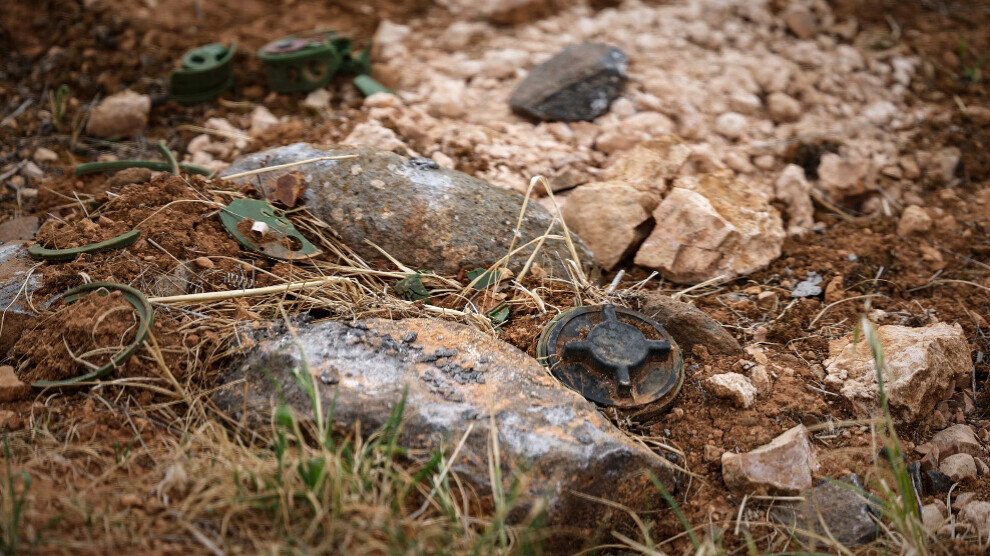
News Center – The latent dangers continue to threaten Syrians despite the decline in military operations, as war remnants remain scattered around residential buildings, fields, and roads, buried beneath the ground or among the rubble, posing a direct danger to civilians when they approach them without realizing their nature.
War remnants in Syria have turned from silent remains of battles into a daily danger threatening the lives of civilians, especially children who may approach unknown objects out of curiosity or find them while playing, while farmers and workers in rural areas are forced to enter lands potentially contaminated with munitions and explosive objects.
According to the documentation of the Syrian Observatory for Human Rights, explosions of mines and unexploded ordnance since the beginning of this year have resulted in the killing of 105 people, including 95 children and 10 women, in addition to the injury of 160 others, including 146 children and 14 women. The number of dead and injured among women and children reached 265 people in less than a year, in a toll reflecting the scale of the danger that still exists in various regions of Syria, despite the decline in military operations compared to previous war years.
The Observatory confirmed that these incidents reveal that the effects of war are not measured only by the number of victims who fell during the battles, but also by the number of civilians who continue to pay the price after they stop, noting that the continued fall of victims at these numbers raises a question that goes beyond the individual incident: Who protects civilians from the danger the war left behind?
The Syrian Observatory for Human Rights called on the concerned parties to assume their responsibilities in identifying contaminated areas, securing them, and removing war remnants from them, and securing the resources and expertise necessary for clearance operations, alongside expanding awareness programs about the dangers of explosive objects, while giving children and the most at-risk communities special priority.