
Jaro Shawani: The Resistance in Rojava Proves the Necessity of Kurdish Unity
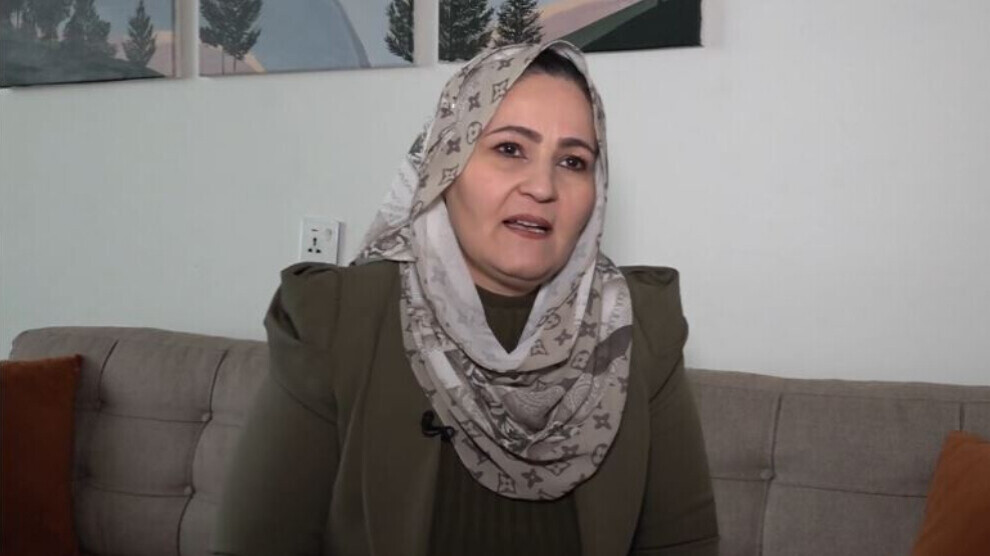
Lawyer Jaro Shawani stressed taking peoples’ positions seriously, highlighting that the resistance in Rojava has significantly influenced Kurds across the world.
Hevi Salah
Sulaymaniyah – Calls for unity are rising in the face of internal divisions and political disagreements that have long been exploited by opponents to unite their ranks against the Kurdish cause. Political and legal figures stress that Kurdish unity is a historical necessity, not a choice, as it has served throughout history as a tool for resistance and survival.
Kurdish history has shown that internal divisions and political disputes have always been the primary factor enabling hostile forces—despite their differing interests and affiliations—to unite against the Kurdish cause. This convergence among adversaries has often been based on short-term interests, primarily aimed at preventing the formation of strong Kurdish unity.
In contrast, Kurdish unity throughout history has been more than a national sentiment; it has been a means of resistance and a guarantee of survival. This unity is not an option that can be dispensed with, but a historical necessity that has proven its importance repeatedly. When the Kurds united, they were able to make their voices heard internationally and build influential political and social power. Meanwhile, any weakening of this cohesion has led to worsening crises and internal divisions. The question arises once again: What is cohesion? Why is it necessary? And how can it be maintained?
The Resilience of a United Kurdish People Halts Hostile Attacks
In this context, lawyer Jaro Shawani stressed the need to take the positions of peoples seriously and not underestimate them, pointing out that the resistance in Rojava has had a broad impact extending to the four parts of Kurdistan and to Kurds around the world.
She explained that Kurdish unity in Kurdistan is a necessary step to stop the attacks, stating: “Leader Abdullah Öcalan, since the beginning of the peace process, sent a message to all Kurds and their leaders emphasizing the necessity of holding a Kurdish Unity Conference, warning of a conspiracy being plotted against them and stressing the importance of what the Kurdish people have achieved in different parts of Kurdistan.”
She added that the attacks targeting the Kurds failed in the face of their unified stance, and that many plans that were not in their interest later changed as a result of their steadfastness. “International silence reveals the absence of any real support, and what can be done is to confront the attempts of hegemonic states to impose their control by mobilizing the public and delivering the voices of the people to the world.”
“We Want to Be in Our Land”
She stated that political declarations stressed the importance of conveying the messages of Leader Abdullah Öcalan among the Kurdish people amid escalating attacks on the democratic nation and the principle of the brotherhood of peoples following the events in Western Kurdistan. She added that major powers continuously seek to impose their hegemony over the region and implement their own programs, while the people of the region know which systems and programs are suitable for them.
She pointed out that speaking about the brotherhood of peoples means adhering to democratic freedom and peaceful coexistence, and rejecting surrender in the face of attempts at occupation and the perpetration of massacres. Accepting the brotherhood of peoples, she argued, is the first step toward democratization. She also called on Kurdish leaders to abandon personal and family interests and work for the Kurdish cause, given the seriousness of the current stage.
She explained that what did not exist a hundred years ago has today become a new system and program that can serve as a shared tool for all peoples of the region in confronting the capitalist system through which dominant states seek to exploit the region for their own interests.
“We Must Take a Firm Stand Against the Path of Betrayal”
Jaro Shawani stated that today the Kurdish people are viewed distinctly on a global level, as the revolutions in the East, the women’s revolution, the resistance in the West, and the positions in the South embody their true identity. Kurdish voices emphasize the necessity of not casting doubt on the people’s struggles and of taking a firm stance against the path of betrayal, while increasing pressure on political parties to unite and move toward holding a Kurdish National Congress as soon as possible, as this path will determine the future of the Kurds.