
Feminist leaders in Aden push for activating the quota and women's participation
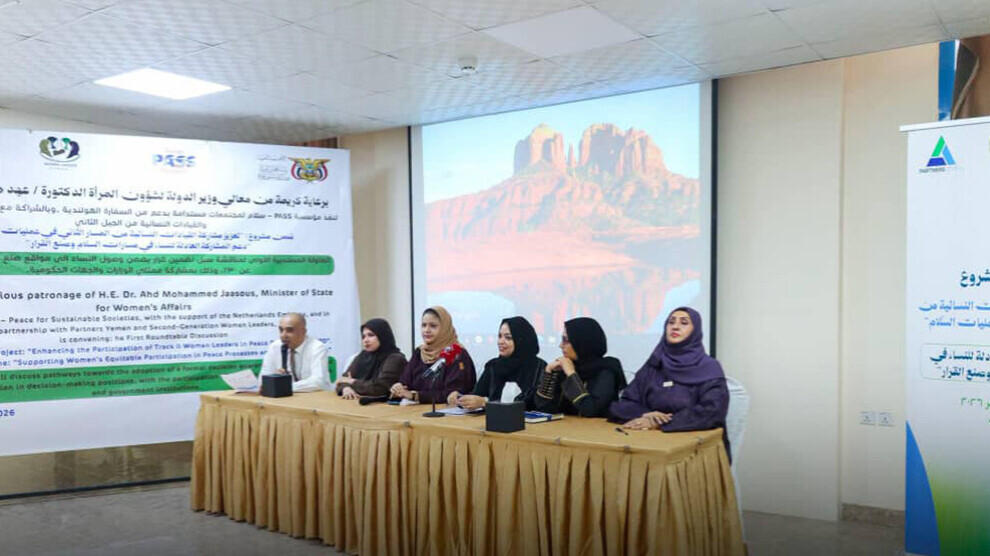
To enhance women's decision-making participation, PASS held advocacy sessions and roundtables to formulate recommendations for women's representation in state institutions.
FATIMA RASHAD
Aden — Within the ongoing efforts of feminist organizations in Yemen toward activating decisions on women's empowerment and their access to decision-making centers at the core of state entities, the temporary capital Aden has witnessed intensive movements to strengthen the presence of "second generation" leadership in the political and administrative scene.
The organization "Peace for Sustainable Communities" (PASS), in partnership with "Partners Yemen," has implemented a series of workshops and roundtables with broad participation from judicial leadership, civil society representatives, and international and local organizations. These efforts aim to prepare policy papers to be worked on in the coming period to create a tangible impact on decision-makers in the government.
Training Path and Policy Papers
Ghida Ali, a member of the feminist leadership team in the "Enhancing Women's Participation (Second Generation)" project, explained that the project began with intensive training programs covering conflict management, politics and crisis management, negotiations, and advocacy, concluding with training on policy paper formulation.
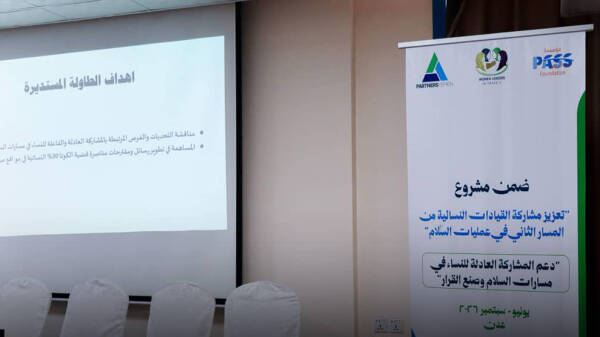
She added: "The second phase included each team preparing a policy paper addressing multiple issues, most notably a paper titled 'Women Outside the Scene,' in addition to conducting studies and in-depth analyses of the local context. Through these papers, we seek to present recommendations to the government that include adopting a 30% quota for women, in implementation of the outcomes of the comprehensive national dialogue."
Advocacy Sessions Targeting Decision-Making Centers
Ghida Ali noted that the team conducted advocacy sessions targeting four main categories in decision-making centers. The first session targeted the presidential leadership, the second targeted civil society organizations and supporting international and local bodies, the third was allocated to political parties, political components, and national leaders, while the fourth session focused on the judiciary. The discussions overall revolved around mechanisms for empowering women and their access to decision-making positions at various levels.
She affirmed that work is currently underway to prepare an integrated document to be used in advocacy sessions to raise awareness of the importance of women's participation, forming a pressure tool to urge the government to issue an official decision approving the women's "quota."
Regarding the "second generation" experience, Ghida Ali described the dialogue with leadership expertise in government bodies and the judiciary as "rich and beneficial," expressing hope for the continued transfer of these experiences to future generations of feminist leaders.
On difficulties, she explained that challenges have turned into opportunities through the diversity in selecting feminist formations on clear foundations, and the direct benefit from the experiences of previous generations in political, civil, and organizational work, paving the way for preparing more effective feminist advocacy papers.
Practical Recommendations and a Supportive Environment
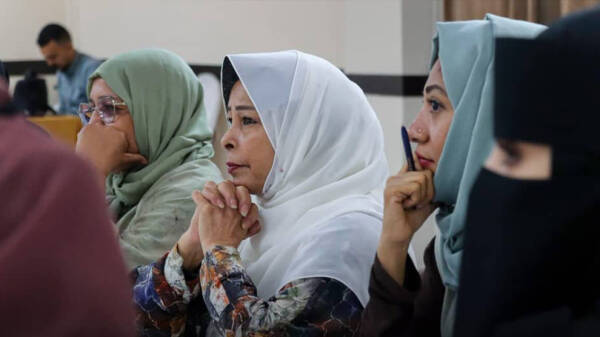
For her part, Professor Athar Ali, Executive Director of PASS, affirmed that organizing these roundtables comes as a continuation of the organization's efforts and an investment in accumulated expertise, aiming to produce practical recommendations that translate discussions into tangible implementation steps on the ground.
In the same context, lawyer Fathiya Ahmed, representing women's leadership, emphasized the importance of preparing a supportive environment that ensures equal opportunities and enshrines the principle of equal citizenship. She expressed hope that the outputs of the event would contribute to advancing national efforts to invest women's competencies in managing public affairs.
It is worth noting that the series of roundtables provided a broad dialogue space among various concerned parties and produced a package of proposals and practical recommendations on which the subsequent phases of the project will be built, supporting fair representation of women in peace paths and state administration.