
Economic Crisis Deepens the “Feminization of Poverty” in Iran and Pushes Women Out of the Labor Market
Official statistics and research reports have revealed deepening gender inequality in Iran’s labor market-a trend that exposes women to economic poverty more than ever before,with rising unemployment,the spread of informal work, and declining job security
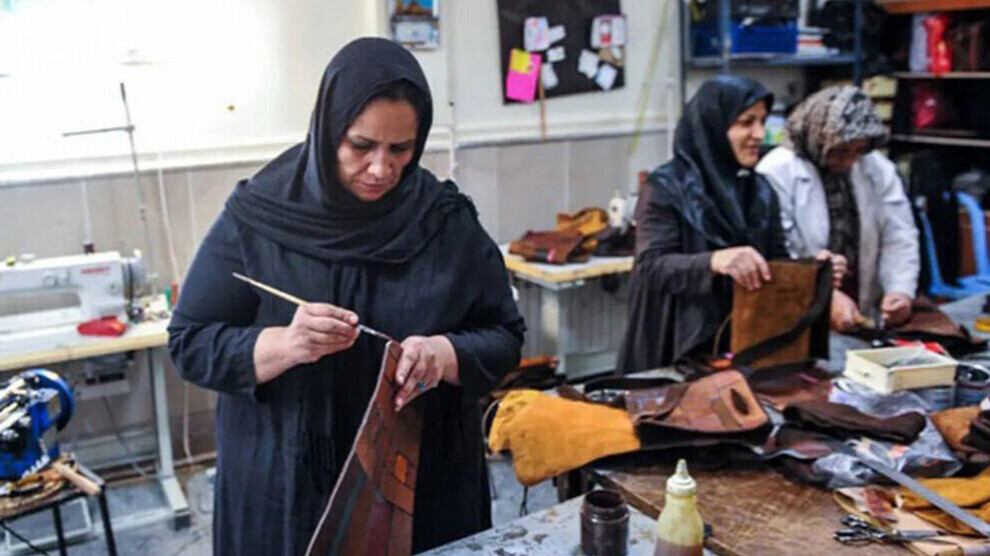
News Center—Women workers in Iran find themselves at the heart of the economic crisis.With each wave of recession,the circle of layoffs expands to include them first, amid a reality growing harsher with declining purchasing power and rising inflation, making unstable jobs even more precarious and placing the future of many women at stake.
The economic crisis and rising inflation in Iran have particularly affected women, exacerbating what experts term the "feminization of poverty." Data from the Iranian Statistical Center indicates that women's labor force participation rate in recent years has ranged between only 12 and 15 percent, while the rate for men has reached between 65 and 70 percent. Reports have also indicated that women's unemployment rate reached double that of men in some periods.
The majority of women workers—employed in the services sector and in unstable jobs—are the first to be laid off during periods of economic recession and declining purchasing power. At the same time, the gender wage gap persists, with estimates indicating an income difference ranging between 20 and 30 percent.
In recent years, many women have turned to informal work, such as online sales, domestic work, street vending, and ride-hailing services, due to the decline in formal job opportunities. However, these jobs lack job security and stable income, and are vulnerable to economic fluctuations.
Experts have warned that women who are the sole breadwinners for their families are among the most vulnerable groups in society, as they face rising living costs, limited stable employment opportunities, and a lack of adequate support. Estimates indicate that millions of women breadwinners in Iran rely on informal work to secure their basic needs.
Studies conducted by international institutions also show that in times of crisis and after war, women are pushed out of the formal labor market faster than men, and it becomes more difficult for them to return to stable employment—a trend that, according to experts, has also been evident in Iran in recent years.