
Death Toll Soars in Iran Protests with Mass Arrests
Human rights groups report over 500 killed, including children, and 10,000 detained in Iran's ongoing two-week anti-regime protests.
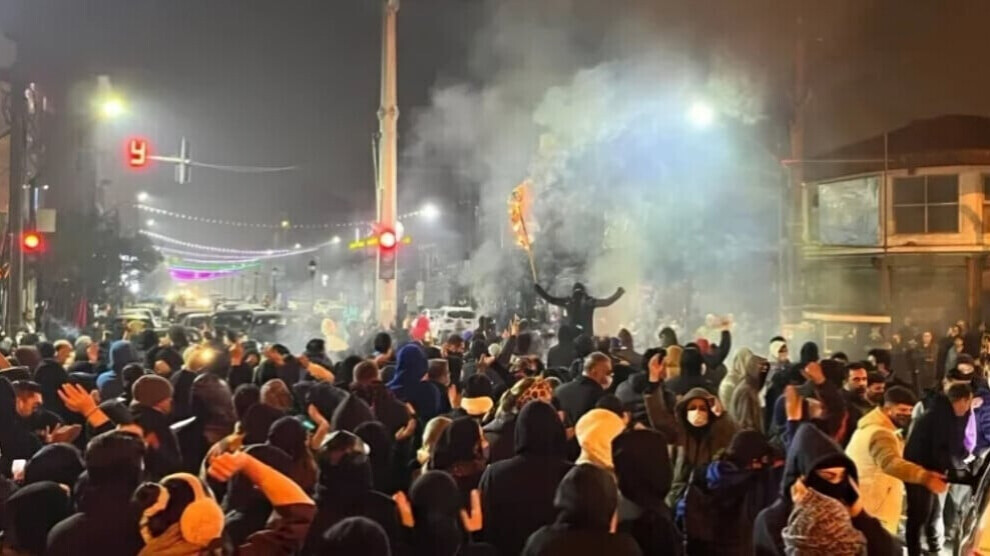
News Center- Amid a complete internet and communications blackout, human rights reports confirm security forces' use of live ammunition against protesters, while demonstrations have spread to all 31 Iranian provinces.
Human rights activists reported on Monday, January 12, that at least 544 people, including 8 children, have been killed during nightly protests that have been ongoing in Iran for 16 days, with over 10,681 individuals arrested and transferred to prisons.
Human rights reports confirm security forces' use of live ammunition against protesters. Leaked videos from the Kahrizak and Rasht mortuaries revealed dozens of corpses inside body bags, showing long lines of stunned families and bodies wrapped in black covers transported in small trucks without any legal or medical procedures.
Eyewitnesses reported over 400 bodies in a single shed at Kahrizak mortuary, while a human rights report indicated that at least 70 bodies were transferred to Poursina Hospital in Rasht under tight security restrictions and threats against families receiving the remains.
Videos from Fardis and Al-Ghadir Hospital in eastern Tehran also showed corpses lying on the ground, indicating that mass killings have extended to multiple cities. According to medical sources, 70 bodies were transferred to a hospital in Rasht, 44 to Karaj Civil Hospital, and 36 to Karaj Qaim Hospital.
Although state television acknowledged the authenticity of the images and videos, authorities attempted to justify them by accusing "fake terrorists"—a claim contradicted by footage showing security forces firing directly at protesters.
The "Narges Mohammadi" human rights foundation confirmed receiving reports of "mass shootings" resulting in the deaths of at least two thousand protesters.
According to reports, the Iranian Revolutionary Guard Corps has armed veterans to suppress protests, while military convoys patrol city streets to instill terror and fear. Security and judicial authorities have resorted to threats and mass arrests, broadcasting fabricated scenarios through state media.
Iran continues to suffer from a complete internet and communications blackout for over 72 hours, with videos and messages reaching the outside world through limited channels, including Starlink users in major cities, while vast areas of the country remain in media blackout. Protests have spread to all 31 provinces, driven by deteriorating economic conditions, rampant inflation, and currency collapse. Some protests have turned violent following security force intervention.
Protests Extend Internationally
While popular protests continue across Iranian cities against the regime, several global capitals and cities have witnessed supportive gatherings from Iranians abroad, including Tokyo, Hamburg, Budapest, Auckland, and New York.
In Adelaide, Australia, a group of Iranians gathered chanting the national anthem "O Iran." In Toronto, Canada, hundreds gathered outside the CBC building demanding broader media coverage of the national revolution, emphasizing that internet blackouts inside Iran have hindered protesters' voices from being heard. In Budapest, Hungary, videos showed Iranians gathering chanting in support of the protests.
Background
The protests began on December 28 last year due to inflation and rising living costs, quickly transforming into broad rejection of the religious establishment that has ruled since 1979.
These disturbances occur while Iran is still recovering from the June 2025 war that lasted 12 days and involved the United States and Israel.