
Organization Demands UN Accelerate Inclusive Political Track in Afghanistan
The open letter highlights Afghanistan's stalled political track, stressing that sustainable peace requires women's active participation, comprehensive national dialogue, and transparent UN mechanisms for an inclusive process.
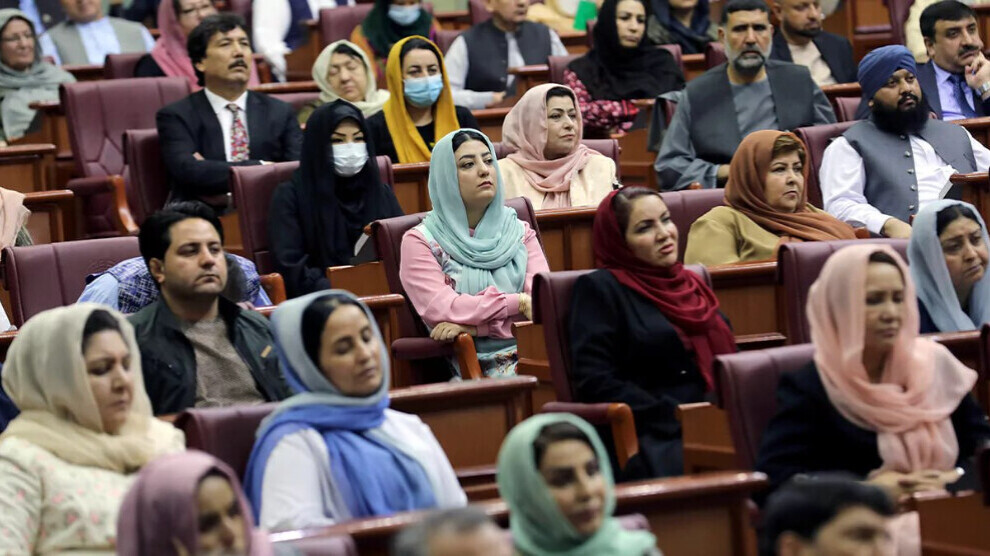
News Center— The "Women for Afghanistan" organization addressed an open letter to UN Secretary-General António Guterres, members of the Security Council, and the United Nations Assistance Mission in Afghanistan (UNAMA), calling for the acceleration of an inclusive and credible political process in Afghanistan based on the participation of all segments of the Afghan people, particularly women.
In the letter—prepared in consultation with a number of Afghan women inside and outside the country, and backed by 30 Afghan activists and human rights organizations—"Women for Afghanistan" stressed that achieving peace, stability, and sustainable political legitimacy requires a comprehensive political agreement, broad national dialogue, and the active participation of women in shaping the nation's future.
The open letter addressed to the UN Secretary-General, Security Council members, and UNAMA stated: "Following extensive consultations with a large number of Afghan women both inside and country and abroad, to voice our deep concern over the slow progress of the Afghan political track, and to present our recommendations at this critical juncture coinciding with the new leadership of UNAMA."
Since August 15, 2021, and the Security Council's subsequent adoption of Resolution 2593 (2021), the international community has repeatedly affirmed its commitment to finding an inclusive and negotiated political solution for Afghanistan, grounded in the full, equal, and meaningful participation of women. This commitment was reinforced by Security Council Resolution 2721 (2023), based on the independent assessment led by Feridun Sinirlioğlu, which called for a coordinated international approach, the relaunch of diplomatic dialogue with various Afghan factions, and guaranteeing women's full participation in shaping the country's political future.
Achieving sustainable peace in Afghanistan requires a genuine and inclusive political process based on national dialogue and reconciliation, respect for the rule of law, and the establishment of an inclusive governance system and legal framework that protects the rights of all citizens. As the independent assessment emphasized, any successful political path must reflect the diversity and aspirations of the Afghan people, ensuring women play a leading and active role at all stages.
Furthermore, reaching a credible and comprehensive political settlement is not only a necessity for peace and stability, but also a prerequisite for creating favorable conditions for the safe and dignified return of millions of Afghans who remain displaced or refugees. Consultations conducted by "Women for Afghanistan" with various segments of Afghan society over past months indicate a widespread desire for a political path ensuring participation, justice, and dignity for all Afghans.
Since March 2022, UNAMA has been mandated to support this objective through the "third pillar" of its mandate, which aims to facilitate political dialogue among diverse Afghan parties, regional stakeholders, and the international community to foster an environment conducive to building an inclusive, participatory, and accountable governance system.
However, with deep regret, we observe that the implementation of this mandate has fallen short of required or expected levels. UNAMA has failed to establish a clear, structured, and comprehensive framework guaranteeing effective participation for all concerned Afghan parties, and sufficient levels of transparency, accountability, and consultation regarding the preparation and execution of the "mosaic approach" remain lacking.
Afghan women, alongside various political, civil, and social forces, have made significant efforts to offer practical visions and proposals and to establish dialogue platforms for a peaceful political transition. Yet, these initiatives have not always received adequate attention or engagement from the UN mission, generating a growing sense of exclusion among many Afghan stakeholders.
The delay in tangible political progress does not stem from a lack of initiatives or ideas; the independent assessment provided a clear and comprehensive roadmap for national dialogue and political reconciliation. Nevertheless, nearly three years after its release, many of its core recommendations still await effective implementation.
Consequently, we urge the UN Secretary-General, Security Council members, and UNAMA to renew their commitment to the inclusive political track called for by the independent assessment, and to take practical steps translating these commitments into concrete actions.
Therefore, we recommend the following:
First: UNAMA should establish a permanent, structured mechanism for communication and engagement with diverse Afghan women's groups, democratic forces, civil society organizations, and political actors, both inside and outside Afghanistan. This outreach must go beyond formal consultations to ensure genuine, meaningful participation in shaping the political process.
Second: In accordance with the independent assessment's recommendations, the UN should appoint a Special Envoy for Afghanistan with a clear, robust mandate to lead sustained, inclusive diplomatic efforts bringing together diverse Afghan stakeholders—including female representatives, political forces, regional nations, and international partners—toward a comprehensive and peaceful political solution.
Third: The UN should establish clear, measurable, and time-bound benchmarks and indicators to evaluate progress in the political process, setting explicit timelines to review outcomes. In the absence of tangible progress, the Security Council should be empowered to hold special sessions considering necessary corrective measures. Regular assessments of these indicators must also be incorporated into the Secretary-General’s reports and debated in Security Council sessions.
Afghan women and the people of Afghanistan look to the UN to uphold its role as an impartial, principled, and accountable partner—a partner that heeds the voices of the marginalized and safeguards the right of all Afghans to participate in decisions determining their homeland's future.
We call upon the Security Council to demonstrate renewed leadership by supporting the full implementation of the independent assessment and working toward a credible political path leading to peace, stability, and prosperity in Afghanistan.
As stakeholders committed to Afghanistan’s future as a pluralistic, democratic, and free nation, we confirm our readiness for constructive participation in any efforts aiming to achieve this shared objective. We hope the UN will renew its commitment to inclusive dialogue, political legitimacy, and sustainable peace for Afghanistan and the region.