
Amid collapsing infrastructure…heavy rains deepen the suffering of Ras al-Ayn(Seré Kaniyé) displaced people
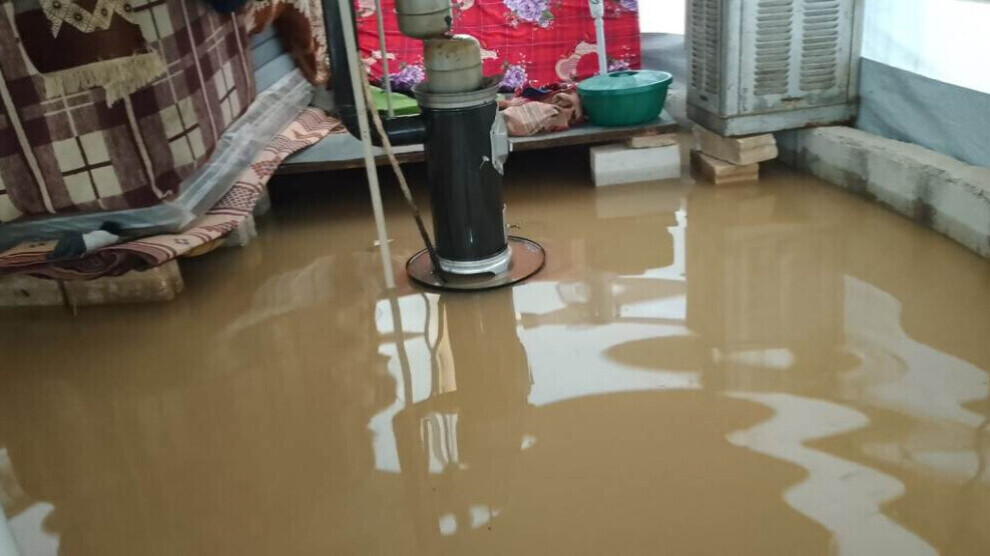
As thousands of families in Serê Kaniyê camp suffer worsening conditions, displaced women say recent heavy rains exposed collapsing infrastructure and humanitarian organizations’ failure to meet obligations.
Ronida Haji
Hasakah – On October 9, 2019, the Turkish occupation launched a large-scale offensive on the city of Serê Kaniyê/Ras al-Ayn, using various weapons in heavy bombardment targeting residential neighborhoods. After days of intense fighting, the city fell, leading to the displacement of hundreds of thousands of residents, a severe deterioration in humanitarian conditions, and widespread damage to infrastructure.
The Autonomous Administration established the Serê Kaniyê and Washokani camps to accommodate thousands of displaced people who were forced to leave their homes following the Turkish attack on Serê Kaniyê. In the city of Hasakah, the Serê Kaniyê camp was built on an area of approximately 14 acres, aiming to relocate families who had been temporarily staying in schools and to provide them with more stable shelter.
One month after the agreement between the Syrian Democratic Forces (SDF) and the Syrian Interim Government—which included a clause facilitating the return of refugees—residents of Serê Kaniyê camp continue to face difficult living conditions amid harsh weather and a lack of basic services. Majda Amin, the co-chair of the camp, provided an assessment of the humanitarian situation, emphasizing the ongoing challenges hindering improvements in living conditions and the return of displaced people to their areas.
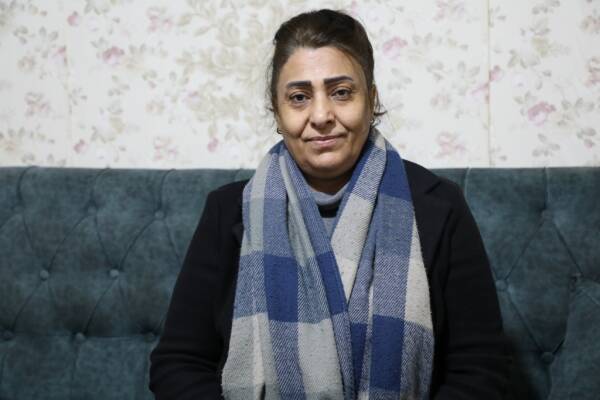
Majda Amin confirmed that the suffering of displaced people in Serê Kaniyê camp is mainly due to the lack of sufficient support from humanitarian organizations. She noted that the camp was established six years ago to host families who had been staying in Hasakah schools, and that the Autonomous Administration has been responsible for meeting their needs despite the attacks and difficult circumstances it faced.
She pointed out that international organizations have not provided the necessary support since the residents of Serê Kaniyê left their city, adding that the camp in particular has been clearly neglected. “The damage caused to the camp during the recent waves of rainfall is due to deteriorating infrastructure, which we consider the responsibility of the humanitarian actors concerned with providing assistance.”
She further explained that displaced people have not received any real support from humanitarian organizations in recent times, noting that the People’s Municipality was the only entity that provided assistance. “This support reflects a spirit of social solidarity, but it remains limited compared to the growing needs within the camp.” She stressed that organizations should have taken serious steps to support the displaced during this critical phase, but this has not yet happened.
She also noted that some displaced people from Serê Kaniyê have received calls informing them that their return to their homes is conditional upon paying $2,000, describing this as a blatant violation of their rights. “Displaced families own homes and property in their city, yet they have been living in tents and facing harsh conditions for years. Implementing the terms of the agreement—especially those related to the safe return of residents—has become an urgent necessity.”
She emphasized that displaced people endure the hardships of displacement in the hope of returning home. “The new government must take responsibility for these residents and ensure their return without conditions or extortion.”
A tragic situation
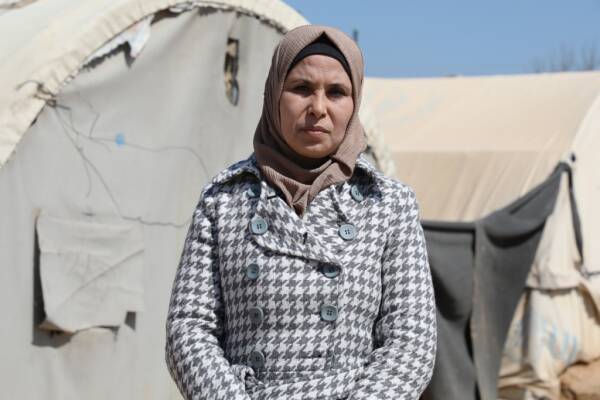
For her part, Maysa Ali, a resident of Serê Kaniyê camp, said that women face harsh conditions inside the camp and bear the burdens of displacement while hoping to return home. She described the situation of the displaced as tragic:
“Humanitarian organizations do not provide the necessary support to alleviate their suffering. Heavy rainfall in recent days has caused water to leak into the tents, making life in the camp even more difficult and leading to illnesses among many children and women due to cold and damp conditions.”
She added that three sections of the Serê Kaniyê camp were severely damaged due to the heavy rains, stressing that the deteriorating conditions in the camp require international organizations to fulfill their humanitarian obligations toward the displaced.
In conclusion, Maysa Ali called for a safe return to their homes, as they are the rightful owners of their houses and lands, asking: “Why are we living in camps while we have homes that we own?” She emphasized that ending the suffering of displacement must be a priority for the new government, as it is a fundamental step toward Syria’s reconstruction and recovery.
yet happened.
She also noted that some displaced people from Serê Kaniyê have received calls informing them that their return to their homes is conditional upon paying $2,000, describing this as a blatant violation of their rights. “Displaced families own homes and property in their city, yet they have been living in tents and facing harsh conditions for years. Implementing the terms of the agreement—especially those related to the safe return of residents—has become an urgent necessity.”
She emphasized that displaced people endure the hardships of displacement in the hope of returning home. “The new government must take responsibility for these residents and ensure their return without conditions or extortion.”
A tragic situation
For her part, Maysa Ali, a resident of Serê Kaniyê camp, said that women face harsh conditions inside the camp and bear the burdens of displacement while hoping to return home. She described the situation of the displaced as tragic:
“Humanitarian organizations do not provide the necessary support to alleviate their suffering. Heavy rainfall in recent days has caused water to leak into the tents, making life in the camp even more difficult and leading to illnesses among many children and women due to cold and damp conditions.”
She added that three sections of the Serê Kaniyê camp were severely damaged due to the heavy rains, stressing that the deteriorating conditions in the camp require international organizations to fulfill their humanitarian obligations toward the displaced.
In conclusion, Maysa Ali called for a safe return to their homes, as they are the rightful owners of their houses and lands, asking: “Why are we living in camps while we have homes that we own?” She emphasized that ending the suffering of displacement must be a priority for the new government, as it is a fundamental step toward Syria’s reconstruction and recovery.