
A conference in Baghdad to Enhance Coordination and Cooperation Between Women’s Organizations and Networks
Baghdad hosted the Coordination Conference for Women's Rights Organizations and Networks under "From Partnership to Impact," aiming to formulate a collective, sustainable framework enhancing responses to complex challenges.
RAJAA HAMID RASHID
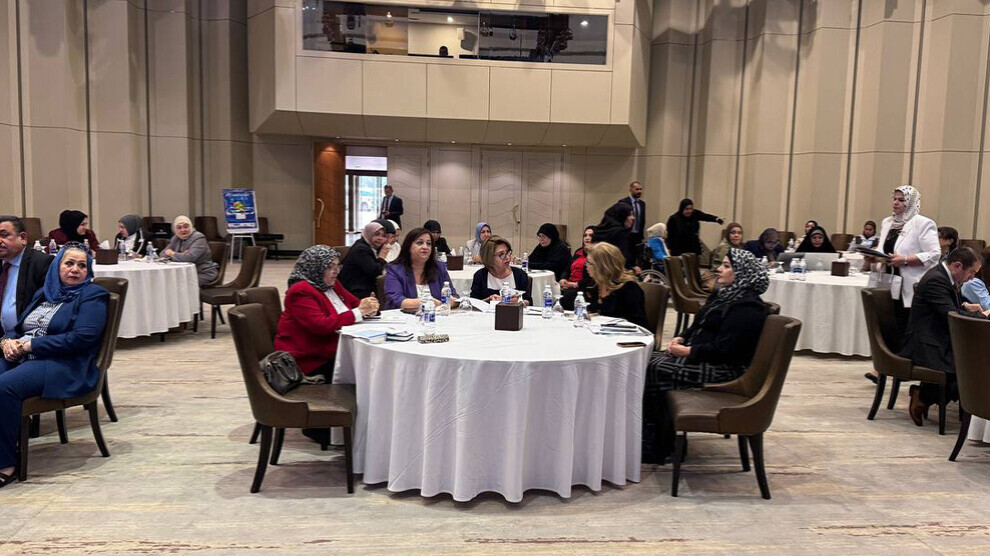
BAGHDAD_Paticipants shed light on ways to develop joint coordination mechanisms, during the work of the Coordination Conference for Women’s Organizations and Networks held in Baghdad, with the aim of entrenching the role of these bodies in contributing and working with a deeper vision toward the feminist agenda for equality and sustainable peace.
Women activists in civil society organizations from Baghdad, the governorates, and the Kurdistan Region stressed the necessity of coordination and crystallizing a joint work framework for collective action between organizations and women’s networks working in Iraq, during their attendance and participation in the Coordination Conference for Organizations and Networks Working in the Field of Women’s Rights to enhance common priorities, coordination, and sustainable advocacy. The conference was organized by the women’s Peace Network (WPN) in cooperation with the Women’s Empowerment Organization (WEO) yesterday, Thursday, 22 October, in the capital, Baghdad.
The Axes Discussed at the Conference
The conference, presented by activist Intisar Al-Mayali and held under the slogan "From Partnership to Impact: Toward a Feminist Agenda for Equality and Sustainable Peace," included three axes: (The reality of women and evaluating the priorities of joint work), (Opportunities and challenges and the sustainability of feminist partnerships), and (From policies to impact: enhancing coordination and joint advocacy for women's issues).
Member of the Board of Trustees of the Minorities Union, representing the Women's Peace Network, Wailit Korkis, explained in her speech that the meeting aims to provide a space for dialogue, coordination, and exchange of expertise between civil society organizations and local networks in the field of human rights and women's rights. It also contributes to enhancing partnerships and common challenges and discussing ways to develop more effective cooperation mechanisms, in addition to the importance of collective work to enhance and entrench the role of Iraqi women's organizations and networks in contributing and working with a deeper vision for the feminist agenda for equality and sustainable peace.
"Challenges Have Become More Complex"
For her part, the head of the Women's Empowerment Organization, Suzan Aref, explained that at this stage they seek to transfer partnership from the level of cooperation, coordination, and information exchange to a deeper level of collective work, capable of influencing policies, decisions, and practices that affect women's lives and rights.
She noted that the road ahead for women in Iraq is still long, and that the challenges facing women, whether at the legal, economic, social, or political level, have become more complex and intertwined. Changes in donors' priorities and the decline in available resources also place before civil society organizations challenges related to sustainability and the ability to continue working and influencing.
Through the conference axes, the participants discussed current developments and their repercussions on women's rights, reviewing the priorities achieved previously to determine the most urgent issues and those most amenable to collective work, analyzing the current environment in which organizations and networks operate, in addition to identifying practical opportunities to enhance the sustainability of their work and their ability to achieve common priorities.
They also addressed the role of available opportunities in influencing public policies and building partnerships with government institutions and national and international bodies. They discussed the sustainability of feminist work in light of changing donor priorities and limited resources, in addition to mechanisms for integration between local and national organizations and networks, and benefiting from available expertise and resources to avoid duplication of efforts, as well as opportunities for building practical alliances around the two priorities selected in the first axis.
Discussing the Legal and Institutional Framework for Combating Violence
The legal and institutional framework for dealing with digital violence and hate speech was also discussed, and a paper was presented that includes institutional policies for a safe civil space, toward civil society organizations and networks that protect the participation of women and activists, through codes of conduct, anti-harassment policies, anti-hate speech policies, and policies for the use of social media, from policies on paper to safe organizations.
The conference included an open discussion on how to transform the recommendations of the paper into practical measures and a joint advocacy campaign between organizations and networks, while identifying the priorities that require joint work, and the recommendations and the parties concerned with them.