
Report reveals deterioration of activist Narges Mohammadi’s health and denial of medical treatment
A new report by the “Narges” Foundation has revealed a serious deterioration in the health of activist Narges Mohammadi inside Zanjan Prison, accompanied by accusations against Iranian authorities of neglecting her treatment and detaining her in life-thre
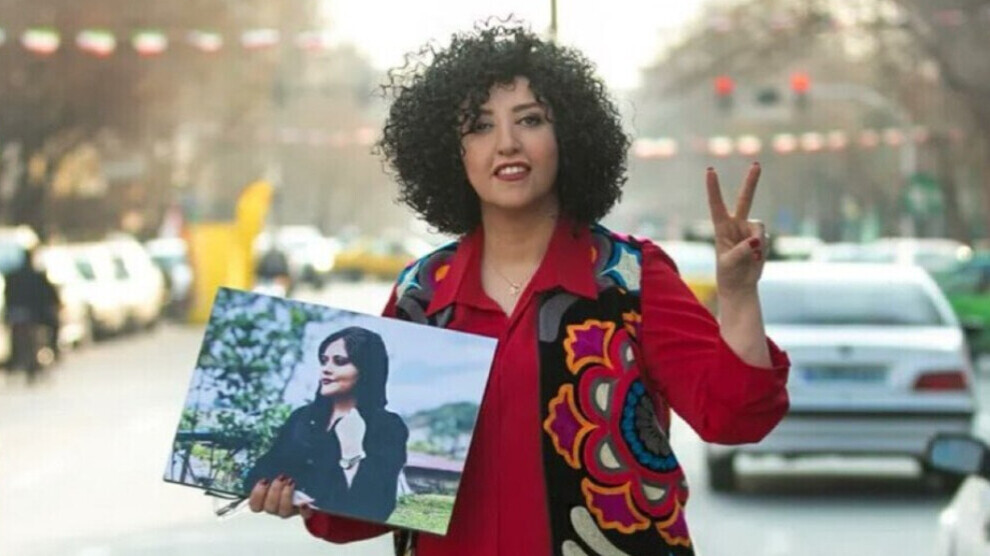
News Center _ Activist Narges Mohammadi is facing a serious health deterioration inside Zanjan Prison, suffering from complications from a previous heart attack, severe chest pain, intense headaches accompanied by nausea and double vision, in addition to dangerous blood pressure fluctuations.
The “Narges” Foundation reported in its findings that her health has notably deteriorated during two family meetings held in recent days in the presence of prison officials, noting that the family observed severe weakness and significant weight loss during a previous visit. It added that she is being held in a cell with inmates accused of murder, and according to the report, she has been threatened with death by them several times.
The report indicated that Narges Mohammadi had been suffering from severe chest pain for a long time, especially after she suffered a heart attack and remained unconscious for over an hour and 15 minutes in the women’s wing of Zanjan Prison _ an incident that raised serious concerns about her health.
According to her brother, Hamid Reza Mohammadi, after the incident Narges was referred to a cardiologist in Zanjan, who attributed the heart attack to the medication prescribed by the prison’s general doctor. The cardiologist refused to prescribe new medication or continue treatment by consulting her trusted doctor at Pars Hospital in Tehran, warning of the risk of another heart attack.
Despite the family's follow-up, Zanjan's intelligence department refused to take responsibility, while Tehran's intelligence department issued no response. According to her brother, the mention of Mashhad's intelligence department was linked to "threats of arrest." He noted that despite Narges meeting with the deputy prosecutor and the forensic medicine team, she remains detained in prison without receiving necessary treatment.
Regarding her health problems, the report highlighted that she suffers from severe headaches accompanied by nausea, double vision, and weakness — symptoms that began after her violent arrest in Mashhad, where she was struck on the head and neck. Additionally, dangerous blood pressure fluctuations, given her medical history of heart disease and the presence of a stent in her lungs, are among other medical concerns related to her condition.
According to the foundation's report, Narges Mohammadi's lawyers submitted three requests during a meeting with the prosecutor general of Zanjan province: release on bail, immediate transfer to Tehran, and immediate hospitalization. However, the Zanjan prosecutor stated he lacked the authority to make decisions in this case, stating that it falls under the jurisdiction of the prosecutors in Mashhad and Tehran.
The report explained that after she was sedated at the Ministry of Intelligence detention center in Mashhad, she was examined and diagnosed as needing urgent angiography. Nevertheless, she was transferred to Zanjan Prison without notifying her family and lawyers. It confirmed that Zanjan Prison, which holds approximately 2,500 inmates, has no separate political wing, noting her previous transfers to the prison in 2012 and 2019.
According to the report, Narges Mohammadi, as the only political prisoner in the women's wing, is held alongside female inmates convicted of violent crimes — a situation that has created an "unsafe and dangerous environment" and subjected her to "continuous threats and harassment."
The report again criticized the violation of the "principle of separation of crimes" in Iranian prisons, describing it as a factor increasing pressure on political prisoners, warning that the continuation of these conditions will put Narges Mohammadi's life at serious risk and could lead to a "humanitarian catastrophe."
The foundation also called on the international community to take "immediate and effective measures" to secure her release and that of other political prisoners.