War Extends to Historical Symbols and the Destruction of Memory
The war involving Iran, Israel, and the United States has expanded beyond civilian and infrastructure damage, placing cultural heritage at risk and threatening Iran’s historical memory.
Barshank Dolatyari
News Center — In the fourth week of the war, the scope of violence has extended beyond human and economic losses to one of the deepest layers of social life: cultural heritage and historical memory.
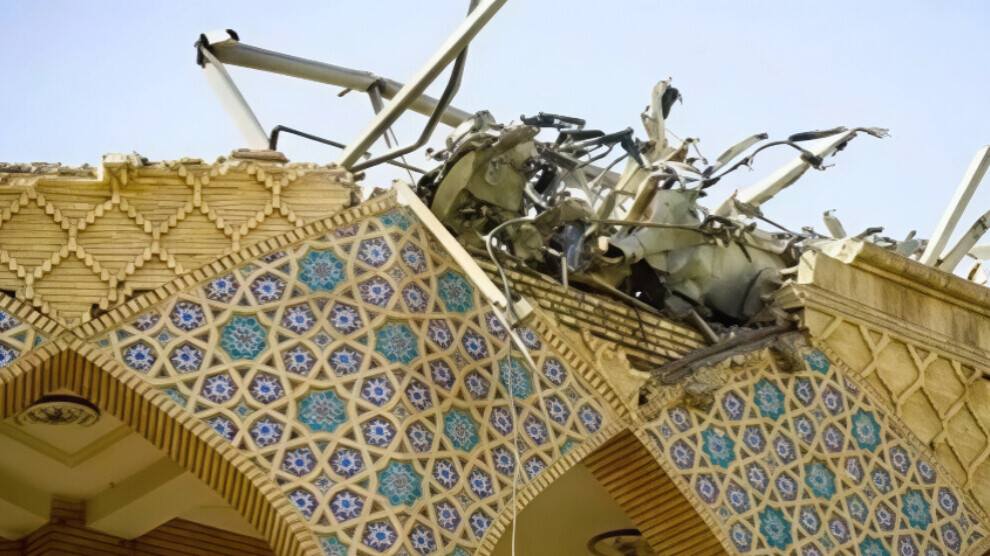
Reports from the thirteenth day of the war indicate that ten historical sites across Iran and Eastern Kurdistan have been damaged or destroyed, ranging from major complexes in Tehran to cultural centers in Isfahan and historical locations in western regions.
These damages cannot be dismissed as mere “collateral losses” of war. Their scale, distribution, and the nature of the targets suggest that historical spaces—including palaces, public squares, and urban fabric—have been directly or indirectly affected. In this sense, the ongoing war is gradually transforming into a war against the “material symbols of history.”
Mapping the Destruction of Symbolic Spaces
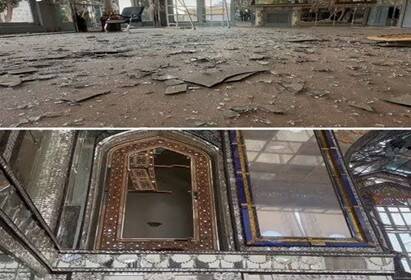
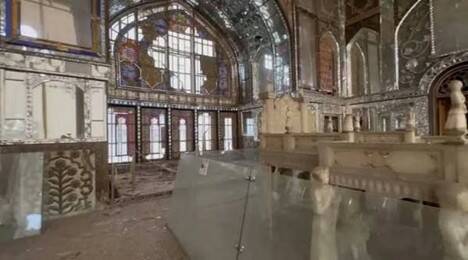
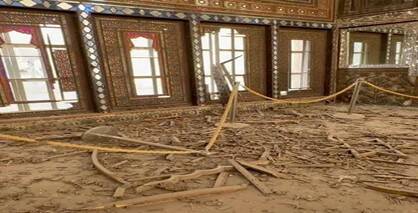
Field data indicate that destruction has been concentrated in locations with historical and symbolic significance. In Tehran, complexes such as Golestan Palace, Saadabad, Baharestan Square, and parts of the historic bazaar have been damaged due to blast waves or direct strikes.
The destruction of decorative elements—such as traditional wooden lattice windows (orsi), mirror work, and historic structures—represents not only an architectural loss but also a blow to the layered artistic heritage of these spaces.
In Isfahan, one of Iran’s most significant historical centers, damage to Safavid-era complexes—including Naqsh-e Jahan Square, Chehel Sotoun Palace, Ali Qapu Palace, and the Shah Mosque—indicates that destruction has reached globally recognized heritage sites. While much of the damage has resulted from blast waves, its long-term impact on structural stability and intricate decorations will be profound.
In Khorramabad, attacks near the Falak-ol-Aflak complex and the destruction of surrounding structures demonstrate that even areas associated with international cultural protection have not been spared.
Historically, the destruction of cultural heritage has often coincided with political collapse or violent shifts in power. A notable example is the devastation of Isfahan following Mahmud Hotaki’s invasion in the early eighteenth century—an event that not only led to political سقوط but also caused widespread architectural damage.
What is happening today, despite differing circumstances, bears similarities in outcome: weakening architectural continuity, damaging historical fabric, and disrupting urban memory. However, the difference lies in the modern context, where advanced warfare tools amplify both the scale and intensity of destruction.
Crisis of International Law: The Gap Between Commitment and Reality
The framework of international humanitarian law, including the 1954 Hague Convention, is built on the principle of protecting cultural heritage as part of humanity’s shared legacy. It obligates states and conflicting parties to refrain from targeting historical buildings, museums, and symbolic spaces, recognizing their immunity through mechanisms such as the Blue Shield.
However, reality on the ground reveals the limitations of these commitments. The gap between “law” and “power” becomes evident, as legal frameworks are often sidelined by military priorities, survival strategies, and geopolitical objectives.
Numerous reports indicate the destruction of protected sites and even the misuse of protective symbols, including the instrumental use of international markers to conceal dual-purpose targets or for psychological warfare. This suggests that such mechanisms are not only insufficient deterrents but may sometimes become tools within the conflict itself.
From a historical perspective, the destruction of cultural heritage is often part of a broader “policy of destruction.” From erasing urban symbols in modern warfare to deliberately targeting antiquities in contemporary conflicts, such actions reshape both space and memory. The removal of structures represents not only material loss but also the erasure of identity, history, and even the legitimacy of entire communities.
What emerges is not merely the failure of a specific convention but a deeper crisis in the global legal system—one in which “power” continues to outweigh “law.” Without independent and non-politicized enforcement mechanisms to protect cultural heritage, these commitments risk remaining moral statements rather than effective safeguards.
From Documenting Destruction to the Silent Erosion of Identity
In times of war, the first line of defense for cultural heritage is not physical protection, but precise documentation of destruction. Systematic recording through images, maps, and field testimonies becomes the last remaining tool to transform devastation into evidence—evidence that may later support legal accountability under frameworks such as the 1954 Hague Convention.
Yet this process itself is constrained by wartime realities: limited access, ongoing insecurity, and the risk of losing evidence before it is recorded make documentation a dangerous and unstable task rather than a routine technical process.
Alongside documentation efforts, measures such as relocating valuable artifacts to secure storage, establishing temporary shelters, and reducing exposure to direct threats are being implemented. However, these actions reflect emergency responses rather than sustainable protection strategies. War shortens planning horizons, placing institutions in a state of constant suspension, where decisions are driven by immediate survival rather than long-term professional standards.
Less visible is the slow but continuous process of cultural erosion. Even without total destruction, the disruption of historical spaces, the weakening of people’s daily connection to them, and the suspension of cultural activities gradually strip these places of their meaning. In this sense, destruction is not only a sudden event but an ongoing process fueled by instability and insecurity.
In other words, the protection of cultural heritage during war becomes a field of political contestation and historical redefinition. What is documented—or erased—will shape future narratives, whether official or informal. Documentation, therefore, is not merely about preserving the past but also about influencing the future—determining what will be remembered and what will be forgotten.
Within this context, the failure to protect heritage goes beyond the loss of monuments; it undermines historical continuity itself. Such disruption may pose a serious challenge to rebuilding collective identity in the post-war period.
What is unfolding today represents a shift from “active protection” to “managing destruction.” The goal is no longer to fully prevent damage, but to record it, reduce it, and delay it. If this trajectory continues unchecked, its consequences will extend beyond physical destruction to the formation of a fractured and wounded memory—one that future generations will be forced to reconstruct their identity upon.