
Bodies Torn Apart and Eyes Gouged Out… Jordanian Women Between Crime and the Guillotine of “Blame”
With societal awareness declining, women face a widening gap between needed protection and reality. Fear, dependency, and silence trap many, costing lives.
BARA’AH AKRAM
Jordan_The numbers of femicide crimes in Jordan are no longer cold statistics recited in news bulletins; they have become muffled screams emerging from beneath the ashes of a reality that grows harsher and more horrific. Death alone is no longer the end; it is now preceded by terrifying brutality carried out in cold blood_from gouging out eyes, to tearing bodies apart, to pushing women toward the edge of suicide.
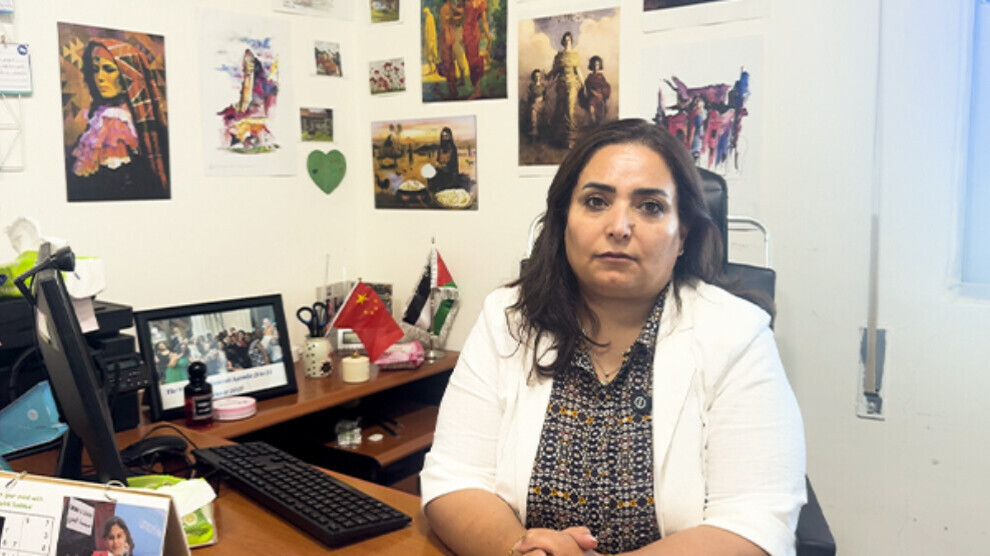
This is a dangerous shift in the structure of the crime, which the director of Al-Balad Radio and human rights activist Atif Al-Rawdan places before the mirror of truth, affirming that the intent is no longer merely to end a life, but to crush the human entity of the woman to the very last breath.
Laws Advance While Awareness Regresses
Although recent legislative amendments in Jordan have taken advanced steps toward protecting the family, the real dilemma stands behind the walls of prevailing culture and the intellectual regression fueled by the street and social media platforms.
Human rights activist Atif Al‑Rawdan says: "We are witnessing today a frightening societal regression toward women's issues. There is a systematic attempt to distort the image of human rights institutions and to accuse everyone who defends women's dignity of Westernization and of implementing agendas of stigmatization. International conventions such as CEDAW have been distorted and linked to the fragmentation of society, and suffocating economic pressures have converged with declining confidence in the human rights system globally, pushing the street toward an increasingly fierce conservative current at the expense of women's rights."
In closed homes, women pay the price of "protection" and "fear of scandal" with their bodies and their lives. A woman stays silent and swallows insult after insult, for fear of the label "divorced" or the accusation of "destroying the home," until the chance of survival is missed and she reaches the hospital as a lifeless body or with a body bearing permanent disability.
Atif Al‑Rawdan points out that "a woman does not always stand up to violence from the first slap; society often teaches her silence, endurance, and fear of consequences. As this fear accumulates, dependency becomes a chain that ultimately leads her to a harsher fate. Therefore, breaking the cycle of violence does not begin only by confronting the abuser; it begins by breaking dependency and restoring independence."
She adds: "When a woman possesses her right to inheritance, her financial independence, and the freedom to dispose of her money and decisions, her voice gains strength and her presence gains weight. Economic empowerment is not merely possessing money; it is one of the most important elements of safety, dignity, and the ability to choose, and an essential shield that protects women and enhances their position within and outside the family."
Trying the Victim... 25 Years of Lethal Justification
From a reality of a quarter‑century of fieldwork in investigative journalism and advocacy for gender issues, Atif Al‑Rawdan recalls details of cases etched in memory to reveal the shortcomings of the prevailing discourse that always searches for an excuse for the perpetrator and subjects the victim to trial.
She says: "The worst thing that can happen to a journalist is to see the victim tried twice: once by the perpetrator, and once by society. I still remember the story of Fatima, whose husband gouged out her eyes only because she tried to protect her children, and that refugee girl who was killed on the pretext of suspicion, and investigations later proved her innocence... In both cases, society came out to ask: Why did you anger your husband? And why did you put yourself in a position of suspicion?!"
A Battle for Existence, Not Just Legal Provisions
Protecting women will not be complete with isolated legislative texts or limited shelters, but with the presence of conscious media led by women in newsrooms and decision‑making positions, to be a true partner in rebuilding public awareness and eradicating the culture of violence from its roots.
In conclusion, human rights activist Atif Al‑Rawdan says: "Numbers do not lie, and they expose a painful truth: our battle today is no longer limited to confronting violence; we face a latent societal refusal to deal with women as human beings with full rights and dignity."