
Jessie Tarbox Beals... The Photojournalism Pioneer Who Opened the Profession's Doors to Women
Jessie Tarbox Beals secured her place in American journalism history as the first female photojournalist published in newspapers, defying restrictions on women at the turn of the 20th century to become a pioneer of photojournalism.
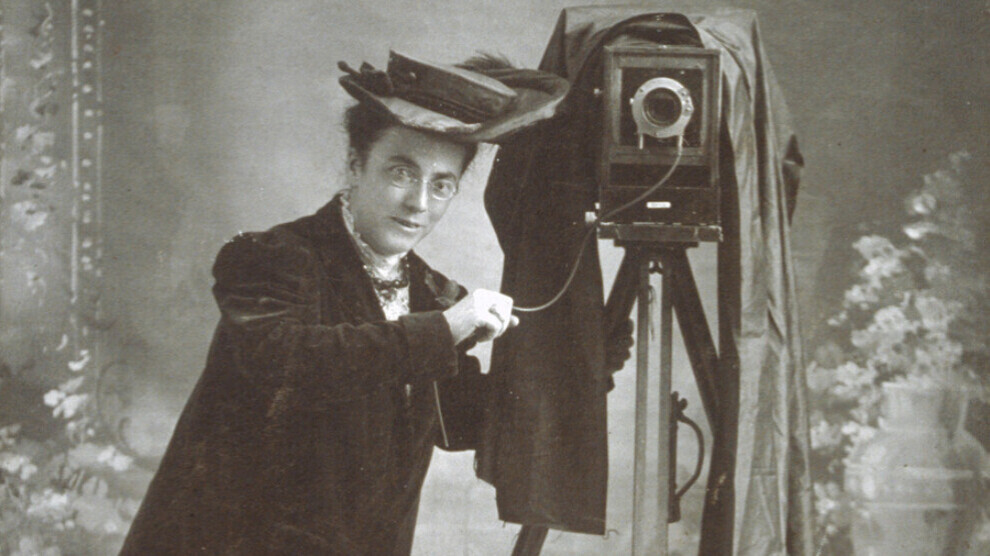
News Center — Jessie Tarbox Beals stands as one of the most prominent figures to have left a mark on the history of journalism and photography in the United States, having become the first American female photojournalist to have her photos published in newspapers, and the first woman to practice night photography in the country.
The significance of her achievement was not limited to being a professional first; it was also reflected in her ability to break into a field that had long been the exclusive domain of men, defying the social restrictions and discrimination women faced in the late 19th and early 20th centuries.
Jessie Tarbox Beals, registered at birth as "Jessie Richmond Tarbox," was born on December 23, 1870, in the Canadian city of Hamilton. She had a stable childhood in a well-off family, but her father's loss of the family fortune due to a failed investment changed the course of her life, forcing her to become self-reliant at an early age — an experience that shaped her ambitious, persistent character.
She excelled academically and worked as a teacher at the age of seventeen. It was during this period that her relationship with photography began, after she won a camera from Youth's Companion magazine — a prize that became the launching point for an extraordinary career. It wasn't long before she acquired a more advanced camera and opened her first photography studio in the city of Williamsburg, beginning to build her name in the field.
Her visit to the World's Columbian Exposition in Chicago in 1893 deepened her passion for photography, while her marriage to Alfred Tennyson Beals in 1897 marked a new chapter in her life, as he helped her develop her technical skills with the camera. In 1899, she got her first professional opportunity when the Boston Post commissioned her to photograph a prison, marking the start of her career in photojournalism.
Starting in 1901, she worked as a photojournalist in Buffalo, becoming known for her boldness in covering events — she didn't hesitate to sneak into courtrooms to capture photos, at a time when such moves were highly unusual. She also drew attention for her coverage of the 1904 World's Fair in St. Louis, presenting photos taken from innovative angles, which cemented her status as one of the most prominent photojournalists of the era.
The Woman Who Changed the History of Photojournalism in the United States
She moved to New York in 1905 and opened her own studio, expanding her work and using her lens to document many facets of American life. She photographed public figures, car races, and the cultural life of Greenwich Village, alongside documenting the city's poor neighborhoods and social realities, turning her body of work into a visual record reflecting the features of American society at the turn of the 20th century.
In 1911, she gave birth to her daughter, Nanette, but her life took a difficult turn after separating from her husband, forcing her to take on various jobs to support herself and her daughter — at one point even performing sleight-of-hand and entertainment acts to earn a living. Despite these circumstances, she continued her professional work, turning during the 1920s to photographing gardens and landscapes.
In her final years, Jessie Tarbox Beals suffered from financial hardship and health problems, but these difficulties did not overshadow her significant impact on the history of journalism and photography. She died on May 31, 1942, at the age of 71, leaving behind a distinguished professional legacy that made her one of the pioneers of photojournalism, helping open the path for generations of women to enter the field and establish their presence in it.