
"The Lion Women of Tehran": A Story of Women Who Resisted the Changes of Time and Politics
Marjan Kamali's "The Lion Women of Tehran" blends history and humanity through a friendship enduring decade of Iran’s political and social upheaval.
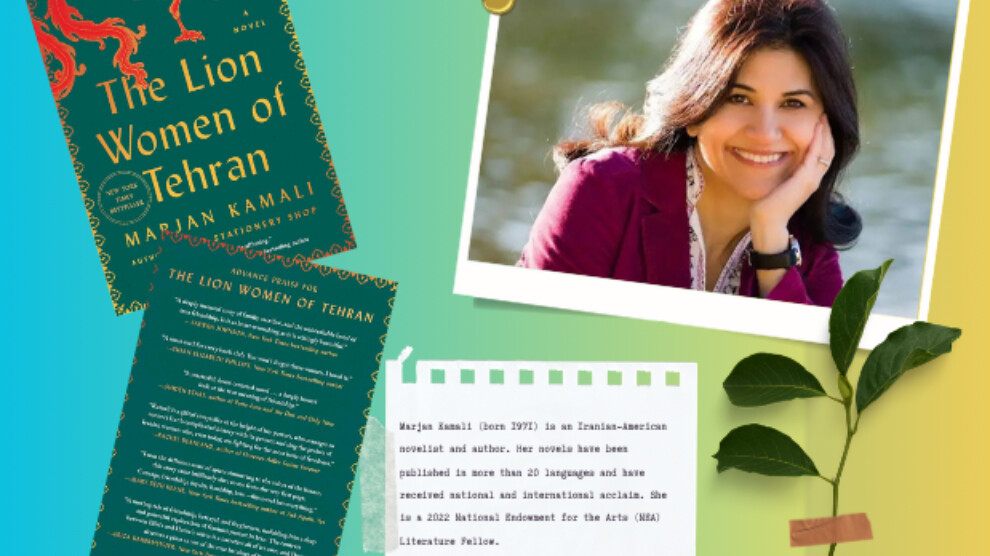
News Center— The novel "The Lion Women of Tehran" by Iranian-American author Marjan Kamali takes readers on a human journey spanning decades, where friendship intertwines with politics, and personal dreams become entangled with the historical transformations that swept through Iran from the 1950s to the contemporary era.
The novel, published in Arabic by the Arab Cultural Center in 2024, does not merely recount historical events but reveals their profound impact on individuals' lives, particularly women who found themselves confronting a constantly changing reality.
It is considered one of the most prominent works blending historical and social fiction, presenting a portrait of Iranian society across seven decades of political and cultural change.
The story unfolds from the concept of "Shir Zan"—a term used to describe a courageous woman possessing the strength and resilience of a lioness. Through this symbol, the author sketches the features of two heroines, Ellie and Homa, who grow up in Tehran amidst a society teeming with political and social unrest. Despite the strength of their bond, their differing social backgrounds place each before different experiences and perspectives on life.
The novel follows the two friends' journey from childhood, where they share simple dreams and great ambitions, before political transformations begin to reshape their reality. With each coup or change in the ruling system, society's features shift, and people's views on freedom, education, work, and women's roles change. Ellie and Homa each find themselves facing fateful choices: should they remain in their homeland and struggle for a better future, or leave in search of a more stable and free life? Their friendship remains the thread connecting past and present, despite the distances and differences that life imposes.
The novel does not focus on political events merely as historical facts, but examines their repercussions on people's daily lives. Through its characters, we see how women's conditions shifted between periods of openness and modernization, then phases of religious rigidity and social restrictions, and how laws and societal expectations changed—and the impact this left on women's dreams, aspirations, and relationships with themselves and with others.
The author also addresses the concept of feminism in a balanced manner, illustrating that the meaning of women's rights was not constant across the decades but was shaped according to prevailing political and cultural circumstances. The novel discusses how slogans of women's support were sometimes used to achieve political goals, while women themselves continued to face daily challenges in securing their basic rights and living with freedom and dignity.
One of the notable aspects of the novel is its treatment of certain popular beliefs, such as belief in envy or the evil eye, and how these ideas can affect individuals' behavior and outlook on life. The characters sometimes fear displaying their success or happiness lest they bring envy upon themselves, reflecting the presence of folk heritage in daily life details and raising questions about the impact of such beliefs on collective consciousness.
Marjan Kamali gives ample space to the details of Iranian life, describing homes, markets, and social customs, and pays special attention to Iranian cuisine through descriptions of traditional foods and their ingredients, lending the novel a sensory quality that makes readers feel as though they are living within the scenes and tasting their flavors.
Marjan Kamali summarizes the spirit of the novel in her introductory words, explaining that she is not a historian seeking to document events, but a novelist who believes that stories possess a unique ability to preserve human memory and give readers hope, empathy, and understanding. For her, the characters may be imagined, but their emotions and experiences reflect realities lived by many. Thus, the story of Ellie and Homa serves as a mirror to women's hopes and disappointments, affirming that differences in cultures and countries do not negate the truth that humans share common emotions, and that their hearts all beat with the same dreams, no matter how different the times and places.