
Riham Hajjo: Many Political Manipulations Are Being Praticed Around Yazidi Female Captives
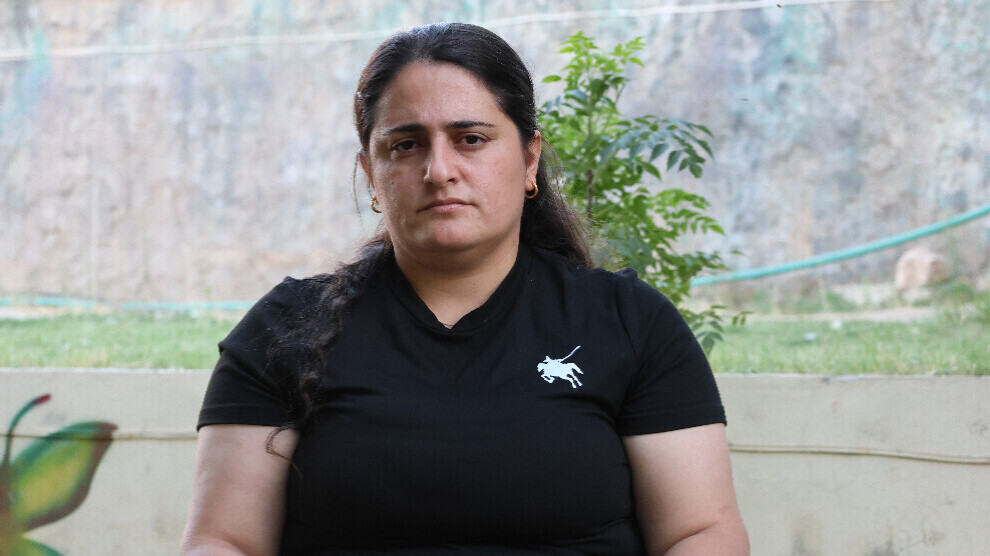
The spokesperson for the Yazidi Women’s Freedom Movement (TAJÊ), Riham Hajjo, said the movement launched a campaign for Yazidi female captives with the aim of thwarting the political manipulations being practiced around their cause.
JIHAN ZAMO
Shingle_ On July 17, the Yazidi Women's Freedom Movement (TAJÊ) launched a campaign under the slogan "For Justice and Freedom, Be You Too the Voice of the Female Captives of the Farman." Within the framework of this campaign, numerous activities and actions have been carried out.
Years after ISIS's crimes against the Yazidi people in Shingle, the issue of the women and girls kidnapped during the Farman on August 3, 2014, remains one of the most complex, sensitive, and marginalized files. Although a number of captives have been liberated, the fate of others remains unknown.
The spokesperson for the Yazidi Women's Freedom Movement (TAJÊ), Riham Hajjo, said: "As the TAJÊ movement, under the umbrella of Yazidi women in Europe, and with the support of Yazidi women in Rojava, Kurdistan, Armenia, and Russia, we began this campaign aimed at carrying out activities for the captives, as well as for the recognition of the genocide."
She noted that the campaign, which launched on July 17, 2026, under the slogan "For Justice and Freedom, Be You Too the Voice of the Captives of the Farman," will continue until November 25, 2026. "We announced this campaign through a statement, and about a month and a half has passed since its launch. During it, we carried out many actions and activities, including seminars, visits, and meetings. Our work revolved around recognition of the genocide and the issue of the captives and the women who were rescued from ISIS's grip."
"Many Captives Are Being Threatened"
Riham Hajjo shed light on the movement's efforts to rescue the captives: "We held meetings and gatherings with the captives who were rescued from ISIS's grip, both women and young men. We listened to them and learned their views, because talking with them reveals many new things. Many of them are still being threatened."
These threats, as she explains, prevent the captives from filing complaints against ISIS members: "A special law regarding the captives was issued in Iraq, and under this law, some ISIS members must be brought to trial. For that, the rescued female captives must file complaints against them, and the rescued male and female captives must identify them and say: This person is from ISIS. But the female captives do not dare to file complaints against them, because their names will appear in the records once the complaint is filed, and then ISIS can easily reach them or their families and threaten them. Therefore, our campaign served as a warning to the captives in such circumstances, so they do not take steps that could expose them to danger later.
Using Captives as a Means of Propaganda
Riham Hajjo pointed out that many institutions, associations, and organizations use the captives as a means of propaganda: "These institutions organize a conference or a seminar and bring these male and female captives for money to participate in these meetings and speak at them. But they are asked to talk only about general matters: what happened to them, what they were subjected to, and so on, and they are not allowed to talk about important matters."
She added: "We in TAJÊ want, through this campaign, to reach those important documents and information so we can achieve a good result. Through this campaign, we reached a number of rescued captives, and we wanted to be a support for them. Many of them were very happy with this campaign, but unfortunately, there are also many rescued male and female captives who, due to fear, cannot tell the truth."
About the actions and activities carried out within the framework of the campaign, she said the campaign is a means of entering the lives of the captives: "On September 5, we held a consultative session aimed at discussing the situation of the captives, the policies pursued toward them, and the psychological impact of the Farman on the Yazidi community."
She explained that rescued male and female captives participated in this session, as well as families of the captives, and many activists working and active in Shingle also participated. "Through discussion and building an agenda, the session is considered successful. Perhaps it was not at the level we aspired to, but it was good to some extent."
She affirmed that "our campaign played a role at the level of Iraq as well. About 40 women's and cultural institutions and associations announced their support for this campaign, and many activists and civil figures announced their support for it. This is an important matter. Our campaign contributed to placing the issue on the agenda in Iraq as well, and after a period, some activities will be held in the Kurdistan Region and Baghdad within the framework of this campaign."
She explained that "our goal is to create international pressure for recognition of the genocide committed against Yazidis, and to ensure that the male and female captives also reach their rights."
"Many Manipulations Are Being Practiced Around the Captives"
Riham Hajjo believes that a despicable policy is being practiced toward the male and female captives, and that every party is weaving plans and manipulations around them: "90 percent of the rescued male and female captives live outside Shingle. Countries such as Canada, the Netherlands, and Sweden host the largest number of male and female captives. But these countries have done nothing in Shingle to rebuild it or improve the conditions of the captives."
She believes that "transferring the rescued captives to Europe and distancing them from the land, language, culture, belief, and identity does not solve the problem."
"The Captives Are Present in Every One of Our Plans"
Riham Hajjo recalled that the male and female captives were subjected to many difficult circumstances: "These people lived through great pain and were subjected to rape and extremely brutal forms of violence. But the psychological state they live in cannot be overcome merely by taking them out of the country. This psychological state can only be overcome on their land, and by providing great health and psychological care and attention. This is also one of the goals of our campaign; we do not accept this policy aimed at emptying Shingle of its residents."
She believes that some parties are seeking to "use the rescued captives against the identity, existence, and cause of the Yazidis. Therefore, we saw great dangers and wanted to take steps to confront that, and this campaign is part of it. The issue of the captives was often raised only on August 3. But we, as TAJÊ, have had the captives present in every one of our plans."
"Protection Is a Fundamental Issue"
Regarding movements aimed at ending the Yazidi military presence that formed after the 2014 Farman, she said that after August 3, 2026, Shingle entered a state of emergency: "People were living calmly, and there was nothing. But suddenly the Iraqi army spread throughout Shingle and increased its deployment points, which created a state of fear within the Yazidi community."
She added: "Our community learned a lesson from the Farman—that the issue of protection is a fundamental issue. The community no longer places its protection in the hands of any party. After the Farman, the Yazidi community does not trust any force that is not from Shingle, because it witnessed the abandonment when Iraqi forces and the Peshmerga withdrew from Shingle when ISIS attacked unarmed civilians."
She explained that the Yazidi community does not want war to break out because it "can no longer bear another war." But at the same time, it "rejects surrender and does not want to become a prisoner of the government," especially since the country does not have a unified army with a national doctrine: "From the Kurdistan Region to Basra, there are different groups, and each group controls a certain area."
”